He found a kinase nobody had drugged, then built a company around the conviction that it would shrink the tumors everyone else had given up on.
In a Seoul lab, a molecule called AD1208 went into an animal that had already beaten an approved second-line cancer drug. The tumor had learned to ignore medicine. AD1208 did not ask for permission. The tumor shrank, and Soongyu Choi had the data point his entire company was built to produce.
Choi is co-CEO and co-founder of Avelos Therapeutics, a clinical-stage outfit chasing first-in-class small molecules in three tightly linked corners of cancer biology: synthetic lethality, the DNA damage response, and the cell cycle. The bet is narrow on purpose. Avelos does not want to be a little of everything. It wants to be the company that drugs the targets other people call undruggable.
The flagship is AD1208, the lead candidate of the AVS1001 program and a first-in-class inhibitor of MASTL, a kinase that governs how a cell finishes dividing. Block it at the wrong moment and a cancer cell's careful choreography of mitosis collapses. Choi designed the program around a deceptively simple instruction to his scientists: pick the molecules with the highest probability of success, and design them to be given at a low dose alongside an approved drug, so the toxicity signal stays quiet while the synergy gets loud.
AD1208 is meant for the patients standard therapy has run out of answers for. On paper that is colon, stomach, breast, ovarian, and prostate cancer. In practice it is a wager that the cell cycle still has exploitable seams, even in tumors that have already outsmarted one drug.
Choi runs the company on what he calls a "twin-headed carriage" - two horses, one cart. One head pulls toward technology transfer and licensing deals with global pharma. The other pulls the in-house pipeline forward into the clinic. He is candid that the priority leans toward the former: get the science validated, get it into bigger hands, and let the platform prove itself through partnership rather than a press release.
It is a founder's posture you do not see often. Most first-time CEOs want to carry a drug all the way to the patient and plant a flag. Choi, after twenty-five years inside other people's pipelines, seems to have decided the flag is beside the point. The point is the molecule. If the best home for AD1208 is another company's clinical machine, that is a feature of the plan, not a failure of nerve. He has spent a career watching good chemistry die for want of the right hands. Avelos is, in part, his answer to that.
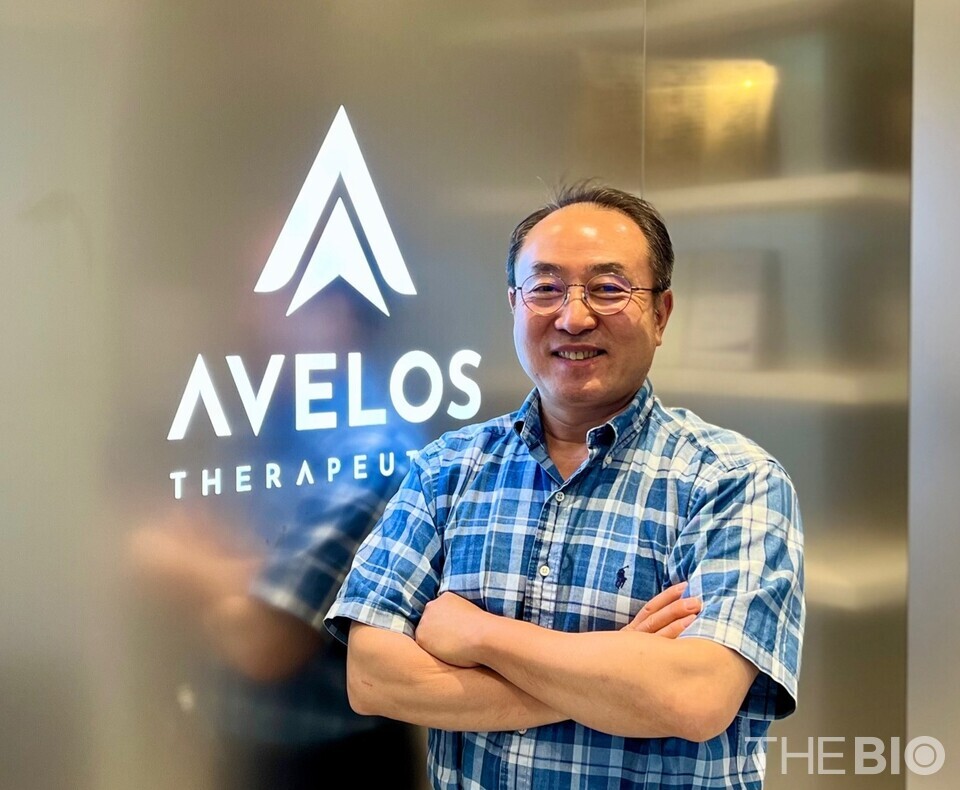
Before he was a founder, Choi was a chemist with a Harvard Ph.D. and an unusually patient resume. He did his doctoral work at Harvard from 1989 to 1995, then research at the University of Chicago, before the pharmaceutical industry came calling.
He spent the late 1990s as a senior research scientist at Bayer HealthCare, then nearly a decade as a group leader at PTC Therapeutics, the New Jersey company built on the then-radical idea of finding small molecules that fix the way cells read their own genetic instructions. That decade matters. Drugging hard targets is a craft you learn by failing at it for years, and PTC is where Choi did his apprenticeship in the impossible.
Then he went home. He became chief scientific officer and executive vice president of R&D at Yuhan Corporation, one of Korea's oldest pharmaceutical houses, and ran Yuhan USA as its CEO. After that came Hana Pharm, where he was CTO and head of R&D. Each stop added a different muscle: discovery, translation, the politics of moving a molecule through a real organization.
In September 2021 he stopped working inside other people's companies. He co-founded Avelos Therapeutics with CEO Young Whan Park and business development head Kangsik Yun. Choi took the CTO seat. Two and a half years later, in January 2024, the title changed to co-CEO. The work did not. He still talks like a scientist who happens to sign the funding documents.
Stages are indicative, drawn from public company statements as of 2024-2026. Bar lengths are illustrative, not regulatory milestones.
AD1208 carries the company. It is the program Choi described shrinking tumors in models that had grown resistant to an approved second-line therapy. The plan he laid out: give it at a low dose, in combination with an existing drug, so the general toxicity signal stays minimal while the two compounds amplify each other.
Behind it, AVS1002 aims at tumors carrying homologous recombination deficiency, a well-known soft spot in cancers that have lost the ability to repair their own DNA cleanly. Two more DNA-damage-response programs sit further back. Choi has also talked about folding DDR-targeting payloads into antibody-drug conjugates - a way to let someone else's antibody carry his chemistry straight to the tumor.
In April 2024, Avelos closed a KRW 17 billion Series B, roughly $12.3 million, and pushed its total raised past KRW 30 billion - about $21.7 million across seed, Series A, and Series B. For a nine-person company built around chemistry that most investors would call early, that is a meaningful vote of confidence.
The round was led by Stassets Investment, with LSK Investment, Medytox Venture Investment, Shinhan Capital, and Heungkuk Securities coming in alongside. The returning names mattered just as much: SV Investment, Mirae Asset Venture Investment, Quad Investment Management, and Timefolio Capital all re-upped, the quiet signal that the people who knew the company best wanted more of it. In early 2025, Hyundai Pharmaceutical added a strategic investment, the kind that tends to come with a commercial conversation attached.
Choi has been disciplined about what the money buys. The first three and a half years went into pipeline and reputation, not splash. The next move, in his framing, is the foundation for global expansion - which for a Korean biotech usually means a licensing deal with a larger partner long before it means a sales force. He has pointed to a technology evaluation by the end of 2026 and a KOSDAQ public listing sometime after 2027. Slow, in other words, on purpose.
Synthetic lethality is an old genetics idea with a sharp modern edge. Two genes are synthetically lethal if losing either one alone is survivable, but losing both kills the cell. Cancer hands you the first hit for free - the tumor has already broken something normal cells keep intact. The drug supplies the second. Healthy tissue, with both copies working, barely notices. The tumor does not get that luxury.
Avelos stacks three connected ideas on that foundation: synthetic lethality, the DNA damage response, and cell cycle regulation. They are not three different bets. They are three windows into the same room - the machinery a cell uses to copy itself without making fatal mistakes. AD1208's MASTL target sits squarely inside the cell-cycle window; AVS1002's homologous-recombination angle sits in the DNA-repair one. Choi's instruction to design for the highest probability of success is, in this light, less a slogan than a filter: in a field this hard, the discipline is choosing what not to chase.
He describes Avelos as a "twin-headed carriage" - licensing and clinical development pulling the same cart, with technology transfer in the front seat.
MASTL governs how cells exit mitosis. It is an unusual, under-drugged cancer target. Avelos made it the front door rather than a footnote.
Harvard, Chicago, Bayer, PTC, Yuhan, Yuhan USA, Hana Pharm. He learned the craft on two continents before betting on his own.
Compiled from public sources: Avelos Therapeutics, PR Newswire, The Bio, Crunchbase, and company filings. Facts current as of mid-2026; pipeline status and timelines reflect company statements and may change.