Imagine an employee trying to do the careful thing. A page says it needs to check that she is human. It resembles a familiar security prompt. Then it asks her to paste a command into her computer. The instruction is the attack. The apparent precaution is the bait. SlashNext's researchers described precisely this sort of fake CAPTCHA in a 2025 analysis of ClickFix, a phishing technique that turns a user's own caution into the delivery mechanism.
The page matters because a perfectly respectable looking link can lead to a trap that did not exist when the message first arrived. A filter that recognizes yesterday's bad address has little time to learn today's. SlashNext made a business of examining the encounter itself: the language of the message, the look and behavior of the destination, and the route a victim took to get there.
- Founded by former FireEye scientist Atif Mushtaq.
- Built security across email, browser and mobile messaging.
- Raised $26 million in a 2021 Series B.
- Acquired by Varonis in August 2025 for about $106 million in cash.
The file was no longer the whole crime
Mushtaq had spent nine years at FireEye, helping build systems that examined suspicious software. In a 2021 interview, he explained the opening he saw: malware sandboxes were getting good at inspecting files, while fast-moving phishing pages still lacked an equivalent examination. His founding idea was to bring that scrutiny to the live web page. A phishing site could be short-lived, newly registered or concealed behind a redirect; its behavior was more revealing than its age.
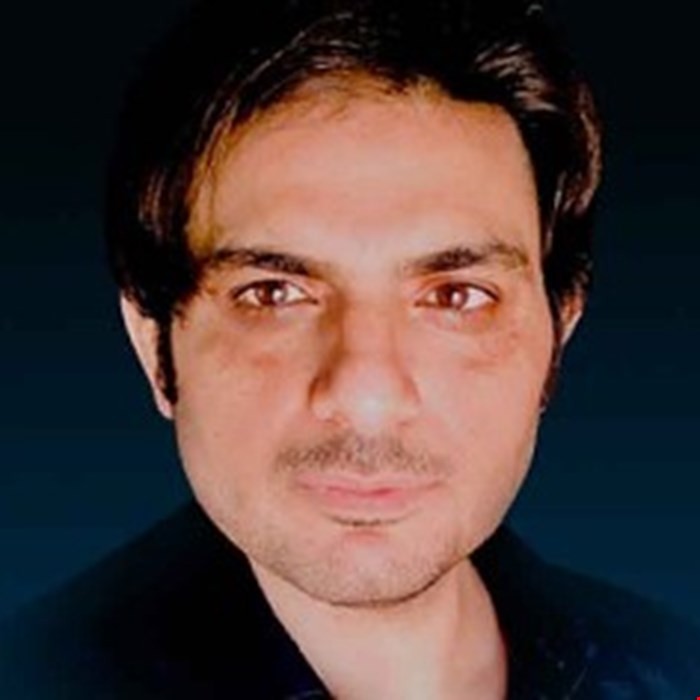
That is the first useful clue in SlashNext's history. It did not start with the slogan “AI will solve phishing.” It began with a specific technical mismatch: the defender could scan an attachment, but the deceptive web page was changing too quickly for a simple list of forbidden addresses. The company used virtual browsing, computer vision, language analysis and behavioral context to judge what a person would actually meet after clicking.
“I started SlashNext when I saw phishing and social engineering strategies begin overtaking malware as the biggest online threat to businesses.”Atif Mushtaq, 2021 interview
The link went on a tour
Email remained important, but it became only one stop on the itinerary. A fraudulent message can arrive by SMS, a social network, a work chat or a collaboration app. A compromised account can make the sender look reassuringly familiar. And many attacks finish in the browser, where a fake sign-in page, a QR code destination or a bogus verification step asks the victim to do the decisive thing.
SlashNext Complete, described in the company's 2023 product sheet, bundled three lines of defense: cloud email security for Microsoft 365, browser protection and mobile protection. The email component looked for business email compromise, malicious links and impersonation. The browser component inspected destinations reached from webmail, search, social media and chat. The mobile component addressed smishing and threats inside mobile apps. “Complete” was a sales name, of course, but it captured the product decision: the same human could be targeted in several places during one workday.
For a security team, that design offers a practical test. Ask where a suspicious message is examined, where its destination is inspected, and what happens if the attacker moves the conversation to another channel. A product demo is more useful when it follows one attack all the way through than when it counts blocked messages in isolation.
A buyer can measure the gap
The company's published case study with Physicians Surgical Network Affiliates says SlashNext was added alongside Microsoft security across affiliated medical facilities in minutes. The customer described targeted email and browser threats being blocked. That is an account from a vendor-produced case study, so it is best read as a concrete deployment example, not as a universal installation time or a controlled comparison.
SlashNext also offered an email observability assessment, a way for prospective customers to see what their existing defenses might miss before buying. That is a replicable idea for any security buyer: run a time-limited assessment against the current stack, inspect the actual misses and false positives, and decide whether a second layer earns its place. The work is less glamorous than a detection-rate claim, and considerably more useful to a team that has to operate the system.
The 2021 financing announcement said customers had grown by more than 600 percent and annual recurring revenue by 750 percent in the preceding year. Percentages that large can come from a small base; the company did not give the starting counts in that announcement. What is visible is the strategy the money was meant to finance: more customers, international operations, and distribution through security resellers, managed service providers and carriers. Telia Group and an Ayala fund joined the $26 million round alongside earlier backers, while Microsoft Azure Marketplace and Palo Alto Networks' Cortex XSOAR marketplace were named as routes to market.
The acquisition changed the address
Varonis completed its acquisition of SlashNext on August 28, 2025. Its later annual filing reports a cash transaction price of $105.953 million. That is more precise than the round-number prices that circulated around the announcement. Varonis's stated logic was to connect early phishing detection with its data security platform and managed detection service: catch the approach, then use data and identity context to limit what a compromised account can reach.
The acquired technology now appears in Varonis Interceptor, an API-based email security product. Varonis says it analyzes language, visual cues, relationships and URLs, and extends protection into the browser and collaboration apps. Its product page says the system scans more than 100 million URLs a day. Those are vendor statements about capability, rather than a promise that every attack will be caught. They do show how Mushtaq's original question survived the corporate handoff: what happens when software examines the thing the user is about to trust?
It is also where the competition becomes plain. Buyers can compare Interceptor with Microsoft Defender for Office 365, Proofpoint, Mimecast, Abnormal Security and specialized browser defenses. The decision depends on the existing mail stack, the channels employees actually use, the tolerance for false positives, and whether the organization wants phishing detection inside a wider data security platform. A company whose risk lives mostly in a tightly controlled email environment may weigh the broad channel coverage differently from one whose staff coordinate through chat and personal phones.
The easy lesson would be “buy more AI.” The better one is narrower. Follow a real attack path from first contact to final click. Look at the page that asks for trust, not just the message that delivered it. Ask which system sees it, how fast it can judge something new, and what the user experiences when it is wrong. SlashNext made that line of inquiry into a company. The interesting part is that the question remains useful even after the company name on the invoice changes.