Dispatch I · The Company
A WorkOS, or something close to it
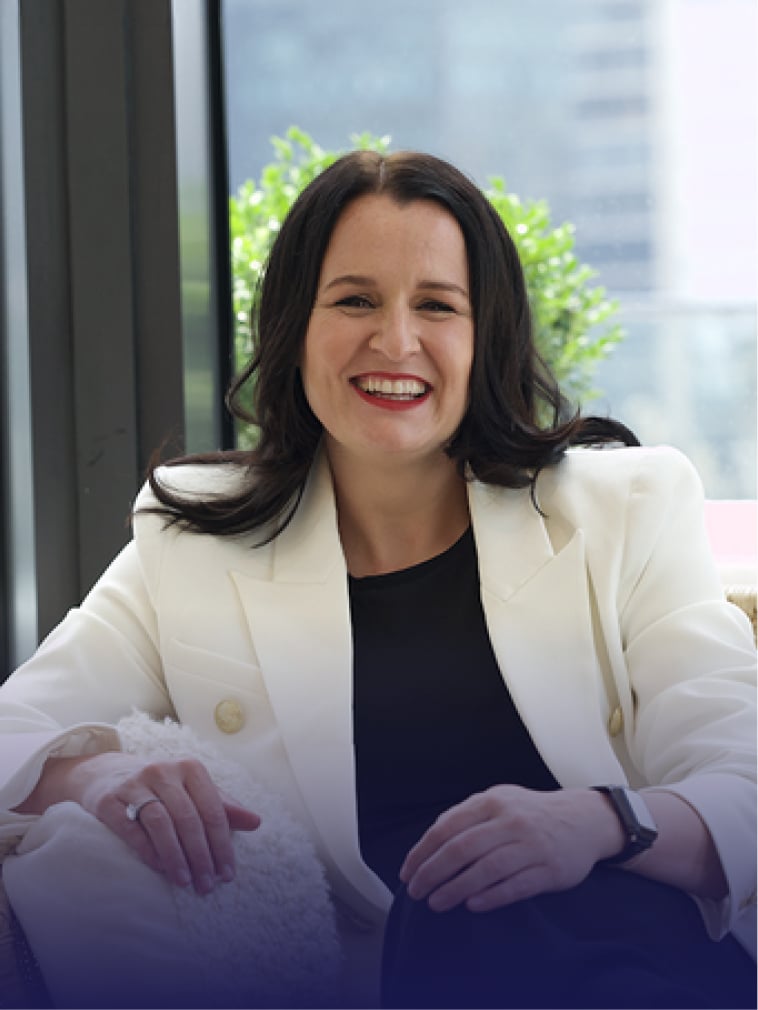
Reejig is what happens when a workforce strategist who spent six years staffing billion-dollar infrastructure jobs decides that the whole talent stack is broken. The company sells software that reads employee skills, matches them to internal openings, and now orchestrates the AI agents that increasingly do the underlying work. Siobhan Savage runs it. She is Irish, based in New York, and has been calling this shift for longer than most of her buyers have been thinking about it.
The pitch is not subtle. Big organizations, Savage argues, run two parallel processes that never speak to each other. One hires. The other fires. On any given quarter a Fortune 500 will be recruiting the same skills it just laid off on a different floor, in a different country, sometimes in a different currency. Reejig's fix is to make skills legible - to build what the product team calls a work context graph so a hiring manager can look inside the building before looking outside it.
The company has been quietly expanding what it means by "the building." The 2026 positioning is WorkOS - a layer for deploying AI, orchestrating agents, and running enterprise transformation at the same time. That is a larger claim than the internal-mobility tool that won the first pitch competition. It also happens to be the version Salesforce Ventures put money into.
Across HR functions inside enterprise buyers.
Series B closed October 2022 at $15M.
Independently audited before any regulator asked.
Dispatch II · The Origin
Sketched during a nap
The founding anecdote survives repetition because it is small. Second daughter, 2018. Maternity leave from WSP, a 66,000-person Canadian engineering firm where Savage had spent six years running workforce strategy. Somewhere in that window she noticed a thing she'd already been noticing for a decade: WSP was winning billion-dollar infrastructure projects around the world, staffing them up, then losing all that human capacity when the project closed. The people walked out with the knowledge. Then the company hired new people at fresh onboarding cost.
She sketched the first version by May. Quit in August. Pitched a diversity-referral tool called Vouch at UTS Startups in September and won the room. By 2019 the co-founding trio was formed: Savage on strategy, her husband Mike Reed on computer science, and Shujia Zhang - former chief data officer at SafetyCulture, PhD in machine learning - on the algorithms. The first office was a coffee shop inside Westfield Sydney. The name became Reejig.
The rebrand of Vouch to Reejig also reframed the mission. It was no longer just about hiring; it was about the whole labour market letting skill go to waste. Savage picked a phrase that has since become a slogan and a business plan at the same time: Zero Wasted Potential. She uses herself as example one. She grew up in Northern Ireland without, as she has put it, the upbringing that easily produces a degree. She holds a certificate from Belfast Metropolitan College and, later, an MBA from Griffith University in Australia. On paper, an odd shape for a CEO of a WEF Technology Pioneer. In practice, she is her own product's proof point.
Dispatch III · The Bet on Trust
Auditing the algorithm before regulators arrived
The most instructive strategic decision Reejig has made is the one about the audit. In 2022, still a Series A company, still five figures away from a proper compliance budget, Savage commissioned an independent third-party audit of the company's talent-matching AI to check it for bias. Nobody was asking her to do it. The EU AI Act was still years from taking practical shape. No customer had made it a requirement. She did it anyway, and the marketing team started calling the result Ethical Talent AI. It became the first independently audited talent AI in the world.
Read cynically, this is category positioning: get there first, make the audit a table stake, sell against competitors who don't have one. Read charitably, it is a founder betting that the whole HR-tech AI market will only work if buyers trust it, and buyers will only trust it if someone shows their work. Both readings are correct. Savage's public framing sits closer to the second. The independent-audit press cycle is how a founder from Belfast without a computer science degree ended up on a Forbes Australia cover and inside the World Economic Forum's Technology Pioneer cohort in the same year.
Dispatch IV · The Long Arc
Two decades of moving people
Before Reejig, Savage did the job the software now does. She spent almost two decades running workforce strategy across the UK, Ireland, the Middle East, South East Asia, China, Australia, and New Zealand. Her CV includes the workforce plan behind Sydney Metro, Melbourne Metro, Roy Hill, and W2B - the kind of programs that come with security clearances, thousand-person mobilizations, and an eleven-figure capex sign-off. Australian HR industry press gave her a Best Attraction Campaign award in 2016.
That background matters because it is not the usual founder shape. Reejig was not built by a machine-learning researcher who noticed HR was under-optimized. It was built by an operator who had personally organised the movement of thousands of people onto and off of billion-dollar projects and had internalized the friction. The AI, in this telling, is a means. The friction is the problem.
Where the money says the market is going
Illustrative product-attention weighting, per Reejig public messaging 2024-2026.
Dispatch V · The Person
Married co-founders, a PhD, and the food court
Reejig's cap table looks unusual until you learn who is on it. The husband and wife who co-founded the company - Mike Reed and Siobhan Savage - overlapped at WSP before either of them was thinking about a startup. Their third co-founder, Shujia Zhang, brought the machine-learning half of the business. Two founders in a marriage is a governance question most investors ask about; Savage has answered it in interviews by referring, dryly, to the shared context of raising a second child while raising a Series A.
The first Reejig office was, as she has told the story more than once, a Westfield mall cafe in Sydney. This is not the pitch-deck version. It is the actual physical location where three co-founders sat with laptops until they could afford chairs elsewhere. Savage still tells it that way. It is consistent with the version of leadership she projects publicly - practical, operator-first, uninterested in the mythology of founding, interested in the mechanics of scale.
She writes as an Inc contributor. She sits on the Forbes Technology Council and Forbes HR Council. She has been positioning publicly around a specific timeline: 2025 as the year of AI agents, 2026 as the year AI actually starts to reshape jobs. That timeline is the one Reejig's WorkOS product is priced against.
Dispatch VI · What's Next
The 2026 pitch
The current Reejig deck reads less like an HR tool and more like enterprise middleware. The words "operational efficiency," "agent orchestration," and "work context graph" now appear where "internal mobility platform" used to. That is the market moving, and Savage moving with it. It is also, plausibly, the reason a company of about fifty people is licensed inside customers across 66 countries.
Underneath the vocabulary, the thesis has not really changed since the maternity-leave sketch. There is skill sitting inside every large organization that management cannot see. There is skill sitting outside every large organization that management pays too much to bring in. The gap between the two is a category. Someone has to sell software into it. Savage would like to be that someone. So far the evidence supports her.