The industry's most useful outsider
There is a specific kind of person who sees an industry clearly only after they stop being inside it. Simon Carless is that person for video games.
For sixteen years he was one of the most influential institutional figures in game development - publisher of Gamasutra, editor of Game Developer Magazine, chairman of the Independent Games Festival, and eventually Executive Vice President overseeing the Game Developers Conference itself. He was embedded so deep in the machinery that he practically was the machinery.
Then, in September 2020, he left.
What he built next is more useful than anything he did before. GameDiscoverCo is a newsletter, a data platform, and a consultancy that answers one deceptively simple question: how do players actually find, buy, and enjoy video games? That question, it turns out, is worth $250,000 a year to the game studios who need the answer badly enough.
He is not a pundit predicting the future. He is an analyst explaining the present. The difference is everything.
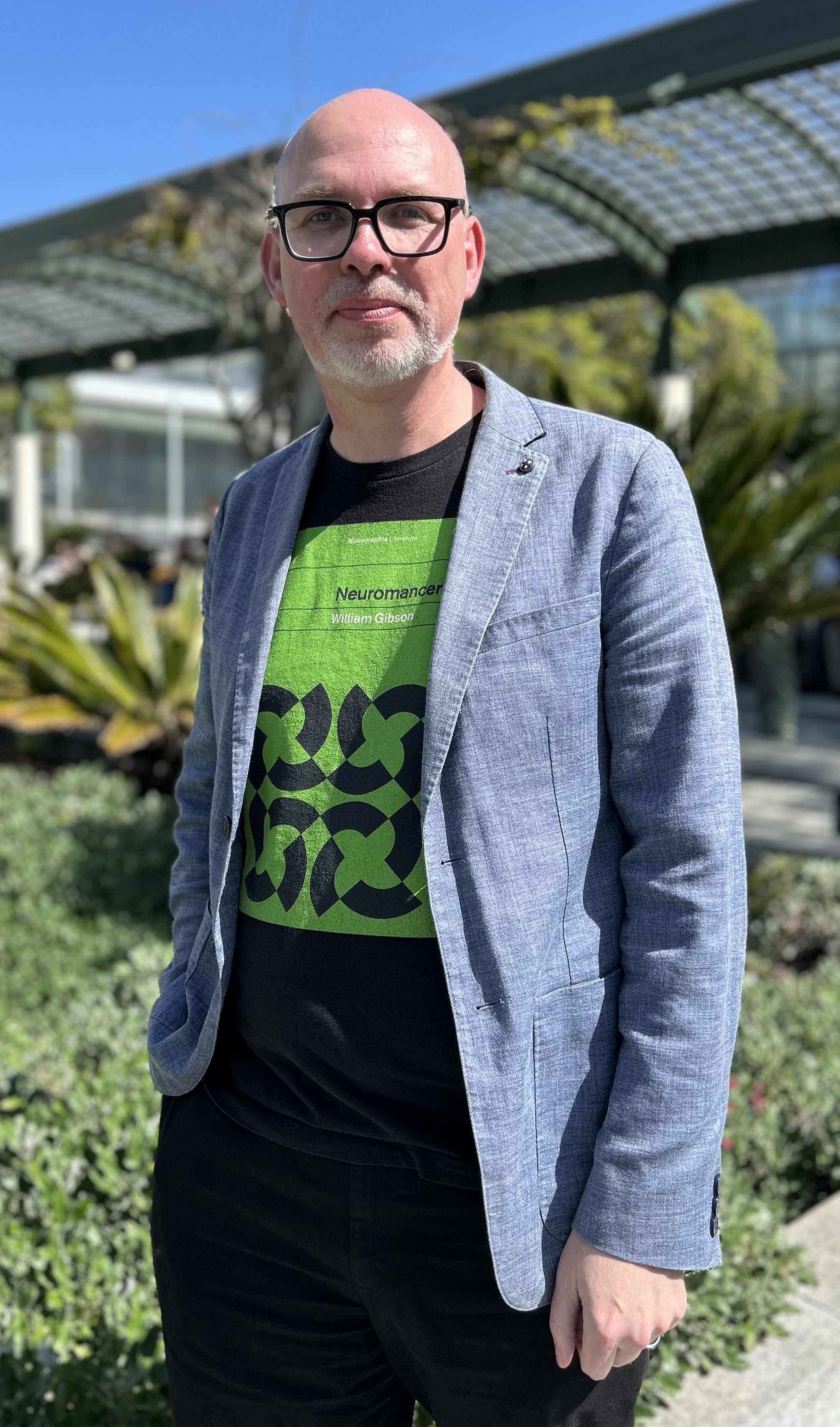
Simon Carless
Founder, GameDiscoverCo
Alameda, California, USA
British / Durham University BA History '96
Ex-EVP, GDC (Informa)
Chairman Emeritus, IGF
Before he was a game industry executive, he was a teenage demoscene musician making electronic music on an Amiga computer under the alias "Hollywood."
GameDiscoverCo Pro is used by 90+ companies including publishers, studios, and investors. It has been described as a Bloomberg Terminal for game developers.
"Game discovery is a really complicated concept, and you must start it VERY early in development."
- Simon CarlessFrom Amiga to Empire
Simon Carless grew up in Britain doing what a very specific type of 1980s teenager did: he sat in front of an Amiga computer making music. Not for fun, exactly - though it was fun - but as a participant in the demoscene, a global underground community of programmers, musicians, and artists who competed to make the most impressive things their hardware could do.
He went by "Hollywood." Later, "h0l." He composed modular music for demogroups including Jetset/Skid Row and Axis. The demoscene taught him something that no business school would have: creative communities have energy that institutions can never fully replicate.
He took that lesson to Durham University, graduated with a History degree in 1996, and immediately did something unusual for a history graduate - he founded a netlabel.
Monotonik launched in 1996, distributing free electronic music online in .mod formats before Bandcamp was a thought, before SoundCloud was invented, before streaming was a concept anyone had monetized. He ran it for thirteen years. When he finally put it on hiatus in 2009, he archived the catalog on the Internet Archive, because he already understood that the things you build deserve to survive you.
After Durham, Carless was hired into game design at Simis (which became Kuju Entertainment) - specifically because of his demoscene background. He worked on Terracide in 1997 (writing the intro script), then Tank Racer, then projects at Eidos and Atari.
He is disarmingly honest about this chapter: "I enjoyed it, but I didn't really feel like I had a full skillset. Like I can't really program, and I felt like that was sort of holding me back."
What he could do was write, observe, and explain. He edited the games section at Slashdot, one of the loudest corners of the early internet. In 2004, he published Gaming Hacks with O'Reilly Media - a 100-tip book covering console modding, emulators, LAN gaming, and MMORPGs. It sold. Editors noticed.
That same year, UBM hired him. His real career was about to begin.
Sixteen Years at the Center of Everything
When Simon Carless joined UBM in 2004 as Editor-in-Chief and Publisher of Gamasutra and Game Developer Magazine, he was walking into the most important trade media in the games industry. Gamasutra was where developers went to think. Game Developer Magazine was what they read on the plane to GDC. Both mattered enormously.
He had first attended GDC as a developer in 1998. He returned as an organizer in 2005. Seven years apart, the same conference - but an entirely different position in the room.
In 2007, he co-founded the Independent Games Summit at GDC. This sounds like a footnote. It wasn't. The summit created a permanent home for independent developers inside the world's largest professional game conference, at a moment when indie gaming was shifting from hobbyist curiosity to genuine cultural force. Games like Braid, Super Meat Boy, and Spelunky were still ahead. The infrastructure for celebrating and developing them needed to exist first.
He became Chairman of the Independent Games Festival - the awards program that legitimized indie games as art - and later Chairman Emeritus. He rose to Global Brand Director, then to Executive Vice President of Informa, overseeing both GDC and Black Hat (the major information security conference). The same person, the same instincts, applied across two entirely different industries.
What GDC Actually Meant
"GDC needs to be something developers can call home."
Simon Carless on his guiding philosophy for the conference
Key GDC Milestones
- First attended as a developer: 1998
- Joined as organizer: 2005
- Co-founded Independent Games Summit: 2007
- Became IGF Chairman: 2007
- Reached EVP, Informa: 2010s
- Departed Informa: September 2020
GameDiscoverCo: A Bloomberg Terminal for Indie Games
The Newsletter
Weekly analysis of game discovery, Steam trends, platform behavior, and market dynamics. The free version alone has more useful insight than most $500/month industry reports.
43,000+ subscribers
GameDiscoverCo Plus
Deep Steam data: rankings across 21,000+ unreleased games and 100,000+ released titles. Revenue prediction tools. A member Discord with 1,000+ developers. Eight eBooks. $19/month or $190/year.
Thousands of paying members
GameDiscoverCo Pro
Used by publishers, studios, and investors who need serious market intelligence. Starts at $250,000/year. Carless describes it plainly: "Think Bloomberg Terminal, but for game developers."
90+ enterprise clients
Why Game Discovery is Harder Than It Looks
Ask most developers how players find their games and you'll get an answer about trailers, press kits, and Steam page optimization. Carless's answer is longer and less comfortable.
Discovery is not a marketing problem. It's a system problem. Algorithms, timing, pricing, genre positioning, comparable titles, platform relationships, trailer cut-points, launch-window choices, regional markets - these all interact in ways that most studios never fully understand because they only ship one or two games in their entire existence. Carless has watched thousands.
The data he collects, curates, and synthesizes gives small studios the comparative market intelligence that large publishers have always taken for granted. The first-time developer can now understand where their game sits in a market context, not just how it's performing in isolation.
That shift - from "how is my game doing" to "how is my game doing relative to everything else" - is what makes GameDiscoverCo genuinely useful rather than just informative.
The Numbers Behind the Headlines
In 2025, 5,863 games on Steam earned over $100,000 - nearly double the 2020 figure. Carless was the first analyst to synthesize and publish this data clearly.
Tiny Glade sold 600,000+ copies in its debut month. Pokopia hit 2.2 million copies in four months. Carless analyzed both as discovery case studies, explaining the mechanics behind the spikes.
GameDiscoverCo also runs "Tales From GameDiscoveryLand" - a podcast extending the newsletter's reach into audio format for commuters and multitaskers.
"You can't just sit there and expect people to jump on board."
- Simon Carless, advice to indie developers30 Years in Bullet Points
The story of Simon Carless is a story of reinvention - each phase more useful than the last.
The Defining Anecdote
Ask Carless for his favorite GDC memory and he doesn't tell you about the biggest show or the most famous speaker. He tells you about Petri Purho - an indie developer who pretended to code a game live from audience suggestions in five minutes, responding to each request in real-time, impressing everyone in the room.
Except he hadn't coded anything. He'd pre-recorded the whole demonstration in advance.
The room didn't know. The memory stuck. The lesson: great demos are about confidence, not code.
Board Roles & Investments
- Founding Board Member, Video Game History Foundation (VGHF)
- Chairman Emeritus, Independent Games Festival (IGF)
- Investor & Advisor, No More Robots (UK indie publisher: Descenders, Hypnospace Outlaw, Forager)
What Makes Simon Carless Actually Useful
He Has the Data
Most game industry commentary is anecdotal. Carless built systems that track Steam rankings, revenue signals, and discovery patterns across hundreds of thousands of games. When he makes a claim, it's because the data says so.
He Has the History
Sixteen years inside GDC. He was in the room when indie gaming went mainstream. He watched hundreds of companies launch, succeed, struggle, and fold. That institutional memory is not replaceable.
He Knows the Developer
He was a game designer. He understands what it feels like to ship something and watch it disappear into the void. His analysis doesn't come from distance - it comes from empathy with the person who made the thing.
The Quiet Radicalism of Starting Over
There is a pattern in how people leave powerful positions. Most don't. They stay until they're asked to leave, or they move sideways into a similar role, or they take a board seat. The perks are too good, the identity too fused, the alternative too uncertain.
Carless did something different. He was Executive Vice President of Informa, overseeing two of the most significant events in their respective industries. He had been there for sixteen years. He walked away voluntarily, announced it on Twitter, and started writing a newsletter.
The newsletter makes more practical difference to more developers than his conference role ever did. A developer in Warsaw or Seoul or Nairobi can read GameDiscoverCo and understand how their game is actually positioned in the market. They could not fly to GDC to hear that same information. The newsletter reaches them.
He built a media company that looks like a newsletter but works like a data platform. He then turned that data platform into an enterprise SaaS product. He did this from a house in Alameda, California, with a Substack account.
It is worth noting that he also happens to be a founding board member of the Video Game History Foundation - an organization dedicated to preserving game history at a moment when it's actively disappearing. The man who built Monotonik in 1996 and archived it on the Internet Archive in 2009 has not changed. He still thinks the things we build deserve to survive us.
Quotable Carless
"It's becoming clear that indie games are getting higher and higher profile, selling more copies, and becoming more relevant to the public at large."
On indie gaming's ascent - 2000s"What we need is more personal games."
On game authorship and ambition"The indie community should be using publishers' money to get onto consoles more aggressively."
On indie business strategyFun Facts & Footnotes
- His alias "Hollywood" (h0l) as a teenage demoscene musician was arguably more anonymous than any handle he's used since
- Monotonik (1996-2009) predated Bandcamp by over a decade and SoundCloud by over a decade
- simoncarless.com - his personal domain - redirects to his LinkedIn profile
- He first attended GDC in 1998 as a developer and returned as an organizer in 2005 - a seven-year gap that represents an entirely different relationship with the same conference
- His O'Reilly book "Gaming Hacks" (2004) covered console modding at a moment when doing so was still legally and technically ambiguous
- He also contributed to "Retro Gaming Hacks" for O'Reilly - an early sign of his interest in game preservation
- Despite spending over two decades in the San Francisco Bay Area (Alameda, California), his Durham University background remains a formative part of his identity
- His interest in game history led him to be a founding board member of the Video Game History Foundation - the same instinct that made him archive Monotonik
- His GameDiscoverCo Pro pricing starts at $250,000/year - more than most game studios make in their first year of sales
- He was at Informa when GDC went virtual during COVID-19, and left shortly after the first disrupted cycle