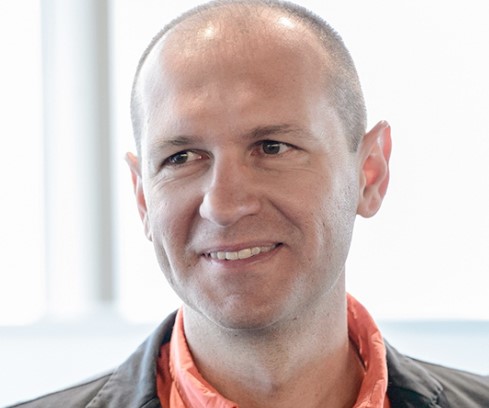
Simon Adar runs a company on a very old idea. The idea is that when a scientist publishes a paper claiming that a particular algorithm, applied to a particular dataset, produces a particular result, another scientist should be able to check by rerunning it. This is a demand that predates cloud computing, GPUs, and the discipline of computer science itself. What is new, and what makes Code Ocean a business rather than a hobby, is that in modern computational research this simple check is almost never possible.
The list of ways a published pipeline can fail to run is long and unromantic. The dependency versions have moved on. The operating system is different. The GPU driver expects a CUDA release that no longer exists. The dataset lives behind a link that has expired. The author has moved institutions, and their university email bounces. Adar has met all of these problems personally. He was in the middle of a PhD at Tel Aviv University on hyperspectral image processing, work that involved sifting through papers to find methods he could build on. He estimates, in the plainest way possible, that "everything could have been done much faster."
Code Ocean, which he co-founded in 2015 during a Runway postdoc at the Jacobs Technion-Cornell Institute, is his answer. The company's central object is called a compute capsule. A capsule contains code, data, an environment, and results, wrapped together in a Docker image with a DOI stuck to the front. If you have the DOI, you have the paper's software the way an astronomer would want the paper's software: as a thing that runs.
The company sits at 135 West 41st Street in Manhattan, a few doors down from the New York Times building where Adar and his co-founders first sketched the platform in Cornell Tech's coworking space. It employs about thirty-three people. It has raised in the neighborhood of $55 million through a Series B closed in May 2022. Its customers are pharmaceutical companies, life-science research institutes, and academic groups that measure their data not in gigabytes but in petabytes.
There is something almost stubborn about the company's premise. Reproducibility is not a category anyone has ever been excited to fund the way people fund, say, generative AI. It is closer to plumbing. Adar seems comfortable with that. He talks about giving algorithms their own DOI in the same tone another founder might talk about launching a rocket. He is right, actually, that this is a big deal - academic credit has for centuries clung to papers, not to the working software those papers depend on. Code Ocean's bet is that if you build good enough plumbing, publishers and universities will eventually have no choice but to hook up to it.
They have, so far, hooked up. F1000 Research embedded Code Ocean capsules into articles years ago. Nature Portfolio, the publisher of one of the most prestigious journals on Earth, announced a partnership with the company in 2024. It is now possible to read a Nature paper and, if the authors have used a Code Ocean capsule, click a button to rerun the analysis in a browser, with the environment already set up and the data already staged. This is not what science publishing looked like fifteen years ago. It is closer to what a lot of people said, fifteen years ago, that it ought to look like.
Adar himself does not fit the archetype of the New York SaaS CEO. He is a researcher who talks like a researcher. In interviews he says things like "if it's not solid science, wrong decisions will be made" and "computational reproducibility is going to be a must-have for the scientific community." These are sentences that would look at home in a peer-reviewed editorial. They come out of a founder's mouth without irony.
His path to New York went through the sky. Before Code Ocean, he worked with the German Space Agency, the DLR, on an EU-funded project called EO-MINERS, which used airborne and spaceborne sensors to detect environmental change. The work took him to South Africa and Kyrgyzstan. Hyperspectral imaging, which was his PhD subject, is the technique of capturing hundreds of narrow bands of light per pixel to distinguish materials the eye cannot separate. It is a discipline that is entirely dependent on being able to trust that a colleague's classifier, retrained on your image, will give you a result you can compare to theirs. When it does not, the field grinds. Adar spent enough time inside that grind to write a company out of it.
The Runway program at Cornell Tech, which recruited him in 2014, is a two-year postdoc designed to produce founders instead of academic papers. Adar is one of its better-known outputs. He spent the first year in a New York City that was full of subway rides and other founders' war stories. "You get to hear a lot of ideas," he said of the experience, "and we had discussions with entrepreneurs on a weekly basis." By the end of the second year he had co-founders, a prototype, and a name.
The name is fitting in a corny way, given that his work depends on Docker containers floating over cloud infrastructure. But it also captures the volume problem underneath the reproducibility problem. Modern research generates staggering amounts of data. Cryo-EM microscopy, single-cell sequencing, hyperspectral imaging, high-content screening - all of it produces datasets in the terabytes, sometimes petabytes, and all of it requires computational pipelines that are hard to describe, harder to install, and hardest of all to hand to a stranger with the expectation that they will get the same answer you did.
Code Ocean's product decisions read like they were made by someone who has, personally, wasted a Tuesday trying to install someone else's toolchain. GPU environments are provisioned automatically. Dockerfiles are built for the user. Data lineage is tracked without instrumentation. There is a visual pipeline builder for people who do not want to write YAML. There is nf-core import for people who already have. There is an MLflow integration for people whose work has drifted from statistics into machine learning. Each of these is a specific concession to a specific bad afternoon.
It is easy to be cynical about scientific reproducibility as a business. There is a version of the story where a founder identifies a moral problem in an industry, monetizes it, and moves on. Adar's version is stranger and more sincere. He has been talking about this problem in the same terms since 2015. He has watched the phrase "reproducibility crisis" go from a niche complaint to something that shows up in NIH grant guidelines. He is still, judging by his LinkedIn posts about hiring a "Bioinformatics Evangelist" in 2024, mostly interested in getting more scientists to use the plumbing.
The pharmaceutical companies use it because the FDA and their own auditors increasingly want to see full result lineage. Regulators do not accept a Jupyter notebook and a shrug. Academic groups use it because a growing number of their funders and journals now expect executable supplements. And the researchers themselves - the people Adar most obviously identifies with - use it because they too have been ambushed by a dead dependency at midnight before a deadline.
There is a longer story here about who deserves credit in science. Adar's argument, made repeatedly since roughly 2016, is that algorithms and datasets should be first-class citizens alongside papers, with their own citations, their own DOIs, and their own version histories. This sounds procedural. It is actually a redefinition of what it means to have contributed to science. If you write a widely-used pipeline that never appears in the author list of a headline paper, you currently get very little. Adar would like that to change. Code Ocean is the mechanism by which he is trying to make it change.
He remains, by the standards of a Series B CEO, notably close to the ground. He posts about hiring. He posts about product releases. He posts occasionally about the state of the reproducibility movement, and he sometimes ends the year with a straightforward summary of what Code Ocean shipped. The company is not a household name. It is doing the household plumbing.