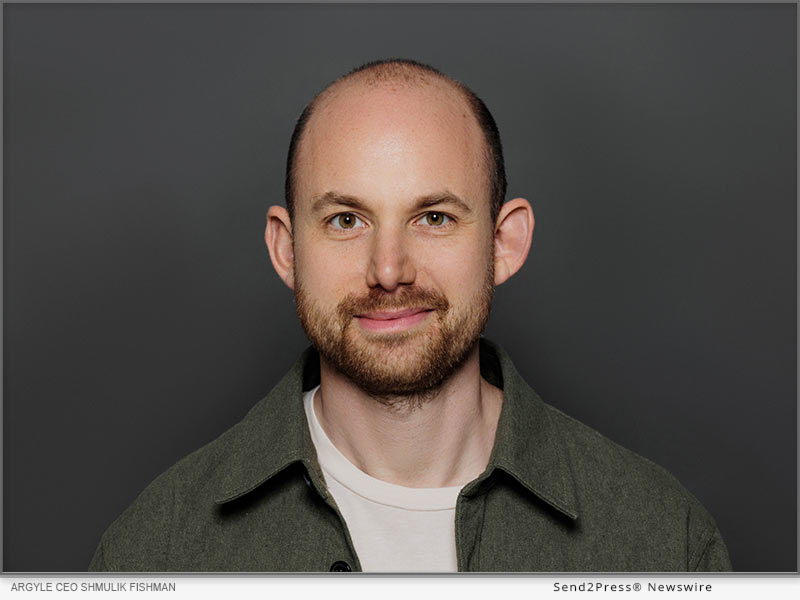
Most mornings, before the city is properly awake, Shmulik Fishman is playing a game against himself: get the inbox to zero. No new mail, no loose threads, nothing waiting. It is a small, almost monastic ritual, and it tells you something about how he runs Argyle - clear the noise first, then go build the thing that matters.
The thing that matters, in his case, is income verification. It sounds about as glamorous as a parking permit. It is also one of the quiet chokepoints of the modern economy. Every time you apply for a mortgage, a car loan, an apartment, or a personal line of credit, somebody on the other side has to confirm that you earn what you say you earn. For decades that confirmation has been a mess of phone calls, faxed pay stubs, and human beings squinting at PDFs. Fishman looked at that mess and saw an API waiting to be born.
Argyle, founded in 2018, is that API. It connects, with the worker's permission, to the systems where work actually lives - payroll providers, gig platforms, the whole sprawl from a W-2 desk job to an Uber shift to a Fiverr gig - and turns the chaos into one clean, real-time stream of consumer-permissioned data. The pitch fits on a business card: your work data should belong to you, and any company you trust should be able to read it in seconds, not days. Today more than 300 clients run on those rails, names like Mastercard, SoFi, LendingClub, NewRez, and Union Home Mortgage among them.
The idea arrived as a headache
Fishman did not set out to fix verification. He stumbled into the problem the hard way. At his previous company he was trying to hire a large number of people, and was buried under a flood of applicants - each one requiring manual checks on who they were and where they had worked. The inefficiency was almost comic. It also would not leave him alone. That itch became Argyle.
The previous company was Stratim, which he co-founded in 2014 and ran as chief operating officer. Stratim built software that automated the operations of large vehicle fleets across the United States and Canada - the unsexy logistics behind clients like General Motors, Enterprise, and Zipcar. It raised north of $40M and, in 2018, sold to KAR Global, an $8B publicly traded auction-services company. Before Stratim, Fishman had a front-row seat to two more outcomes: he worked on the S1 team at Adap.tv, the online video-ad marketplace, through its IPO process and eventual acquisition by AOL.
So by the time Argyle began, he had already lived through the full arc - founding, scaling, selling, and the strange machinery of going public. He started Argyle anyway, from zero, because the verification problem was bigger and more stubborn than anything he had touched before.
Transparency as a strategy, not a slogan
Ask him how deals actually get done and he does not reach for tactics. "Laying your cards on the table and being transparent is what closes deals, and creates bonds with other people," he says. It is a notable thing for a data-infrastructure founder to lead with, given that the entire industry he plays in was built on opacity. His bet is that the next era of finance belongs to whoever is least guarded with the people they serve - and that consent, not collection, is the product.
That instinct runs deeper than business. Fishman studied philosophy at Hampshire College before adding a business degree from Columbia, and he still talks like someone who reads for pleasure. He recommends Roland Barthes' Camera Lucida, of all things, for the way it captures how a human presence can transform a room. He is also a published author himself, of a book titled Fiction of Value - a title that doubles neatly as a thesis for a company built on proving what income is genuinely worth.
The money keeps following
Investors have noticed. Argyle has raised roughly $100M and counting from a cap table that reads like a fintech who's-who: Bain Capital Ventures, Mastercard, Rockefeller Asset Management's Fintech Innovation Fund, Checkr, Bedrock, and SignalFire. In 2024 the company closed a $30M Series C led by Rockefeller's fund. In September 2025 it announced a Series C extension - and this time Mastercard climbed off the sidelines and onto the cap table directly, a meaningful nod from one of the largest networks in the world.
For Fishman, none of this is the point. The point is the rails. "There's a big day coming, I can hardly wait," he likes to quote - a Yo La Tengo lyric he keeps close. It is the kind of line that sounds like marketing until you realize he means the slow, unglamorous work of making everyone's work data portable, permissioned, and finally, usefully boring.