There is a box truck roaming Northern California with four metal drums in its belly. A person drives it. The drums cook dinner. If a bowl of wagyu takes eight minutes and the customer is 15 minutes away, the machine waits seven minutes before it begins. In a business addicted to shaving seconds from delivery, Shin Starr Presents found a more interesting use for the commute: make the commute part of the recipe.
This is OLHSO Truck, the most legible expression of a Seoul food-robotics company founded in 2019 by Kish Shin and Jay Shin. They share a surname but are not related, which feels appropriate for a business that contains many things that look connected until you inspect them. It is a robotics maker that operates restaurants. It is a Korean food company collecting machine data. It is an automation venture whose truck still needs a driver.
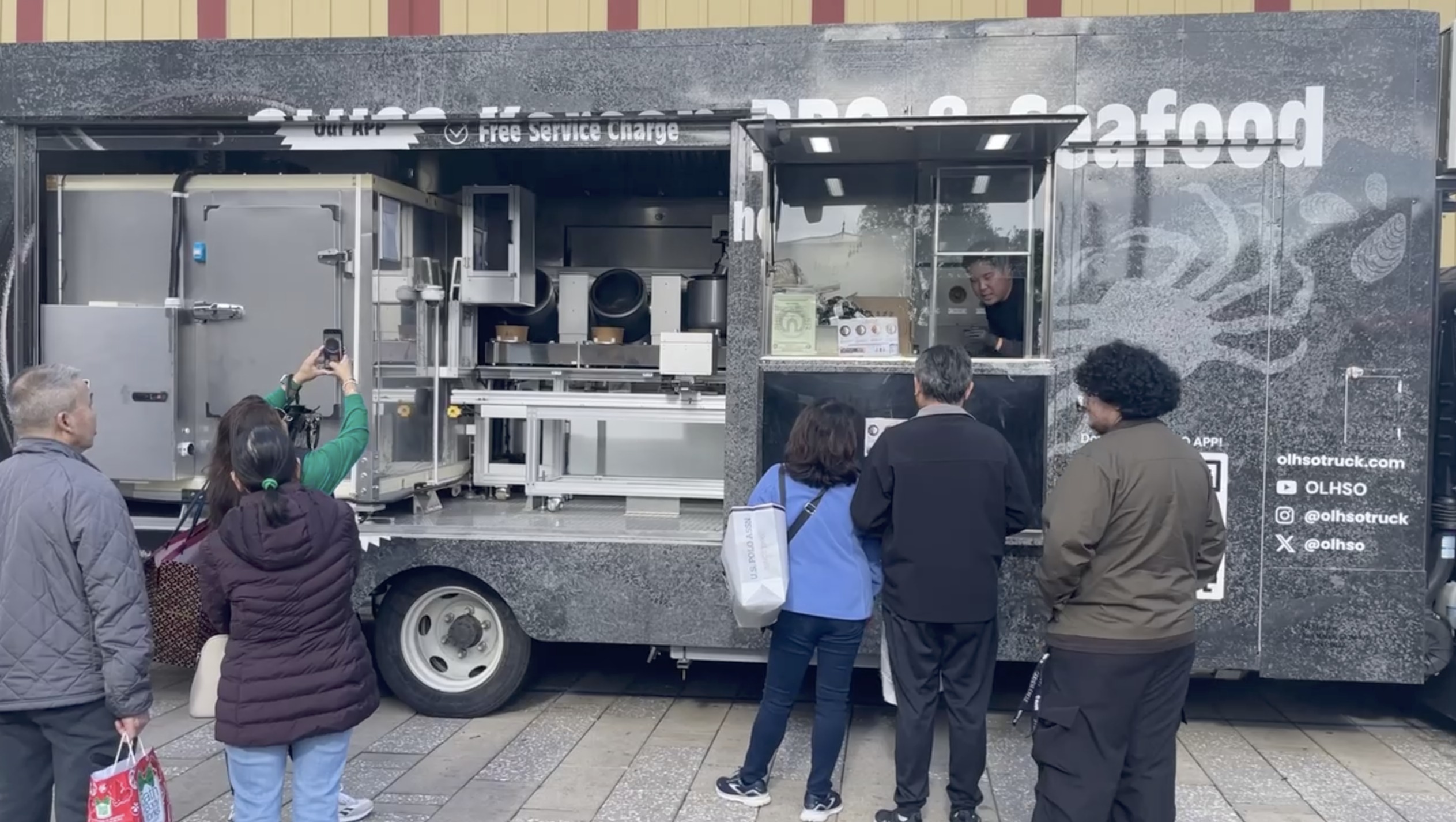
The setup is wonderfully literal. Prepared ingredients sit refrigerated. Software releases them onto a conveyor. A tilted, drum-shaped Autowok heats and tumbles the food, drops it into a bowl, then cleans and sanitizes itself for the next order. The customer sees galbi or japchae. The company sees a repeatable sequence of temperatures, timings, movements and handoffs.
The numbers illustrate Kish Shin's public example for an eight-minute wagyu dish on a 15-minute route.
The robot had to learn some humility
The origin story begins with a useful embarrassment. Jay Shin, a former investor and enthusiastic cook, encountered an earlier automated concept and disliked the result. His question was brutal: why build an expensive robot to make bad food? That objection changed the assignment. Automation could no longer be the attraction. It had to reproduce food a serious cook would be willing to serve.
“Customers don't care about the type of rocket science that is in your truck or in your kitchen.”Kish Shin, co-founder and CEO
Shin Starr recruited culinary weight. Sungil Han, who had operated more than 18 restaurants in Korea, came to lead culinary operations in the United States. Recipes became something to encode without sanding away their character. The machinery took care of repeatable heat and motion; people handled preparation, menu judgment and the parts of hospitality that benefit from a face.
That distinction separates Shin Starr from the familiar robot-as-theater pitch. The robot is not dressed like a chef. It does not wave. It lives in the back and turns a constrained job into a consistent one. Shin Starr's product is better understood as three layers: a food brand called OLHSO; operating formats called Truck, House and Express; and an automation stack that learns from all three.
Then the health code met a kitchen in motion
From concept to public launch took roughly four to four and a half years. The expense was not just steel, sensors and software. A kitchen that cooks on the road did not fit neatly into an existing sanitation or safety category. The company worked through health approvals and adapted the system for movement, cleaning, power and food handling. Firefly and Roaming Hunger helped fit the concept into a vehicle. By mid-2024, two trucks were serving Foster City, each carrying four induction-powered woks.
The capital record provides the scale, if not a tidy bill for a single truck. Reported rounds include KRW 2.7 billion in early 2021, KRW 4 billion later that year, KRW 5.7 billion in 2023, a KRW 5 billion bridge in 2025 and KRW 8.2 billion in 2026. Public databases disagree on classification and totals, but the basic lesson survives: this was not a weekend hardware hack. It was a restaurant, robotics and regulatory program financed across years.
The early commercial test was modest and concrete. Jay Shin estimated that a truck needed to sell about 19 or 20 bowls to break even for a day, with a goal near double that. A private event moved roughly 175 meals in three hours. These are more useful numbers than a video of a robotic arm, because they ask whether the machine belongs in a business.
The truck is the lab, not the whole company
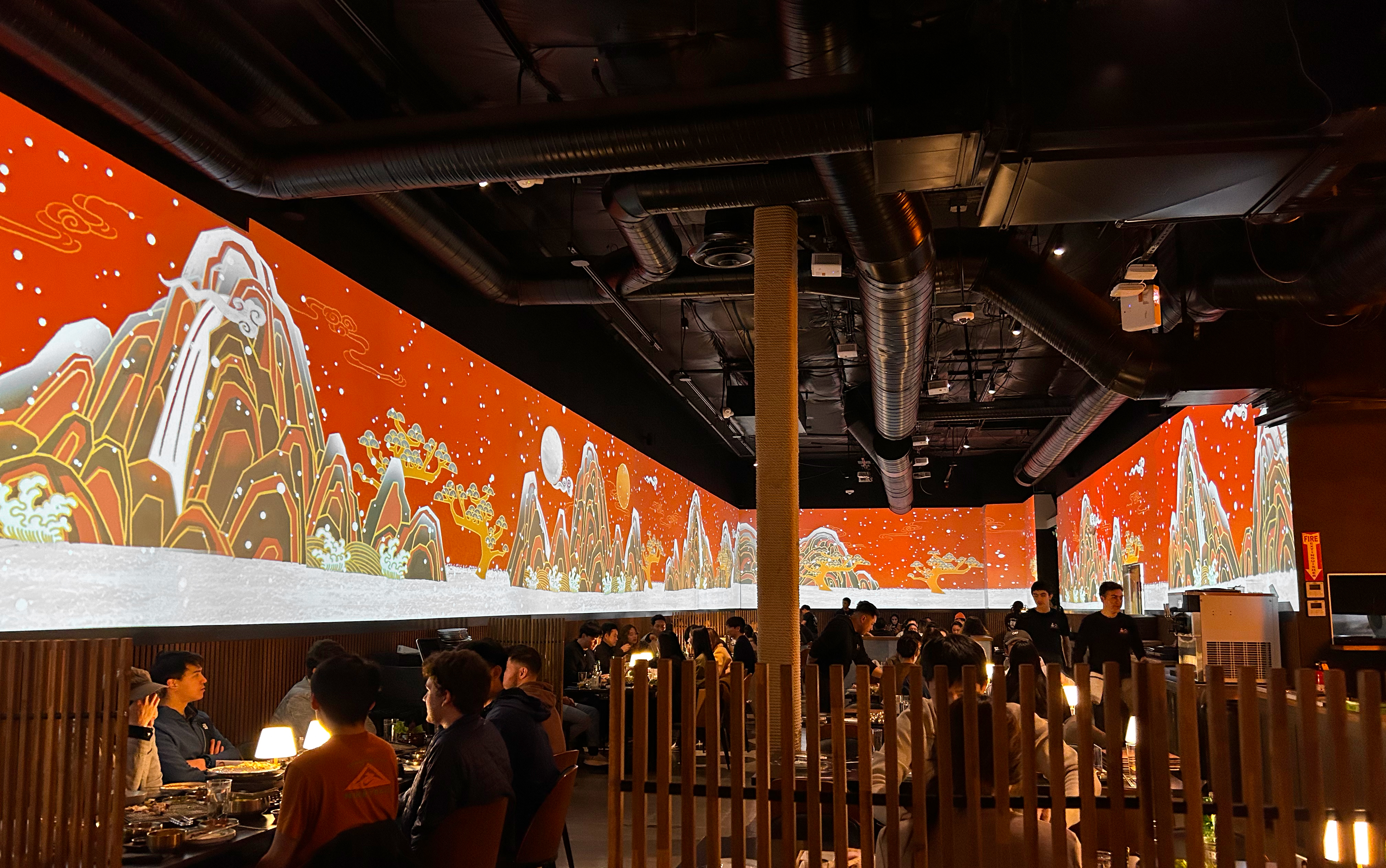
OLHSO House in San Mateo gives Shin Starr a different kind of evidence. It is a full-service Korean barbecue and seafood restaurant with live-fire cooking, tableside service and large projected landscapes. Humans cook there; automation can assist with sides and repetitive work. The place makes an important concession: not every meal should feel unmanned. Some customers want a dining room, smoke, explanation and occasion.
OLHSO Express points the other way. The planned format automates ordering, payment, cooking, transfer and pickup in a small footprint. The first advertised target is Los Angeles International Airport in late 2026 under what the company describes as a 10-year agreement. Airports are the sharp end of the labor problem: expensive space, uneven traffic and a stubborn stretch after 11 p.m. when passengers remain but kitchens close. Hotels, hospitals and campuses share the same midnight arithmetic.
This is also where the business model becomes clearer. Shin Starr can make money selling meals and catering today. Those operations generate field data for the machinery. The longer plan is to franchise the restaurant formats and license an AI-robotics platform across hard-to-staff venues. It is vertically integrated on purpose: the company controls the recipe, the equipment and the place where customers decide whether either one is any good.
Automate the bottleneck, not the brochure
The piece worth copying is not a motorized wok. It is the order in which Shin Starr learned. Begin with a customer defect: delivery food cools and softens. Reframe it: perhaps travel time can become production time. Narrow the menu to processes a machine can repeat. Put a chef in charge of the result. Keep the driver because road autonomy is a separate, enormous problem. Then operate in public long enough for customers, inspectors and unit economics to expose the fantasy.
A five-step field test for practical automation
- Name the customer disappointment before naming the technology.
- Automate one bounded, repetitive process with measurable output.
- Let an expert define quality; let software repeat that standard.
- Preserve the human task that already works.
- Sell the result early enough that revenue, not applause, grades the machine.
The geometry matters. Cook-en-route gains power when trips are long enough to contain the cooking cycle, parking is plausible and orders cluster within service zones. Dense streets, steep hills, short journeys or hostile mobile-vending rules weaken the advantage. A menu built around delicate plating or last-second human judgment resists encoding. And an autonomous micro-kitchen only wins where long hours, scarce labor or expensive floor space can repay the equipment and maintenance.
There is no shortage of failed food-robot stories, including Zume's attempt to bake pizza on the road. Shin Starr is walking near that graveyard with its eyes open. Its defense is not that the robot is more exciting. It is that the food brand, the working restaurant and thousands of real orders force the machine to answer a boring question every day: was dinner hot, good and worth the price?
That is the paradox inside the truck. The better the technology becomes, the less a customer should have to think about it. The Autowok can spin, sanitize and schedule in the dark. At the curb, all that complexity collapses into steam rising from a bowl. OLHSO - a Korean exclamation meaning something close to “that's right” - supplies the appropriate response.