Volume XIV / The Operator File
Shawn
Cantor.
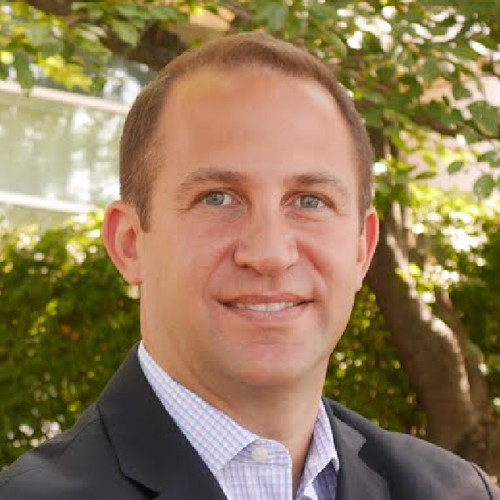
Co-founder and Chief Operating Officer of Certemy, a workforce compliance SaaS that most people will never think about, which is exactly why it exists.
Co-founder and Chief Operating Officer of Certemy, a workforce compliance SaaS that most people will never think about, which is exactly why it exists.
Shawn Cantor sells software that answers a question most people don't realize is worth billions of dollars: is the person you just hired legally allowed to do their job. His company, Certemy, tracks professional licenses, certifications, and renewals for the boards, agencies, and employers that would otherwise track them in a shared spreadsheet with a tab named "MASTER (do not edit)." Cantor is co-founder and Chief Operating Officer. He is not the celebrity type. He is the kind of executive whose LinkedIn tagline reads "Builder of Teams, Systems & Scalable Growth," which is, roughly translated, the tell of a person who has scaled a sales channel to $200M and would prefer to talk about that than about themselves.
Certemy is small - fourteen employees at last count, a Series B in the neighborhood of $9.7 million, an office in Los Angeles - and it is in a category that will never trend on Twitter. Regulatory compliance software has the unusual property of being simultaneously very valuable and very boring, which is a good property for a business but a bad one for a magazine profile. So we are going to write around the software and about the man who spends his days running the org chart behind it.
The essential fact about Cantor's career is that it is a loop. In 2002 he founded JAC Media, a digital marketing agency that sold to ReachLocal in 2005. He then spent eight years at ReachLocal building its North American sales channel from zero to more than six hundred people, forty-nine offices, and more than two hundred million dollars in revenue. In 2014 he left to be Chief Operating Officer at WorkWave, a field service management company, which was acquired by IFS in 2018. In 2017 he co-founded Certemy with Zorik Gordon, a former ReachLocal executive with whom he had already spent the better part of a decade. If you have been paying attention, you have noticed that the same names keep reappearing in different combinations. Second acts in American SaaS are almost always the first act's cast list, reshuffled.
Certemy sells to certification boards, state licensing agencies, hospitals, real estate brokerages, and any employer that ships people into the field with a wallet full of credentials. The pitch, stripped of buzzwords, is: your organization has a list of humans, each human has a list of licenses, each license has an expiration date, and the current process for managing all of this is a woman named Debbie in HR who has been meaning to get around to it. Certemy replaces Debbie with software - workflow automation, primary source verification, automated reminders, a digital wallet for credentials, dashboards for the auditor.
The unfashionable truth about this category is that it prints money for the companies that survive in it. Compliance is a fear purchase. Buyers do not price the software against the software; they price it against the fine, the lawsuit, the licensing board's next audit letter. Cantor and Zorik Gordon picked a market where the buyer is not asking whether the ROI is 3x or 10x. The buyer is asking whether you can turn a legal problem into a purchase order.
Which is a very Shawn Cantor thing to pick. At ReachLocal he was not the founder pitching investors on the dream of local digital advertising. He was the person on the org chart labeled General Manager and VP of Sales, which meant he owned the phone lines, the office leases, the quota, the ramp, the churn, and the payroll for a sales force that at its peak had six hundred people in forty-nine offices. You cannot fake your way through that job. You have to know, at any given hour, which of your seats are producing and which are not, and you have to be willing to have the conversation with the ones that are not. Cantor, by all accounts, was willing.
Chart is illustrative. Bars scaled to reported headcount / revenue at exit or, in Certemy's case, current state.
"Builder of Teams, Systems & Scalable Growth."- Shawn Cantor's LinkedIn tagline, in full
Certemy was founded in 2017. That was three years before the pandemic taught a large portion of American HR that they did not, in fact, know where any of their employees' documents were, and roughly the same interval before hospitals discovered that primary source verification is a thing insurance auditors like to write letters about. In venture terms, this is called good timing. In operator terms, it is called reading the room several rooms in advance.
The co-founding partnership is the more interesting story. Zorik Gordon, who is Certemy's CEO, was Cantor's boss's peer at ReachLocal, or close to it. When two people who ran an SMB sales machine together in the 2000s decide to start a company together in the 2010s, they are not doing it because they cannot get a job. They are doing it because they think they know how to build something the second time in a way they wish they had built it the first time. Repeat-founder pairs have a specific advantage over first-time pairs: they have already had the co-founder fight. They know how they lose. That does not make them better people. It makes them faster at recovering.
Cantor's LinkedIn describes him, in that carefully bland way of senior operators, as a "Builder of Teams, Systems & Scalable Growth." Note the ordering. Teams first, systems second, growth third. This is the vocabulary of someone who believes that if you get the first two right the third one is a math problem.
There is a smaller detail worth pointing to. Certemy's Twitter handle is @lookuplicense. Not @certemy. Not @shawncantor. @lookuplicense - the imperative form of the entire product. This is, in a very specific way, the anti-branding decision of a person who does not care about the brand as long as the phone rings. A digital marketer might have negotiated for the more brand-safe handle. A sales operator says, "put the search term in the handle" and moves on.
Not a feature. A regulatory requirement. Sold as software to boards and hospitals that would otherwise do it by fax.
License renewals, CE tracking, automated reminders, audit trails, HRIS and SSO integrations. Boring. Sticky.
The buyer's mental model is the fine, not the feature list. Compliance sales is a different sport.
Fourteen people, Series B, national market. Lean-team economics on a huge fragmented category.
Cantor and Zorik Gordon overlapped at ReachLocal. Certemy is the second act with the same cast.
Twitter handle as sales pitch. The company's brand is the search term.
There is a certain kind of executive who mistakes his own story for the plot. Cantor is not one of them. Read every public bio available and you find the same eight or nine sentences, in the same order, delivered without adjective inflation. There is no chapter about the epiphany, no photo of him hiking, no favorite quote from a Roman emperor. This is not evidence of a lack of interior life. This is evidence of an operator who understands what the audience needs to know and has priced the rest of it out.
The interesting thing about Certemy is that it will probably not be a household name. Compliance software is not built for that. Its users are not delighted; they are relieved. Its buyers do not switch out of excitement; they switch out of the memory of a bad audit. The people who run companies like this tend to be the people who have already been in the room where a bad audit happened, or the room next to it. Cantor spent eight years at ReachLocal - a public company (NASDAQ: RLOC) with a sales culture built on ramp, churn, and quota - and four more at WorkWave, where the customer is a pest control franchise trying not to lose a technician's license. He has been in both rooms. Certemy is what happens when you have been in both rooms and decided the problem is worth building for.
There is a modest amount of humor in the details. The company's headquarters is on Raymer Street in Los Angeles, a small industrial address ninety miles from any of the places one usually associates with venture-backed SaaS. Its Twitter handle asks you to look up a license. Its CEO and COO worked together twenty years ago at a digital advertising company that no longer exists as an independent entity. Its market is a market most software companies would rather not be in, because the sales cycle is long and the buyer is skeptical. Which is exactly why the ones that succeed in it get to keep the market.
Cantor's aspiration, insofar as it has been publicly stated, is prosaic and specific: build Certemy into the default operating system for professional licensing and credentialing across regulated industries. He has been building operating systems for other people for twenty-four years. This one, he owns a piece of.