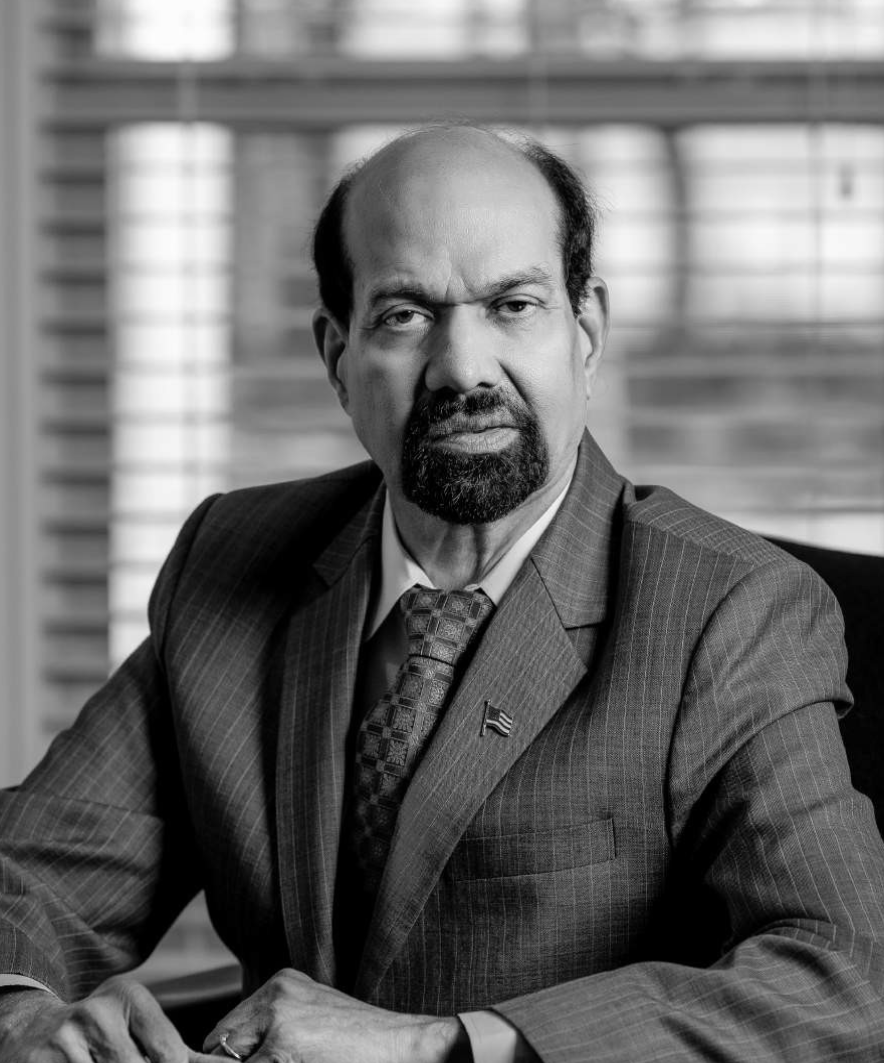
Aiming the medicine, not flooding the body
A transdermal cream sits on a lab bench in Cambridge, Massachusetts. It looks like nothing. What is unusual is what it is built to not do: travel everywhere. Most drugs are blunt instruments. You swallow a pill, it circulates through the whole body, and the place that actually needs treatment gets the same dose as everywhere else. Shashi Kori has spent the back half of his career deciding that this is a solvable problem, and Novilla Pharmaceuticals is his answer.
Novilla's pitch fits on an index card. Use a proprietary AI model to design formulations that deliver an effective treatment to the site of action while minimizing systemic effects. In plainer language: get the drug where it needs to go, skip the rest of the body, and lose the side effects that come from dosing organs that were never the target. Kori co-founded the company in 2019 and runs it as CEO.
It is a strange second act for a man who already had a full career. Kori is a neurologist and neuro-oncologist, trained at Memorial Sloan-Kettering Cancer Center and Cornell. He did not drift into pain medicine - he built the field's furniture. He founded, built and ran four large pain programs, including the Pain and Palliative Care Program at Duke University, where he was the founding director. He founded and served as vice chairman of the Department of Neurology at the University of South Florida College of Medicine. Somewhere in there, the Governor of Florida appointed him the state's Pain Commissioner.
The partnership that became a company
Novilla did not start as a solo project. In 2019 Kori partnered with Dr. Eric Fossel, and the two combined their separate drug-delivery innovations into a single therapeutic approach. One plus one became a platform. That collaborative instinct shows up across the company: a vice president of product development, a director of computational chemistry, a chairman of the scientific advisory board. Kori assembled a team that mixes pain-therapeutics veterans with people who think in chemical thermodynamics and machine-learning formulation.
The science underneath is not hand-waving. Novilla's model works on the hard parts of formulation - permeability, the thermodynamic properties of the skin barrier, in-silico screening of candidate formulations before a single one is mixed. The goal is rational formulation design: predict what will penetrate and act locally, rather than discovering it the slow and expensive way. The lead candidate, NOV-1776, has shown significant efficacy in trials, reportedly outperforming standard treatments.
A career spent on the unglamorous half of pharma
Before founding anything, Kori spent two decades inside big pharma's clinical machinery. He was senior director of clinical development and senior medical advisor on the pain and migraine team at GlaxoSmithKline. He was vice president of clinical development and medical affairs at Allergan and MAP Pharmaceuticals. In 2014 he became chief medical officer at Autonomic Technologies. The through-line is consistent: pain and headache, the molecules and the patients who take them. By his own company's account, he helped develop a large share of the pain and migraine medications people use today.
He is also a prolific academic voice. More than 90 published works - Novilla's own bio puts the count north of 110 - plus over 150 invited lectures across the United States and abroad on pain and headache management. He has served on editorial boards and held faculty roles at Duke, the University of South Florida and Case Western Reserve University. This is a person who has argued the case for better pain therapy from the clinic, the lecture hall, the boardroom and, briefly, a government commission.
Illustrative concept: conventional systemic delivery spreads dose across the whole body; Novilla's approach concentrates it where it acts. Directional, not clinical data.
From Mangalore to Cambridge
The arc starts a long way from biotech row. Kori earned his medical degree at Kasturba Medical College in Mangalore, India, then trained across New York - an internal medicine residency at the VA Medical Center in Brooklyn, a neurology residency at St. Vincent's Hospital and Medical Center, and fellowships in neuro-oncology, neuroimmunology and cancer pain at Memorial Sloan-Kettering. Three of New York's medical institutions, stacked one on the next, before pharma and academia ever entered the picture.
What makes the Novilla chapter interesting is the choice itself. A clinician with that resume could have coasted into advisory roles and emeritus titles. Instead he is running a small biotech of roughly fifteen people, raising venture money - Novilla closed a Series A, last raised in late 2021 - and betting that the next frontier in pain therapy is not a new molecule but a smarter way to deliver the ones we already trust. Including, the company says, an opioid alternative.
It is a quiet kind of ambition. No grand manifesto, just a transdermal cream that knows where it is going. For a doctor who has spent his life watching patients pay the price of side effects, that may be the most personal product he has ever built.
A career in seven moves
Things that are true about Shashi Kori
Policy seat
He didn't just treat pain - he advised a state on it, as Florida's Governor-appointed Pain Commissioner.
Serial builder
Four large pain programs founded and run, including Duke's flagship Pain and Palliative Care Program.
Two-into-one
Novilla exists because he merged his drug-delivery work with Dr. Eric Fossel's into one platform in 2019.