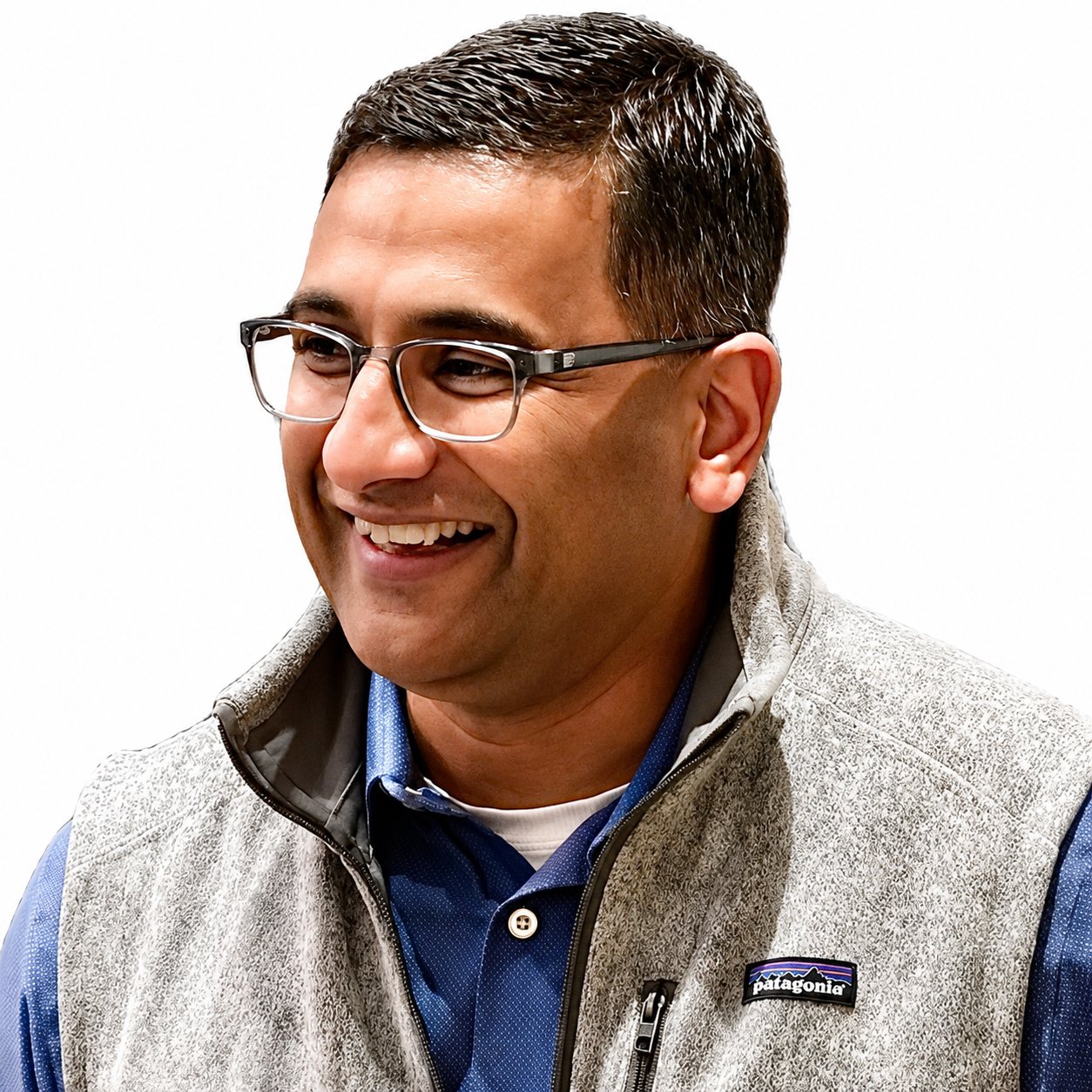
Sharath Dorbala runs Vendavo. That sentence does a lot of quiet work. Vendavo is the kind of company most people have never heard of and most CFOs at industrial manufacturers have a strong opinion about - the software that decides whether the price your sales rep just quoted on 4,000 pounds of specialty resin is actually going to make the company any money. It's commercial excellence, B2B pricing, deal optimization, rebate management, CPQ. It is, in other words, the plumbing of margin.
He arrived at Vendavo in August 2024 as Chief Product and Technology Officer. He left that title behind faster than most executives finish ordering business cards. By 2025 the board had handed him the CEO seat. Companies don't make that kind of move because they enjoy the optics of an internal promotion. They make it when a product person walks in and starts rewriting the operating system.
Vendavo sits in Denver, employs around 400 people, and has raised about $51.5 million in private-equity capital across its lifetime. Its customers are the unsexy giants - the manufacturers, the distributors, the wholesalers - whose annual reports talk less about TAM and more about basis points. For two decades Vendavo has sold them software to find margin leakage. Dorbala's job now is to convince them that AI agents can find it faster than humans can.
This is, depending on how you squint, either the most predictable arc in enterprise software or the least. Predictable, because Dorbala has been circling this exact problem his entire career - CPQ at Oracle, order management at Conga, mobile financial services at Amdocs, subscription billing at Vindicia. Unpredictable, because he is the rare operator who never built his reputation on a single hit. There is no Dorbala IPO. No celebrity exit. Just a stack of two-year stints where the product got measurably better and the customer churn measurably worse - the kind of resume that compounds quietly and then, one day, lands you the chair.
He is the rare operator who never built his reputation on a single hit. There is no Dorbala IPO. No celebrity exit. Just a stack of two-year stints where the product got measurably better.
- The Pattern
The early chapters were written across two continents. An MS in Economics and Management from BITS Pilani in India. An MS in Information Systems from Northeastern in Boston. Two degrees on two coasts of the world, both ending in "and management." The pattern was already there - someone who wanted to understand how things were built and how they got sold, in equal measure.
Oracle was where the calluses formed. Then Amdocs - eight years there, in roles that drifted from product management to corporate strategy to running an entire business unit. By 2013 he was SVP and General Manager of Mobile Financial Services, the kind of title that means you stop arguing about the roadmap and start arguing about the P&L. He stayed in that seat until 2017. It was the right preparation for what came next.
In 2019 Amdocs handed him Vindicia. Vindicia is a subscription billing platform - the rails behind digital media and entertainment recurring revenue. Dorbala ran it as CEO for two and a half years and the company's own people, on its way out the door, described the period as "record growth." He left in 2021. The next three years were the most interesting because they look, on paper, like nothing. He advised. He invested. He took board seats at small AI companies - Picquora, building software for the auto and tire industry; DoddlAi in eCommerce; Kaytoons in children's educational content. He picked up an advisory relationship with Nordic Capital, the European private-equity firm, on fintech and SaaS.
It is the kind of three years a person uses to figure out what they actually want to do next. By the time Vendavo called, he had a thesis. Pricing software, like billing software before it, was about to be rewritten by AI agents. Not chatbots. Not copilots. Agents that recommend prices, flag deals, route approvals, and explain themselves while doing it. Embedded explainable AI for the price waterfall. Industry-trained AI for the salesperson on a forklift.
That thesis is now Vendavo's roadmap. The product language tells you what he's building - role-specific AI guidance, automated deal approval, price-volume-mix analytics, pricing for tariffs, real-time pricing. It is recognizably the same problem he was working on at Oracle in the 2000s, except the substrate underneath has changed three times.
What's interesting about Dorbala the operator, talking to people who have worked with him, is what's not there. No founder mythology. No insistence on a personal brand. No book deal, no podcast circuit, no Twitter following to maintain. He's a Bloomberg profile page and a LinkedIn account with the kind of headshot you'd expect from someone who has been at it for twenty years and figured out, somewhere around year nine, that the headshot is not the job.
The job is the thing his customers do not have time for. Pricing for a B2B manufacturer is genuinely hard. There are list prices and floor prices and target prices, customer-specific discount waterfalls, rebate programs that accrue across quarters, channel partners with conflicting incentives, tariffs that move overnight, and a sales rep on the phone with a customer who needs an answer in the next four minutes. The software that solves this problem badly is everywhere. The software that solves it well is rare. Vendavo, for two decades, has been one of the rare ones.
Dorbala's bet is that the next decade rewards the company that makes that software disappear into the workflow - that turns the pricing analyst's spreadsheet into an AI agent's recommendation, and turns the sales rep's gut into a "yes, this deal is within policy" notification. It is a quiet bet. It is also, if it works, the kind of bet that compounds into the same kind of resume he already has.
The other thing worth knowing about him: he is a product person first. Read the press release announcing his arrival at Vendavo in 2024 and you'll notice the title was Chief Product and Technology Officer - not Chief Operating Officer, not Chief Revenue Officer. The PE board that owns Vendavo wanted someone who could ship. They got someone who, by 2025, they trusted to run the whole thing.
Which is the through-line, finally. The story is not the climb. The story is what the climb is for. Two decades of asking "what should this cost?" was never about pricing software. It was about whether the rails of B2B commerce can be made smarter. The CEO seat is just a better vantage point.