THE ORIGIN STORY
June 2015. Karachi. The mercury had surged past 48°C. People were collapsing on streets, in buses, on their doorsteps. Over 1,200 people died in one of Pakistan's deadliest heatwaves on record. The city ran out of morgue space. Bodies were lined up in halls at the Expo Centre. Mass graves were dug.
Shahzad Qureshi — a textile engineer by training, a serial entrepreneur by nature — watched it unfold from Karachi like most others: horrified, helpless, angry. "It was just one of those times where you just ask: what the hell is wrong with this place?" he would later recall. "And one of the things everybody was talking about is that there's not enough green cover."
He wasn't an environmentalist. He wasn't a botanist. He'd spent his career in quality assurance and supply chain for textile companies across Pakistan and the USA, then co-founded Tohfay.com, a gifting e-commerce portal connecting the Pakistani diaspora to their families back home, and the Raintree Spa. Business was his world. Climate was someone else's problem.
Until it wasn't. "Caring for the environment is less about passion and more of a necessity borne of inaction," he would say. And around that scorching summer, Shahzad stumbled across a TED Talk that changed everything.
"Look for something that really excites you and then run after it like there is no tomorrow. The money will follow."
— Shahzad Qureshi
THE TED TALK THAT STARTED IT ALL
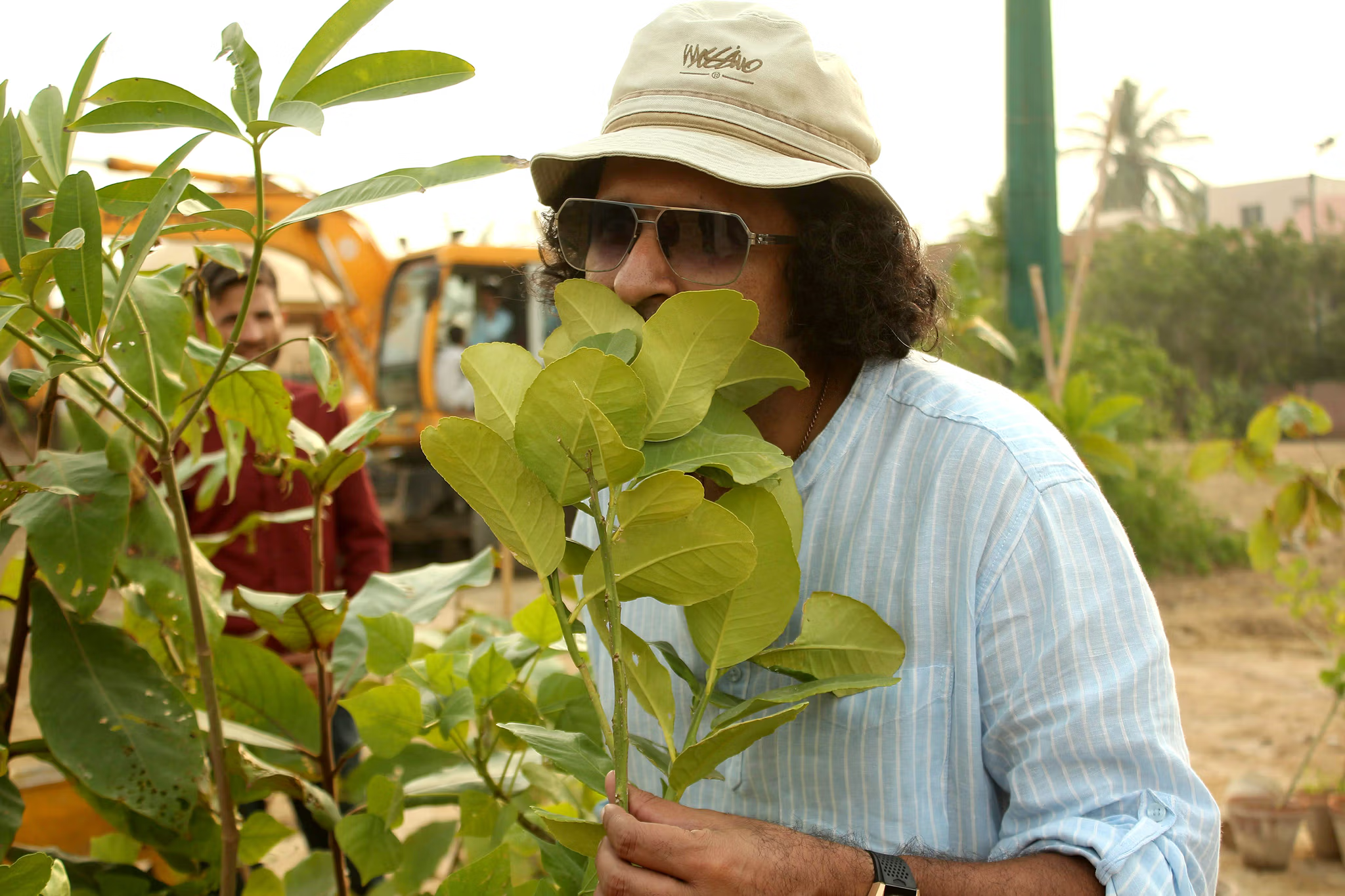
FROM GARBAGE DUMP TO GREEN LUNGS
This is where it started. A patch of land so neglected, the Parks Department director let Shahzad have it for free — as long as he financed it himself. The catch? It was a garbage dump. The result? 38,000 saplings. Three acres of breathing forest. 6–7°C cooler than the concrete city around it.
The TED Talk was by Shubhendu Sharma, an industrial engineer from Bangalore who had quit his Toyota job to grow forests using a method pioneered by Japanese botanist Dr. Akira Miyawaki. The concept: plant native species densely together — three to five plants per square metre — and watch them grow ten times faster than conventional planting. A self-sustaining forest in two to three years. No pesticides. No chemical fertilisers.
"The TED Talk sounded just so beautiful at that time," Qureshi recalled. He reached out to Sharma directly. The two began a long-distance friendship and collaboration across national borders — a textile engineer in Karachi and a forest scientist in Bangalore, plotting green revolution.
In late 2015, Shahzad scouted for land. He found a 400-square-metre garbage dump in Clifton public park. The Parks Department director agreed — as long as Qureshi would fund it. He did. Then he flew Sharma in. Together, they broke ground on what would become Pakistan's first Miyawaki urban forest.
FAST FACTS · QUICK ANSWERS
Where is Shahzad Qureshi from?
Born and based in Karachi, Pakistan — a city of 16 million people and, until recently, very few trees. He studied Textile Engineering at Philadelphia University in the United States before returning to build his businesses (and eventually, his forests) back home.
What did he do before forests?
Textiles, then tech. Sixteen-plus years in quality assurance and supply chain across Pakistan and the USA. Then co-founded Tohfay.com — a diaspora gifting portal — and the Raintree Spa. A restless builder who kept finding new things to build.
What is the Miyawaki method?
A Japanese forestation technique by botanist Dr. Akira Miyawaki involving dense planting of 3–5 native species per square metre. Trees grow 10× faster than conventional planting. Self-sustaining within 2–3 years. No chemicals. No maintenance after Year 3.
How many forests has he built?
As of the latest reports: 26 urban forests across Pakistan — 20 in Karachi, others in Lahore. His Clifton flagship alone covers 3 acres with 38,000 saplings. The Karachi mayor was so inspired, he announced 300 new municipal forests using the same method.
What does a forest do for a city?
Shahzad has observed a 6–7°C temperature drop inside his forests versus the concrete around them. Clifton Urban Forest now hosts bird species, four species of chameleons, five species of bees, and a diamondback spider. An ecosystem born from a garbage dump.
What does he actually want?
"If I had my way, I would convert all the parks and all open spaces in Karachi into urban forests." He calculates that 25 urban forests could eliminate Karachi's urban heat island effect entirely. He's more than halfway there.
THE CLIFTON FOREST STORY
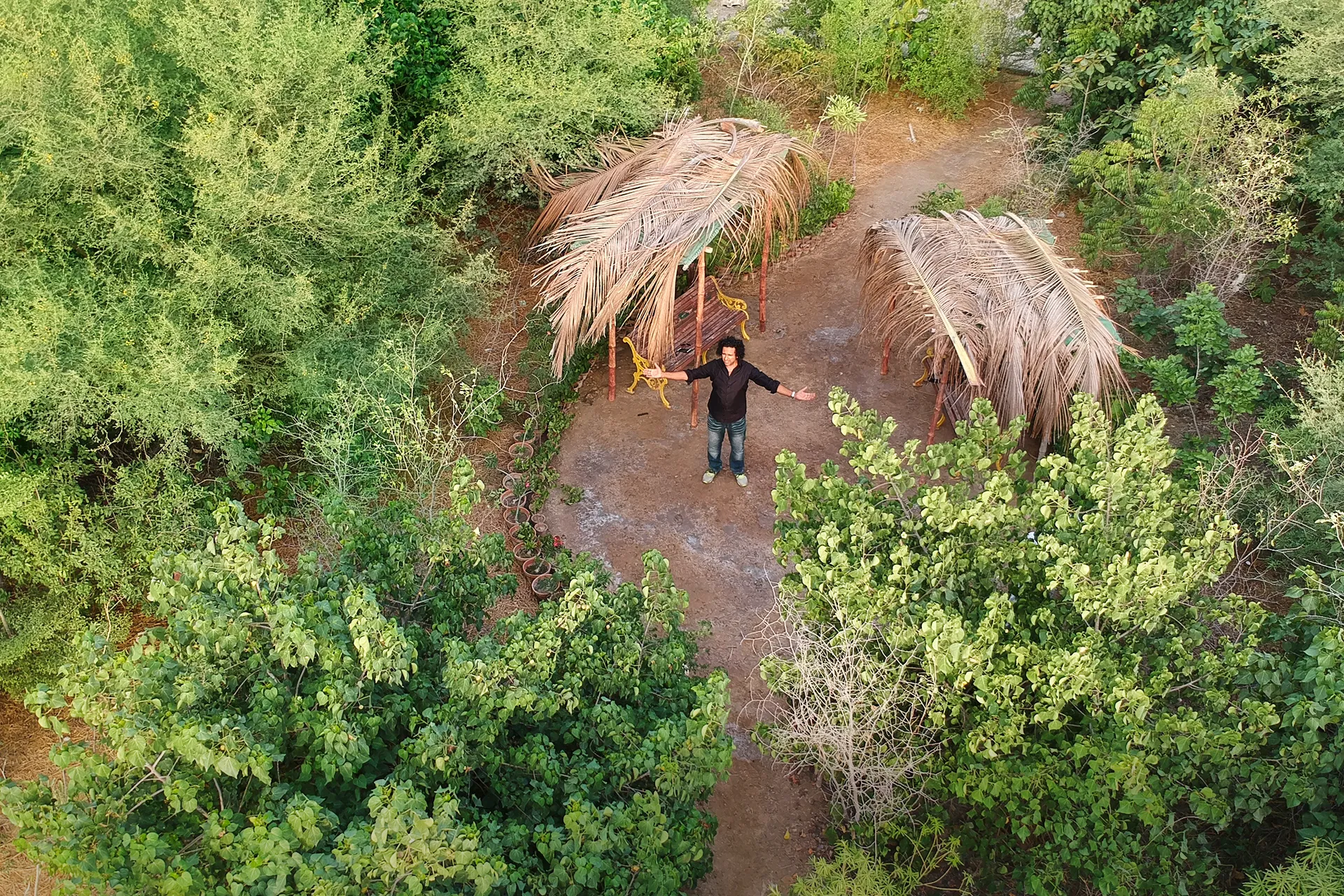
What began as a 400-square-metre pilot plot — paid for out of Shahzad's own pocket on a garbage-strewn bit of Clifton park — grew into something nobody expected. Three years in, the same patch had 1,200 trees, some reaching 25 feet in height. The city had to look twice.
The Parks Department, initially skeptical, watched it succeed and then asked Qureshi to expand it to the whole park. A German-trained landscape architect was brought in. The 14,000-square-yard space was redesigned from scratch: a sewage water filtration system that treats wastewater through a wetland channel; a vegetable garden feeding the surrounding community year-round; a fish pond; a waterfall; fruit trees; natural walkways stretching 1.2 kilometres; composting stations absorbing waste from 100 nearby households.
Over 9,000 people have planted saplings at the site. More than 30 schools have visited for educational trips to learn about native species. Old couples wander in on weekends to thank him. Local kids call it the jungle.
Qureshi, not a wildlife expert by any stretch, has nonetheless catalogued what moved in on its own: several bird species, four species of chameleons, five species of bees, and a diamondback spider. He built a place for trees, and everything else came because the trees were there.
THE MAN WHO SPEAKS FOR TREES
Shahzad has taken the Urban Forest message to Rotary clubs, corporate boardrooms, government ministries, school halls, and international platforms. He is a member of the Rotary Club of Karachi New Central, through which he raised early funds for the forest. His pitch is simple: your city is burning. Here's a solution that pays for itself.
TIMELINE OF A FOREST-BUILDER
Earns a BS in Textile Engineering from Philadelphia University, USA. Spends 16+ years in quality assurance and supply chain with major textile companies across Pakistan and America. Learns how systems work — and how to fix them.
Co-founds Tohfay.com, a gifting platform connecting diaspora Pakistanis with family back home. An unusual customer request leads him to launch Mamoo in Pakistan — a concierge service handling everything legal for overseas Pakistanis, from document attestation to birthday parties. Also establishes the Raintree Spa.
Karachi's catastrophic heatwave kills over 1,200 people. Temperatures exceed 48°C. Qureshi is stunned by the city's lack of green cover. He watches a TED Talk by Shubhendu Sharma on the Miyawaki method. Something shifts.
Secures a 400 sq metre plot — a garbage dump in Clifton public park — from the Parks Department director. Personally finances the project. Invites Sharma to Karachi. Together they plant Pakistan's first Miyawaki forest on what was once a rubbish pile.
Inspired by the pilot's success, Qureshi formally launches Urban Forest as an organisation. Offers consulting and turnkey forest creation services to homes, offices, factories, mosques, and schools. Begins raising funds through Rotary Club and corporate sponsors.
The pilot plot expands into the full 14,000-sq-yard Clifton park. A German-trained landscape architect designs the masterplan. Sewage-fed wetlands, vegetable gardens, walking trails, and a fish pond are added. 9,000+ people plant saplings. 30+ schools visit. BBC, Dawn and international outlets take notice.
Urban Forest grows to 26+ forests across Pakistan, including in Lahore and near mosques using ablution water for irrigation. The Karachi mayor announces 300 new municipal Miyawaki forests, citing Qureshi's model as inspiration. UNDP Pakistan points to Urban Forest as a viable urban greening model.
Shahzad Qureshi continues to build, advocate, and inspire. His advice to anyone watching: "We are pushing ahead to make our cities green, for our own survival. I see Urban Forest playing a major role in creating that change."
"Urban Heat Island effect already had reduced the average rainfall of Karachi seriously, and now this! There was no clear deliverable solution for greening the city with the right species and in the shortest possible time."
— Shahzad Qureshi, on the moment he decided to act
THE MAN BEHIND THE TREES
People who meet Shahzad Qureshi often leave the encounter with a seedling, a sense of purpose, or both. He is, by all accounts, the kind of person who makes you feel like you should be doing something more useful with your time.
He describes himself as a serial entrepreneur who finds the process of running businesses unremarkable — it's just what you do. What consumes him is the scope of what still needs to be built. "I believe the industry to restore the planet is shaping up. Not just in Pakistan but worldwide," he has said. "There is humungous opportunity in Environment Restoration — be it energy, water conservation, recycling, organic food supply, forestation. The fields are wide open."
He was reading The Hidden Life of Trees by Peter Wohlleben — a book about how forests communicate, support each other underground, and form communities — at the time his own forest was first being reported on. Which feels about right.
He built Tohfay.com because he noticed the diaspora wanted to send gifts home. He launched Mamoo in Pakistan — a "do anything legal in Pakistan" concierge service — because a single customer request unlocked a whole underserved market. He makes forests because people were dying from heat and nobody had a concrete, deliverable plan. Shahzad's defining trait is not idealism but pragmatism. He doesn't dream. He builds. Then he looks for what else needs building.
He also talks to schoolchildren, speaks at corporate events, briefs government officials, and shows up on BBC Punjabi, Dawn, and international platforms with the same core message: this works, it scales, and you can do it too. Some urban forests have been built near mosques, using ablution water — grey water from ritual washing — as irrigation. That's not poetry. That's engineering.
Hey, Shahzad —
The old couple. You remember them? Walking into Clifton park, looking for you. Asking if you were the one. Thanking you — not for anything grand, just for giving their city one small breath of shade.
You weren't trying to be a hero. You were just furious and had a plan. That, it turns out, is the rarest combination there is. The forest was always going to happen because it had to. But it happened because of you.
The parrots you used to see growing up? They're coming back. 🦜