He learned to hold a scalpel steady inside a human skull. These days the steadiest thing about him is his read on a deal.
CHIEF BUSINESS OFFICER — NOETIK, SOUTH SAN FRANCISCO
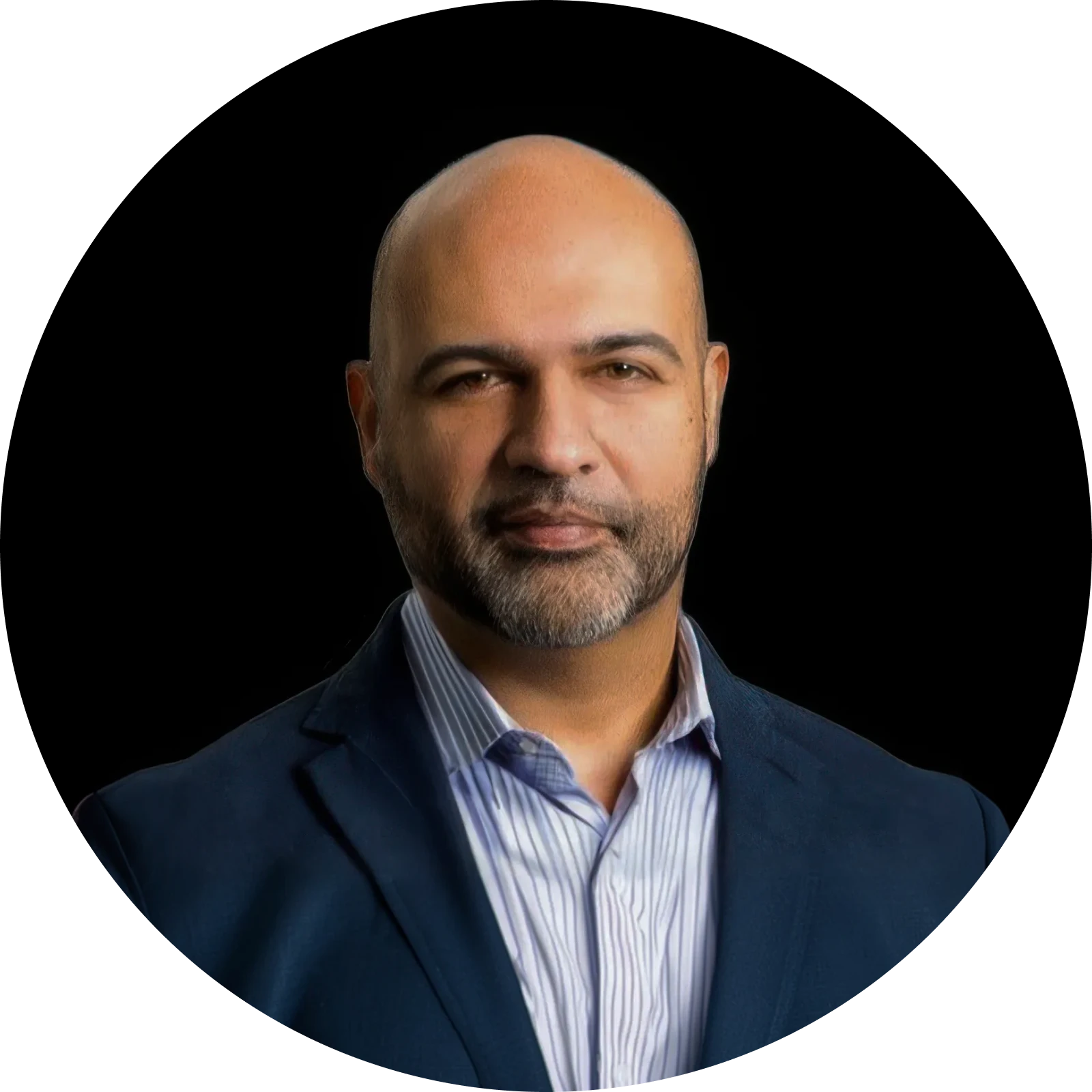
At Noetik, the cancer drugs do not start in a wet lab. They start as predictions made by a machine that has read 40 million cells. Shafique Virani's job is to convince the largest pharmaceutical companies on earth that those predictions are worth licensing - not as a science experiment, but as infrastructure. He is the Chief Business Officer, which is the polite title for the person who turns code into contracts.
The pitch is unusual, and he says so plainly. Most AI-and-pharma stories are services arrangements: a startup runs a model, a drugmaker pays for the output. Virani is selling something else. When Noetik handed GSK its OCTO-VirtualCell foundation models in early 2026, he framed it as a category shift. "This deal defines a new asset class in biotech," he said. "We are moving the industry from AI services collaborations to licensing AI infrastructure." Translated: stop renting the answer, start owning the engine.
It helps that he has sat on every side of the table. Virani has been a CEO, a Chief Business Officer, and an interim Chief Medical Officer - sometimes two of those at once. He has built drug pipelines inside a pharma giant and inside scrappy subsidiaries. And before any of it, he was a doctor with his hands inside people's heads.
Most people pick a lane. Virani keeps switching vehicles - and somehow ends up in the room where the biggest deals get signed.
Noetik calls itself AI-native, which is not marketing filler. The company generates its own proprietary spatial transcriptomics data - nearly 40 million cells from more than a thousand patient tumor samples - and trains foundation models on it. The flagship, OCTO-VirtualCell, can drop a virtual T cell into a virtual tumor and predict whether it will switch on and start killing cancer. Researchers can poke at it through an interactive tool called Celleporter. It reads less like a pipeline and more like a flight simulator for oncology.
That is the product Virani is out selling. And the early returns - an oversubscribed $40 million Series A in 2024, the GSK anchor partnership in 2026 - suggest the market is listening to a man who knows how to make pharmaceutical executives reach for a pen.
We are moving the industry from AI services collaborations to licensing AI infrastructure. — SHAFIQUE VIRANI, ON THE GSK DEAL
The Genentech years are where the resume gets heavy. For 13 years Virani served as Vice President and Global Head of partnering for neuroscience, ophthalmology and rare disease - the person matching outside science to inside ambition through licensing and acquisitions. The portfolio he helped build was not theoretical. It included Risdiplam, a treatment for spinal muscular atrophy, and Enspryng, for a rare and brutal disorder called neuromyelitis optica spectrum disorder. Both became approved medicines.
Then he went operational. Virani took the CEO seat at not one but two BridgeBio Pharma subsidiaries, Navire Pharma and CoA Therapeutics, learning what it feels like to own the whole P&L of a young company.
At Recursion he combined the two instincts. As Chief Corporate Development Officer - and, for a stretch, interim Chief Medical Officer - he brokered partnerships with Bayer and with his old employer Roche/Genentech. That Roche deal ranks among the largest drug-discovery partnerships the industry has ever produced. He also sits on the board of QurAlis, keeping a hand in neuroscience, where his story began.
A surgeon who became a builder who became a closer.
Approximate tenure by role. The long bar built the medicines; the short bars built the deals.
CEO, Chief Business Officer, interim Chief Medical Officer. He has worn all three - occasionally overlapping - across a single career.
Risdiplam and Enspryng, from his Genentech partnering years, both became approved therapies for rare disorders.
Noetik's OCTO-VirtualCell can drop a virtual T cell into a virtual tumor and predict whether it activates.
The Roche/Genentech partnership he helped forge at Recursion ranks among the largest drug-discovery deals in industry history.
Noetik's models train on proprietary spatial data from 40 million cells across more than 1,000 patient tumor samples.
He trained as a neurosurgeon, then pivoted entirely to the business of getting drugs to patients faster.
I appreciate the challenges of early drug discovery based on the limited informative models we have to use. — SHAFIQUE VIRANI