When a recalled drug needs to be found before it reaches a patient, the trail runs through a network he built. 291,000 companies are plugged into it.
Every box of pills that crosses a border now carries a question: is it real, and where has it been? Shabbir Dahod spent two decades turning that question into software. TraceLink, the company he co-founded in 2009, is the quiet plumbing beneath the global pharmaceutical supply chain - the layer that lets a manufacturer in one country, a distributor in another, and a pharmacy down your street all agree on the same answer about the same pill.
He is not a household name. The thing he built is. When regulators across the United States, Europe, and beyond demanded that drug makers serialize and trace their products, the industry did not each invent its own wiring. It plugged into TraceLink. That is what "de-facto standard" means: not a mandate, but a gravity. Companies showed up because everyone else already had.
Today Dahod is steering that network somewhere new. The pitch in 2025 is not just visibility but orchestration - supply chains that sense disruption and route around it, increasingly with the help of agentic AI. His framing is characteristically unglamorous: clean data first, intelligence second. "Generative AI relies heavily on clean, high-quality data," he says. Start small, scale, repeat.
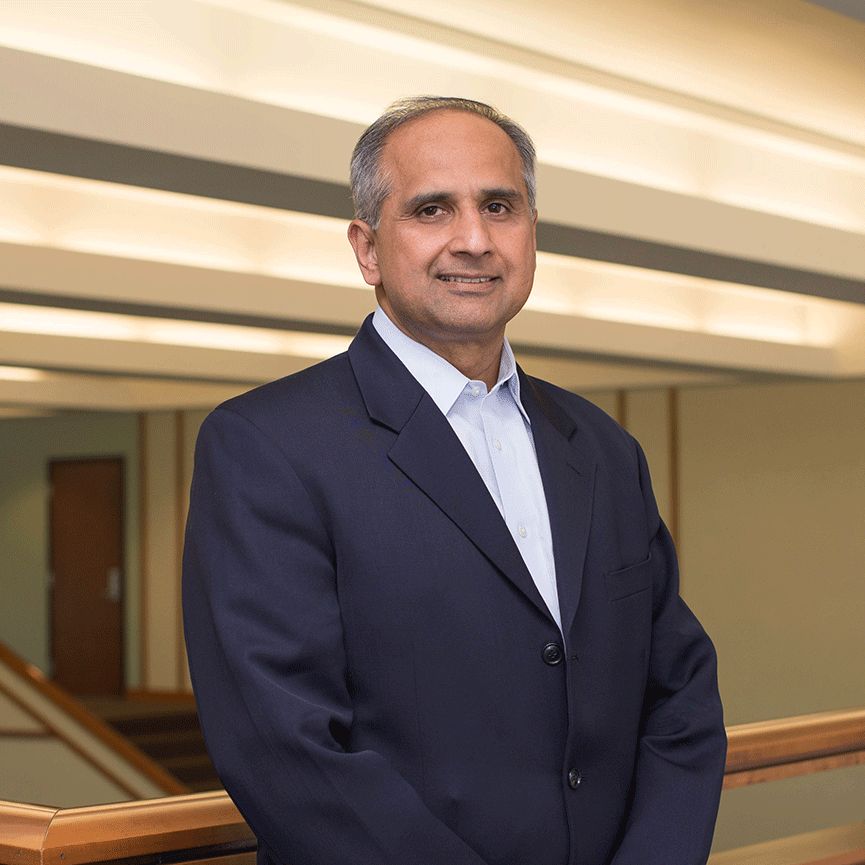
Resilience and adaptability hinge on real-time, end-to-end visibility across the entire network. Shabbir Dahod
Long before pharma, Dahod was building the future people forgot was once the future. He landed at Asymetrix, the startup bankrolled by Microsoft co-founder Paul Allen, and helped make it a leader in multimedia authoring - the early grammar of clickable, interactive media. From there to Microsoft itself, where he led work on collaboration and knowledge management back when those words still felt new.
Then the pattern that defines him appeared. In 2003 he founded SupplyScape, an early bet that pharmaceutical products should be serialized and traceable. It was the right idea, arguably too early. He ran it for five years. And here is the tell: when he started over in 2009, he did not pick a safer industry. He went back to the exact same problem - serialization, traceability, the integrity of the drug supply chain - and built it again, bigger, as a network this time instead of a product.
That second swing was TraceLink. The difference was architecture. SupplyScape sold software to companies. TraceLink connected them. Connect once, the idea went, and share data with everyone - no thousand brittle point-to-point pipes between every manufacturer and every distributor. It is the same logic that made social networks and payment rails win: the value is in the edges, not the nodes.
Multimedia authoring at Paul Allen's startup, when "multimedia" was a sales pitch.
Leading initiatives in two categories the web would soon eat alive.
Founder and chairman. The first try at pharma serialization. The dress rehearsal.
Joins Asymetrix, Paul Allen's multimedia startup, and helps establish it as an authoring-tech leader.
Incubates early web products, then moves to Microsoft to lead collaboration and knowledge management.
President and CEO of iWant.com.
SVP of Products and Services at Performaworks.
Founds and chairs SupplyScape, an early pharmaceutical serialization company.
Co-founds TraceLink, turning an MIT-sparked idea into a cloud network for supply chain traceability.
Named by PharmaVOICE among the 100 most inspirational people in life sciences.
TraceLink closes a $93M Series D, pushing total funding past $230M.
On CNBC explaining how track-and-trace would secure the COVID-19 vaccine supply chain.
Receives the Pros to Know Lifetime Achievement Award from Supply & Demand Chain Executive.
Pushes TraceLink toward agentic AI and end-to-end supply chain orchestration.
Catch him mid-stride and the vocabulary has shifted. The first decade of TraceLink was about compliance - serialize the product, satisfy the regulator, prove the pedigree. The current chapter is about turning that same network into something that thinks. A connected supply chain that can spot a shortage forming, find the recalled lot, and reroute before the disruption lands.
"Digitalising end-to-end information flows is critical because it lays the groundwork for every other advancement." No clean data, no smart anything.
"Pilot programs are an excellent way to test AI capabilities." Less moonshot, more controlled burn.
Real-time visibility lets companies make proactive decisions and swiftly reroute when a link in the chain breaks.
Regulation wrote Dahod's market for him. The U.S. Drug Supply Chain Security Act and Europe's Falsified Medicines Directive both demanded the same thing in different dialects: every prescription drug must be serialized, tracked, and verifiable as it moves from maker to patient. Counterfeit medicine is not an abstraction. It is a real and lethal trade, and lawmakers decided the fix was traceability. The question was never whether the industry would comply. It was how.
The slow way is the one most software companies would have sold: a tracing product for each company, integrated one painful connection at a time to every trading partner. Multiply a few thousand manufacturers by their distributors, their contract packagers, their wholesalers, their pharmacies, and you get a combinatorial nightmare of brittle pipes. Dahod had already lived that version once, at SupplyScape. The second time, he inverted it.
TraceLink's bet is that you connect to the network once and inherit a relationship with everyone already on it. A new partner is not a new integration project - it is a new node that everybody can reach the moment it arrives. This is the boring miracle behind a roughly 291,000-entity network. Each company that joins makes joining more valuable for the next one. The standard becomes self-fulfilling. By the time a regulator's deadline arrives, the easiest path to compliance is the one everyone else already took.
Pros to Know Award from Supply & Demand Chain Executive, citing 20+ years advancing pharmaceutical supply chain integrity. "I'm truly honored," he said, crediting "my team for their relentless pursuit of excellence."
Named among the most inspirational and influential people in the life sciences industry.
Called on by national television to explain how track-and-trace would secure the COVID-19 vaccine supply chain.
There is a kind of founder who chases whatever market is hot. Dahod is the other kind. He found a problem in 2003, watched it not pay off fast enough, and came back to the same problem in 2009 with a better architecture. That is not stubbornness. It is conviction with a memory - the willingness to be early, lose, and return knowing exactly why the first attempt missed.
His public voice is measured, almost deliberately unhyped. Ask him about AI and he steers the conversation back to data hygiene. Ask about resilience and he talks about visibility, not heroics. The award speeches credit the team before the technology. For someone whose product is built on the idea that no single company should be an island, the consistency is almost too neat: even his rhetoric is networked.
The throughline across thirty years - multimedia at Asymetrix, knowledge management at Microsoft, two runs at pharmaceutical serialization - is connection. Making separate things talk to each other. Making information flow where it could not before. He has been building variations of the same machine his whole career. TraceLink is just the version that finally found a market large enough, and a regulation urgent enough, to make the network worth everyone's while.
Willing to be ahead of a market, lose, and return with the lesson encoded in the architecture.
Pushes every AI conversation back toward clean data and small, testable pilots.
Credits the team first, builds products where value lives in the connections.
Digitalising end-to-end information flows is critical because it lays the groundwork for every other advancement. On why data comes before AI
In 2016 he sat for a portrait at his desk in North Reading. Not a corner office - a cubicle. The founder still working from the floor.
He founded two startups in the same narrow niche - pharmaceutical serialization - more than five years apart. Most founders flee a hard market. He went back in.
His diploma reads Boston University. TraceLink's origin story traces to the corridors of MIT. He collected both.
When the world worried about COVID-19 vaccine logistics in 2020, TV producers needed someone to explain the supply chain. They called Dahod.
Connect once. Trust everywhere.