He named the company after a time machine. The pitch is simpler than the science: see the trouble coming before it arrives.
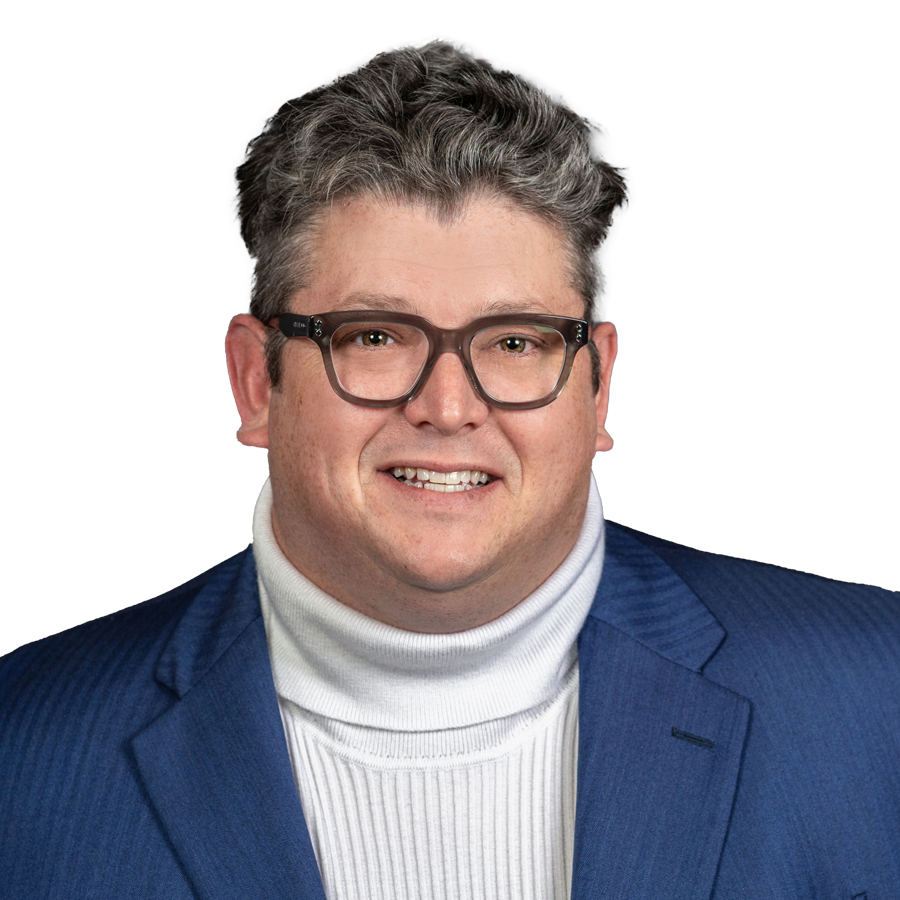
Severence MacLaughlin runs DeLorean Artificial Intelligence out of Palm Beach, building software that tries to read the future of a person's health the way a chess engine reads a board - many moves ahead, fast, and without flinching. He got there by quitting a career that paid extremely well and meant, by his own account, almost nothing to him.
Walk into DeLorean Artificial Intelligence today and the joke writes itself. The name borrows the gullwing time machine from the movies, and MacLaughlin leans into it. The whole enterprise is a bet that prediction beats reaction. His flagship product line, Medical AI, is built to flag the onset and progression of chronic disease early enough that a care team can act, not just document.
He likes to put a boundary around the technology that a lot of AI founders skip. The machine recommends. The doctor decides. That single rule, repeated in interview after interview, is how he answers the question every clinician asks first: who's actually in charge here.
The company says its Medical AI was the first to be biologically validated by two independent laboratories, with models trained on more than 80 million patient records and seven patents underneath. Whatever weight you give those claims, the posture is unusual. Most AI pitches promise. MacLaughlin keeps pointing at proof.
It's a strange resume for an AI founder, and that's the point. He didn't arrive from a computer science lab or a hoodie-and-hackathon track. He arrived from biology, from datasets large enough to need mainframes, and from twenty years watching how big institutions actually adopt - or quietly ignore - new technology. That history shows up in how he sells: less spectacle, more evidence, and a constant insistence that the human stays at the center of the loop.
There is no industry that wouldn't be revolutionized through gaining the ability to predict the future.- Severence MacLaughlin, on the DeLorean premise
A design rule, not a slogan. The AI surfaces risk; the human owns the call.
I was just moving money from one account to another.
I was solving business problems. Not human ones.
If the technology exists to predict chronic disease, we have a moral obligation to use it.
This isn't about preventing admissions. It's about giving people more hugs, more birthdays, more holidays, more time with their families.
The physician is always in charge.
There is no industry that wouldn't be revolutionized through gaining the ability to predict the future.
A sheep-and-turkey farm in rural Rhode Island. Parents who never went to college and treated education like a tool you don't put down.
He picked Cornell partly for its dairy farm. The man studied reproductive physiology before he studied anything resembling a neural network.
Early on, he served in restaurants while building a name. The resume now reads UN and WHO advisor. The arc is not short.
For years MacLaughlin was very good at a job he eventually decided was hollow. He built analytics practices, ran AI and data science for the Western Hemisphere at Capgemini Invent, and led AI for healthcare and life sciences at Cognizant. The titles were large. The work, he later said, was moving money from one account to another.
Two losses sharpened it - his father's death, and the death of a close friend. The grief did what grief sometimes does: it audited his calendar. He concluded he was solving business problems, not human ones, and went looking for a problem worth the rest of his career.
The unlikely throughline is the science. A Cornell degree in animal science. A PhD in embryonic and fetal development, earned in Australia working with mainframe-scale datasets back when that was rare. He was a quantitative biologist before he was an AI executive, which is exactly why the medical version of the pitch comes naturally to him.
When he started DeLorean AI, he funded it himself. No early venture round, no permission slip. The savings were the runway. The validation came later, and on purpose.
Strip away the branding and DeLorean AI rests on one stubborn idea: an organization that can see what's coming beats one that only reacts to what already happened. MacLaughlin states it flatly - there is no industry that wouldn't be transformed by the ability to predict the future, and he picked the one where the stakes are highest.
His belief, stated publicly, is blunt: within a few years, payers and providers without disease-prediction capability will look obsolete, and the business model that profits from illness will give way to one that rewards keeping people well. It's a provocative claim from someone who spent two decades inside the consulting machine that ran the old model. He's not predicting the shift from the cheap seats. He's trying to build the thing that forces it.
That's also why he keeps hammering on validation. Plenty of founders say their model works. MacLaughlin's tell is that he points to outside labs rather than his own deck. For a quantitative biologist, "validated" is not a marketing word. It's the difference between a result and a guess.
He runs the company from Palm Beach, a long way from the AI clusters of San Francisco and New York. The geography is part of the personality. So is the funding choice. By writing the first check himself, MacLaughlin kept the roadmap on his own clock and skipped the pressure to manufacture a headline before the science was ready.
The titles he carries outside the company tell you how seriously the establishment takes the work. He has been ranked among the world's top healthcare and life sciences data scientists, was named an American Healthcare Leader, and now advises the United Nations and the World Health Organization on artificial intelligence. He has taken the pitch to Nasdaq's TradeTalks. None of it reads like a man chasing virality. It reads like someone playing a long game and willing to be early.
Graduates Cornell with a B.S. in animal science, focus on reproductive physiology.
Completes a PhD in Australia, working with large mainframe datasets.
Founds a strategic analytics practice inside a consulting firm.
Launches MacLaughlin Global.
Becomes Global Head of AI for Healthcare & Life Sciences at Cognizant.
Named Chief of Intelligence for the Western Hemisphere at Capgemini Invent.
Founds DeLorean Artificial Intelligence and bootstraps it himself.
DeLorean AI raises a reported Series A round.
His doctorate is in embryonic and fetal development, not computer science. He came to machine learning through biology, which is why he talks about validation the way a lab does.
DeLorean AI started on personal savings. In a category drunk on raises, the founder's flex is that he didn't need permission to build it.
Ask him what success looks like and he doesn't lead with margins. He leads with more time, more holidays, more people around the table.
This isn't about preventing admissions. It's about giving people more hugs, more birthdays, more holidays, more time with their families.- Severence MacLaughlin
There's a clean line you could draw from a Rhode Island farm to a Palm Beach AI company, and it would be wrong because it would be too clean. The truer version has detours: the dairy-farm reason for picking Cornell, the reproductive-physiology degree, the doctorate earned overseas, the years waiting tables, the consulting titles that paid well and satisfied little. MacLaughlin didn't march toward predictive AI. He arrived at it after deciding the work he was already brilliant at didn't matter enough.
What he wants now is not subtle. He wants prediction to become standard practice - so ordinary that not having it looks negligent. He frames the goal in human terms rather than technical ones, and he insists the people who built the old system can be the ones to retire it. The science gives him the vocabulary. The losses gave him the reason. The name on the door gives him the joke.
He spent the better part of seven years on a single argument: that a machine, trained carefully and checked by outsiders, can help a clinician see a little further down the road. Whether the industry agrees on his timeline or not, he's put his own money, his own name, and the back half of his career behind the wager. That's the part that's hard to fake.
Revolutionizing Healthcare with Predictive AI - Severence MacLaughlin interview (VENSEARCH)