She fixed teeth at Harvard. Then she decided the real cavity was in how the world keeps its health records.
Open the MyDigiRecords app today and a phone camera can read your heart rate off your face. Behind that party trick sits a quieter idea, and a stubborn one: the medical record should belong to the person whose body it describes. Dr. Saroj Gupta has spent the back half of her career arguing exactly that, and she has built a company to make the argument hard to ignore.
She is the founder and CEO of MyDigiRecords, known to its users as MDR. It is a personal health companion app that lets people store, organize, and share their own prescriptions, lab reports, discharge summaries, medications, allergies, and vaccination records. One account holds the whole family. The pitch is simple enough to fit on a sticky note: stop leaving the most important document about your life in a drawer, a WhatsApp thread, and three different clinics that have never spoken to each other.
The company was founded in 2022 and spent close to two years in research and development before the consumer app launched in August 2023. It went to market in India in April 2024. Since then it has grown past 40,000 users and signed up more than 20 hospitals and clinics, including a National Institute, that now recommend it so doctors can build clinical context faster. MDR plugs directly into the Government of India's Ayushman Bharat Digital Mission, letting users generate and manage their national ABHA health ID inside the app.
Gupta did not arrive here as a software person. She arrived as a clinician who kept seeing the same failure from the other side of the desk.
When she immigrated to the United States from India, she did not have copies of her own immunization records. So she did what millions of immigrants quietly do: she paid to redo each vaccine, shot by shot, out of pocket. It is the kind of expense that is merely annoying for some and impossible for others. She filed the indignity away.
Then she watched it happen to everyone else. Patients would show up unable to name their medication, identifying the pill only by its color and shape. Prescriptions arrived lost, damaged, or simply forgotten. Vaccination histories lived on paper, scattered across years and addresses. In a high-volume system, that fragmentation is not a clerical headache. It delays diagnosis, it doubles up doses, and, in her telling, it costs lives.
"India is still very much in the paper system," she has said. The early version of the product, built around 2020, was narrow and urgent: track immunizations, and during COVID-19, verify vaccinations. It started with the people the paper system fails worst, including foster children whose vaccine histories often do not exist on record at all. From there it widened into the full medical history.
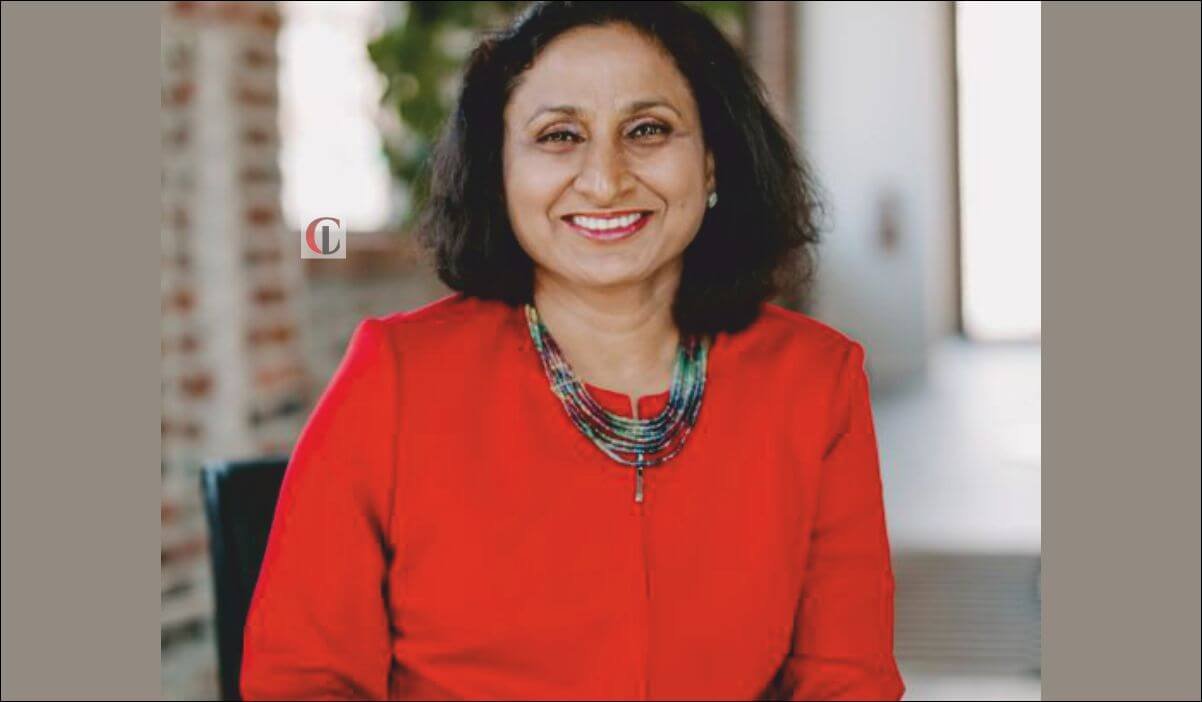
Most health software is built to please the institution that pays for it. Hospitals, insurers, billing departments. Gupta noticed the obvious gap and walked straight into it. "Everyone thinks about the provider here," she says. "No one is thinking about consumers. I am trying to give consumers the power to manage their health records."
That sentence is the whole company. MDR is patient-owned by design. The records do not live with a hospital that may or may not share them. They live with you, portable across every provider you will ever see. When you walk into a new clinic, you bring your history with you instead of leaving it behind at the last one.
The feature list reads like a wishlist from someone who has been the patient and the doctor and the frustrated immigrant all at once. Upload and organize prescriptions, lab reports, and discharge summaries. Track medications with persistent reminders, the kind that do not give up after the first ping. Log allergies and chronic conditions. Manage an entire family from one login. And SmartVitals, the headline trick, captures vital signs like blood pressure and heart rate through a facial scan, no cuff required.
There is a behavioral insight tucked inside the engineering. People panic at numbers they do not understand and calm down at numbers they do. "A lot of people panic," she has observed, and "when they see it's normal, they calm down." Giving someone their own data, legibly, is not just convenience. It is reassurance on demand.
Two years of R&D before launch is an eternity in startup time. Gupta treated it as a feature. She has watched other countries digitize health in a rush and inherit the mess. Her stated ambition is to help India skip those mistakes, to build interoperable, secure, patient-owned infrastructure the first time rather than patch it later.
It helps that she has done institutional technology before. Earlier in her career she rolled out Electronic Medical Records systems at major academic institutions and managed offshore development teams of engineers, mobile developers, business analysts, and QA. She is also a founder and investor in Asuun, a blockchain company, and has worked on machine-learning software aimed at digital equity for underserved communities. The health app is not a first attempt at building. It is a culmination.
Everyone thinks about the provider here. No one is thinking about consumers. I am trying to give consumers the power to manage their health records.
Empowerment starts with information.
India is still very much in the paper system.
A lot of the time, diagnosis gets delayed. And sometimes, people lose their lives.
We call ourselves a developed country, but our healthcare system is so broken.
A lot of people panic. When they see it's normal, they calm down.
Consider the resume and then try to draw one straight line through it. Harvard-trained geriatrics dentist. Faculty at three universities. EMBA from Rockhurst. Builder of offshore engineering teams. Founder of a blockchain venture. Designer of online dental screening for schoolchildren. International speaker. Board member and advisor to nonprofits and technology companies. CEO of a health app used by tens of thousands of strangers in a country she left decades ago.
The thread is not a discipline. It is a posture. She keeps finding systems that serve the institution and quietly forget the individual, and she keeps trying to flip them around. The immunization records she had to repurchase. The patients who could only describe their pills. The consumers nobody was building for. Each one is the same complaint in a different costume, and each time her answer is to hand power back to the person at the bottom of the chart.
She is described, by the people who write about her, as energetic and mission-driven. The more telling tell is the irony she keeps returning to, the one about money and health. We will reconcile a bank statement to the penny and then lose the only record of what keeps us alive. Said once, it is a clever line. Said as the founding premise of a company, it is a business plan.
Her aspiration is stated plainly and pursued patiently: shift healthcare from provider-centric to consumer-owned, expand through hospital partnerships and AI-driven tools, and help a country of more than a billion people build its digital health backbone correctly the first time. Whether MDR becomes the default or simply moves the conversation, Gupta has already done the harder thing. She made the patient the main character.
She started as a Harvard-trained geriatrics dentist before becoming a health-tech CEO.
SmartVitals reads blood pressure and heart rate from a facial scan, no cuff needed.
The company began because she had to repay for every vaccine after immigrating.
Users can generate India's national ABHA health ID right inside the app.
She is also a founder and investor in a blockchain company, Asuun.
MDR was incubated through Kansas City's Comeback KC Ventures during the pandemic.