The Chart Problem
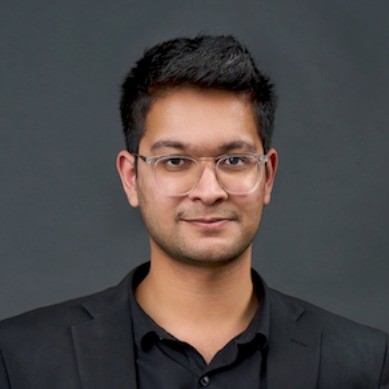
A cancer patient's electronic record can run to thousands of pages. Pathology reports, radiology impressions, genomic panels, treatment histories, side notes, phone messages, the same fact restated forty different ways in forty different notes. Somewhere in that pile is the answer to a specific question - is this patient eligible for the KEYNOTE-522 arm, has anyone reviewed the last MRI, when was the last CBC - and an oncologist has fifteen minutes. Sarim Khan spent the last five years building the software that shortens that search.
Khan is the co-founder and CEO of Triomics, a New York City company that makes oncology-specific AI agents. The company sells three things - a trial-matching product called PRISM, a visit-preparation product called Symphony, and a data-curation product called Harmony - and the pitch behind all three is the same: a general-purpose large language model can summarize a chart, but an oncology-trained model can reliably catch the detail on page 1,847 that determines whether a patient qualifies for a trial. In May 2026 the company raised $22 million in Series B financing led by Battery Ventures. Nexus Venture Partners, Lightspeed, and Y Combinator, all previous backers, came along. Total funding is now above $54 million.
"We have seen medical records [with] thousands of pages of information." - Sarim Khan, on why generalist AI won't cut it
Two Roommates, One Idea
Khan and his co-founder Hrituraj Singh met as undergraduates at the Indian Institute of Technology Roorkee. Khan studied chemical engineering. Singh gravitated toward machine learning and eventually ended up at Adobe Research, working on language models and reinforcement learning. Khan took the more scenic route - he spent a year at MIT, from June 2019 to May 2020, researching how polymer gels expand inside brain tissue. That is a very long way from cancer registries.
In 2021 the two friends noticed the same thing at roughly the same time. Advances in generative AI, still a few months before the ChatGPT moment, meant it was suddenly plausible to extract structured information from unstructured medical records in minutes instead of hours. The specific pain they wanted to relieve was clinical trial matching - the process by which an oncologist figures out whether a patient qualifies for one of the several thousand active cancer trials in the United States. That process, done by hand, could take days per patient. Most patients never got the review at all. They started Triomics, applied to Y Combinator, and got into the W21 batch.
Cancer Registries Are a Legal Requirement
Here is a thing that is genuinely useful to know about the American oncology system: every cancer center is legally required to report every tumor to a government registry. It is one of the most tedious things a hospital does. Someone, usually a highly trained certified tumor registrar, sits with a chart and abstracts fields - stage, histology, treatment, outcomes - into a structured record that eventually flows to the state and the NCI. The registry is what public-health surveillance runs on. It is also very slow and very expensive and very error-prone.
Triomics' Harmony product does the abstraction. That is not a glamorous problem, which is part of the appeal. It is a mandated, recurring, cash-flowing workflow that every cancer center in the country has to fund. If a startup can automate it credibly, the wedge into the hospital is durable. And once the software is inside the hospital reading pathology reports for the registrar, it can also read them for the trial coordinator, and for the oncologist prepping for a Monday morning clinic, which is how you get from Harmony to PRISM to Symphony.
Funding trajectory
Series B led by Battery Ventures. Prior investors Nexus, Lightspeed, YC participated.
Why MSK Called
In 2025 Memorial Sloan Kettering Cancer Center - which is to American oncology roughly what the New York Times is to American newspapers - announced it would deploy Triomics' platform for clinical trial matching and screening. Yale Cancer Center followed. Four of the top ten U.S. News-ranked cancer hospitals now run some part of the stack. The pitch that seems to have landed at these institutions is not that Triomics has a bigger model than Abridge or Microsoft's Nuance. It is that Triomics has trained specifically on oncology data, produces structured outputs, and cites its sources - meaning a clinician can click on any assertion and see the exact page of the medical record the AI is quoting from.
Cited outputs are a small design choice with a large consequence. Clinicians will not trust an AI that hallucinates about their patients. Cited outputs mean the AI cannot hallucinate silently, because every claim is traceable. This is one of those decisions that looks like a UX detail and is actually the product.
more time acting on what matters."
The Shape of the Company
Triomics is headquartered at 285 Fulton Street, a block from the World Trade Center transit hub, and employs about 72 people - a mix of engineers, AI scientists, and clinically-trained staff. Khan describes the team as multidisciplinary by necessity: shipping software into an oncology clinic requires people who know what a pathology synoptic report looks like, people who know what a transformer looks like, and people who know what a hospital procurement contract looks like. In the year leading up to the Series B, the company grew annualized recurring revenue tenfold and quadrupled its enterprise customer base.
The choice to build a vertical AI company is not a fashionable one. For most of 2023 and 2024 the investor conversation ran the other direction - horizontal foundation models, general reasoning, agents that could do anything. Khan's version is the opposite. One disease. One record type. One set of workflows. The bet is that some markets are too particular for a generalist and reward being the one company that has read a hundred million pathology notes.
"The founders observed that clinically-trained teams spent excessive time manually reviewing extensive medical records for trial matching and visit preparation. Rather than relying solely on large language models, they built a system designed specifically for healthcare." - Triomics' own founding statement
Quirks & Notes From the Margin
His MIT year was spent on polymer gels expanding in brain tissue. A field that has nothing to do with cancer paperwork, and everything to do with getting comfortable around unstructured biological data.
The three Triomics products are named PRISM, Symphony, and Harmony. Someone in the office is very into optics and music.
The company's HQ is on Fulton Street in Lower Manhattan, which puts it about equidistant from Wall Street and the Oculus.
Every AI-generated claim in the Triomics interface is cited. Click on a bullet point in a trial summary and it takes you to the page of the record it came from.
What He Wants
Khan's stated ambition is bigger than any single product. He wants a version of oncology in which clinicians walk into visits fully informed by the chart rather than half-reading it in the hallway, in which trial eligibility is checked for every patient rather than the lucky few, and in which the quality teams downstream - the registrars, the researchers, the operations people - start with structured data instead of building it from scratch. It is a fairly clinical statement of purpose from a founder who by all accounts is a fairly clinical thinker.
The most striking thing about the Triomics story so far is how narrow the aperture has stayed. There is no plan to expand into cardiology, or radiology, or primary care, or any of the adjacent verticals that a healthcare-AI company might be tempted to grab. It is oncology, and inside oncology it is the record. Everything else is downstream.