A company that, quite literally, dials and waits
Somewhere right now a SuperDial voice agent is listening to hold music for a regional dental group, pressing 4 for claim status, and waiting forty minutes to ask a payer rep a single question about a denied line item. It does not sigh. It does not quit at 5 p.m. It logs the answer, structures it, and dials the next number. This is the unglamorous frontier Sam Schwager chose on purpose.
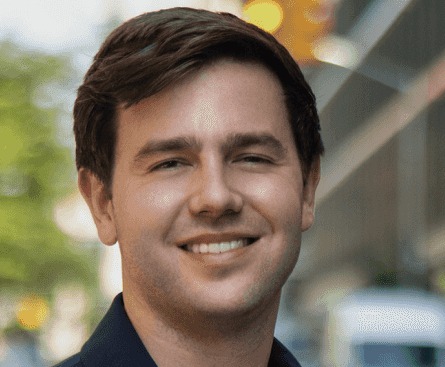
Schwager is the co-founder and CEO of SuperDial, a San Francisco company that automates the high-volume phone calls between healthcare billing teams and insurance companies. Eligibility checks. Prior authorizations. Claim status. Denial follow-ups. Credentialing. The work that keeps revenue cycle management running and keeps clinical staff on the phone instead of with patients. SuperDial's voice agents navigate phone trees, sit on hold, and hold live conversations with payer reps - then hand back clean, structured data.
The pitch is blunt: billions of these calls happen every year, they are expensive and miserable, and software should eat them. In June 2025 SignalFire agreed, leading a $15 million Series A as one of the first checks from its applied-AI fund. By then SuperDial had crossed seven-figure annual revenue and was placing tens of thousands of calls a week. One customer, a dental group, had handed over a backlog of roughly 70,000 insurance claims and now runs more than 10,000 automated calls a month.
Billions of these calls are made every year, and they're extremely expensive and burdensome. We want to make them a thing of the past.
The detour that became the destination
Rewind to early in the pandemic. Schwager was working as a consultant and went looking for mental health support. What he found instead was the American out-of-network reimbursement process - claims delayed, claims reduced, claims denied, on repeat. An experienced software engineer, he did what engineers do with a recurring failure: he tried to fix it systematically.
He called Harrison Caruthers, a Stanford classmate, with an idea for a mental-health chatbot that would automate therapist check-ins with remote patients. Caruthers was unconvinced by the bot but hooked by the problem underneath it. They shelved the chatbot and kept digging. That instinct - keep the problem, drop the idea - would define the next three years.
Three names, one partnership
First came Haven Health in 2021, a platform for customizable remote group therapy. It didn't pencil out. So they pivoted to SuperBill, which automated out-of-network insurance claim filing for patients - a tighter, simpler bet. Schwager credits that simplicity for SuperBill's traction after Haven's sprawl. Then, watching where the real volume and pain lived, they built SuperDial: large language models and voice AI pointed at the phone calls themselves.
Through all three companies, the founding pair never changed. Schwager and Caruthers met in Stanford's freshman computer science course and spent four years building projects together before they ever formalized a company. Schwager describes the chemistry plainly: Harrison keeps him grounded, except when they switch roles, which they do all the time.
Keep it simple. A business needs a clear and simple value proposition.
The resume hiding behind the founder
Schwager earned a B.S. with distinction in Mathematical and Computational Science at Stanford and stayed for an M.S. in Computer Science with an AI specialization, finishing the master's around 2019. He was a Mayfield Fellow in Stanford's Technology Ventures Program in 2017 and a Phi Beta Kappa member. Before founding companies full time, he co-founded Ladle, Inc. in 2018 - building a React web app and working directly with restaurant clients - and spent two years at McKinsey & Company as a business analyst. The pattern is consistent: build the thing, then talk to the people who have to use it.
Why the phone, of all things
Nearly a quarter of US healthcare spending - more than a trillion dollars a year - goes to administration rather than care. A large, stubborn slice of that is people on phones, repeating themselves to other people on phones. SuperDial's framing is that the phone became healthcare's most expensive blind spot, and missed or slow calls quietly cost millions in lost revenue, staff burnout, and backlog. The company runs a human-in-the-loop model - automation for speed, humans for quality control - and is SOC 2 and HIPAA compliant, because the alternative is unthinkable in this industry.
The customer stories carry the argument better than any deck. West Coast Dental handed SuperDial a backlog of roughly 70,000 insurance claims and now leans on the platform for more than 10,000 calls a month. Another billing team reported a fourfold jump in claim throughput without adding a single new hire. These are not marginal efficiency gains; they are the difference between a team drowning in hold queues and a team that has been handed its hours back.
In 2025 SuperDial acquired MajorBoost to deepen its integrations with payer systems, and partnered with operators like Omega Healthcare to scale the approach across larger revenue cycle organizations. The SignalFire round brought more than money: Tom Peterson, former co-founder and COO of Evolent Health, joined as an executive-in-residence to help shape go-to-market - a signal that the company is being built for the enterprise, not just the early adopter.
Schwager's longer bet is almost philosophical: that two AIs will eventually talk to each other over text protocols and skip the phone call entirely. It is a strange thing for a voice-AI CEO to root for - the obsolescence of his own medium - but it is consistent with how he thinks. Keep the problem, drop the idea. Until that day arrives, his agents will keep dialing, patiently and indefinitely, on hold so a human doesn't have to be.
In his own words
Harrison keeps me grounded. At least, that's often how it goes. But we switch roles all the time.
We're laser-focused on these calls between billing teams and payers.
Sources: SuperDial, Stedi Spotlight, Fierce Healthcare, SignalFire, Becker's, SuperDial Founders Story.