He co-founded Momos in Singapore in 2020, after watching favorite restaurants close during lockdown. Before that he helped build Uber Eats across Asia, then started GrabKitchen. The pattern - if there is one - is that he keeps ending up on the operator's side of the counter.
Momos is a software company for multi-location restaurant brands, headquartered in San Diego with its heart still in Singapore, and Sai Alluri runs it. The product is easy to describe and hard to build: it takes every place a customer talks about a restaurant - Google reviews, Yelp reviews, delivery-app comments, DMs, feedback surveys - and pipes them into one place, then answers them with AI, and then tells the operator whether the store on the corner of 5th and Main is losing regulars.
That is the plainest version of it. The longer version involves customer sentiment analysis, unified inbox, listings management, review response automation, digital vouchers, geo-targeted promotions, incident detection, and a reputation score that goes up and to the right if the operator does their job. The company sells to enterprise chains and franchisees; it employs about 150 people; it has been called an "AI guest platform," a category that did not exist two years ago and which Alluri and his co-founder Andrew Liu are attempting, in the manner of most ambitious startups, to invent by simply behaving as though it does.
The pitch is credible because the pitcher used to be the customer. Alluri managed hundreds of restaurants while at Grab. He knows what it feels like when a one-star review sits unanswered for three days and the operator only notices because the general manager forwarded it in a WhatsApp group with 40 unread messages. Momos, in its most honest framing, is the tool he wished he had.
An AI-powered platform for multi-location restaurant brands - review management, feedback automation, customer engagement, reputation scoring, listings, and marketing - built by former Uber and Grab operators who spent years running the restaurants they now sell software to.
Momos is headquartered in San Diego, California. It was born in Singapore, where Alluri has lived for roughly seven years and where much of the team still works. The dual-continent posture is not accidental; the customer base is global.
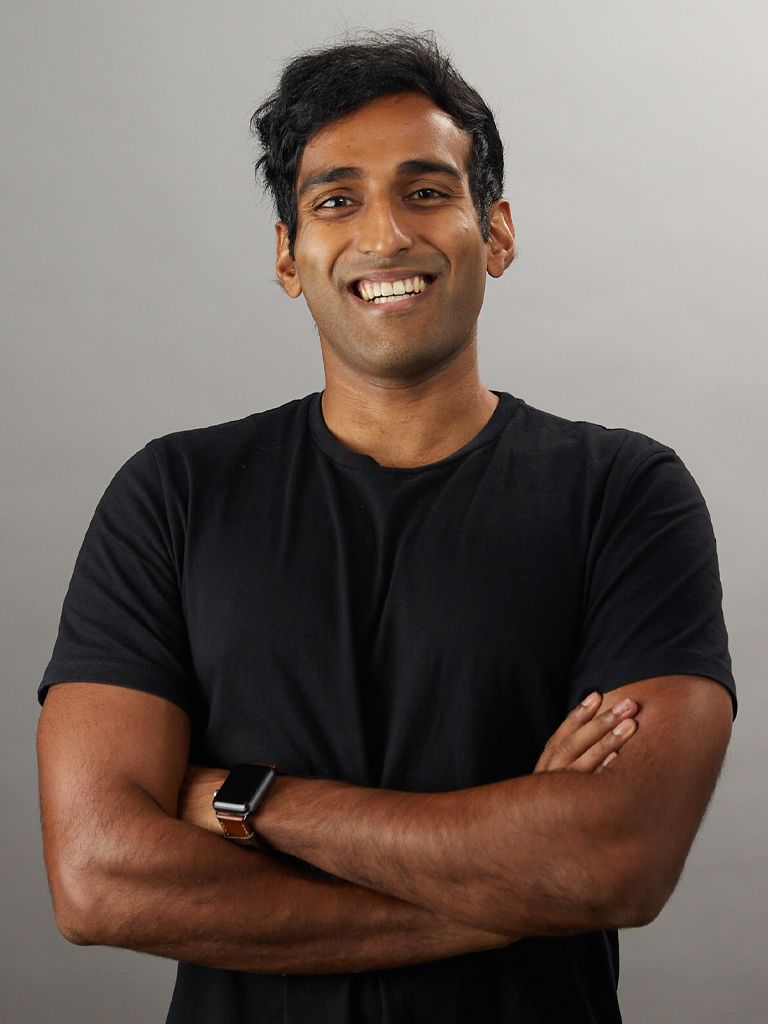
“Getting product-market fit takes time, creativity, rigor, luck, and a ton of iteration.”
- Sai Alluri
Alluri was born in India and grew up in Connecticut, a first-generation immigrant whose parents, in his own telling, sacrificed to give the family an American life. He studied at the University of Illinois at Urbana-Champaign. He then joined Uber, early enough that "early Uber employee" still means something specific in the Bay Area, and worked on ride-sharing in San Francisco.
Around 2017 he moved with Uber to Asia and helped launch Uber Eats across the Asia-Pacific region. This is the part of the resume where operators grow up: launching a food-delivery business into markets with unfamiliar cuisines, courier economics, and payment systems teaches you the specific difference between a spreadsheet and a supper. When Uber sold its Southeast Asia business to Grab, Alluri stayed in the region and moved to Grab. There, he founded and ran GrabKitchen, the superapp's cloud kitchen network, which grew into the largest such network in Southeast Asia.
Then COVID arrived, and Singapore's restaurants started closing. He watched favorites shutter. He and Andrew Liu started Momos in 2020. The idea was that restaurants, particularly good independent ones and growing multi-location brands, did not need another delivery app - they needed the operator's console. Five years later, Momos has 150 employees and a $10 million Series A that closed in September 2024, bringing the total to about $16.5 million.
Source: Public reporting, Series A announcement Sept 2024.
“I work with the best engineers and restaurant operators to build software that can help bring more customers to restaurants.” Sai Alluri
“It was devastating to see some of our favorite restaurants struggle or shut down permanently.” On the impetus for Momos, 2020
“Momos is a culmination of all the tools we wished we had at those restaurants.” momos.com/about
He is a self-described foodie who plans trips around restaurants, which is either a professional hazard or a competitive moat depending on your priors. He recently converted from Salted Caramel to Black Sesame - a small ice-cream ideology shift that says a lot about a decade spent between Connecticut, San Francisco, and Singapore.
His favorite show is Breaking Bad. He says his mother makes the best pickles in the world and is, in his words, finally learning to embrace seafood - a family detail from the Momos "About" page that reads more like a text message than a corporate bio, which may be the point.
He considers himself both American and Asian at heart. Given the company's split HQ, that duality has become a business fact, not just a personal one.
1. Was an early enough Uber employee that "early Uber employee" is a resume line.
2. Personally ran hundreds of restaurants during his time at Grab.
3. Founded GrabKitchen - the largest cloud kitchen network in Southeast Asia.
4. Splits time between Singapore and San Diego.
5. Black Sesame convert. Formerly Salted Caramel.
6. Named to Tatler Asia's Gen.T Leaders of Tomorrow, 2023.
Restaurant technology has a specific problem, which is that most of it is built by people who have never worked a Friday-night rush. Alluri's biography is unusually well-suited to solve this, in a way that shows up in the product: Momos does not sell dashboards for their own sake; it sells response time to a bad review, and revenue attribution to a marketing SMS, and the ability to know that the location on 3rd Avenue is quietly losing regulars three months before revenue reflects it.
The bet Momos is making is that customer data - reviews, feedback, delivery comments, DMs, survey responses - is the closest thing a multi-location restaurant brand has to a nervous system, and that whoever owns the interface owns the customer relationship. In September 2024, ten million dollars' worth of investors agreed.
The other bet, quieter but more interesting, is on AI as a workflow rather than as a chat interface. Momos does not want you talking to a chatbot. It wants your general manager reading a summary that says, in plain English, that the Yonkers location has a rising trend of complaints about wait times, that the manager should be told, and that a personalized promotion for the last five one-star reviewers is queued for approval.
Build the operating system for multi-location restaurant brands worldwide, from independent chains to enterprise.
Co-founder and CEO of Momos, an AI-powered restaurant customer engagement platform. Previously Uber and Grab.
A software platform for multi-location restaurant brands that unifies reviews, feedback, marketing, and reputation into one dashboard.
2020, in Singapore, during the COVID-19 pandemic, with co-founder Andrew Liu.
Approximately $16.5 million total, including a $10 million Series A announced in September 2024.
Split between Singapore, where Momos was founded, and San Diego, California, where Momos is now headquartered.