Profile / Biotech / Vol. 26
Ryan Spencer.
The interim controller who never left. Twenty years inside one Emeryville biotech, ending in a $2.2 billion handshake with Sanofi.
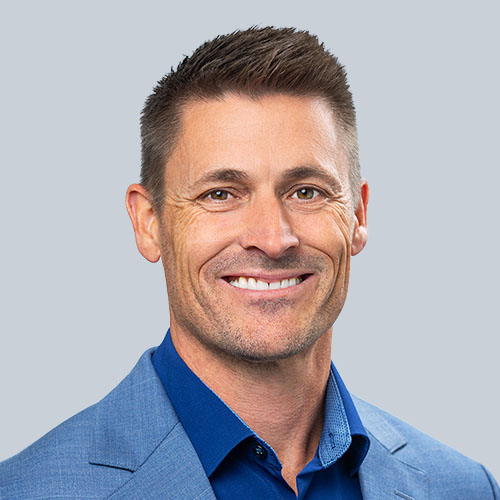
RYAN SPENCER · FILE PHOTO · DYNAVAX
The interim controller who never left. Twenty years inside one Emeryville biotech, ending in a $2.2 billion handshake with Sanofi.
Ryan Spencer's office sits inside a glassy building on Powell Street, between a freeway and the Bay. From there he runs a company that, by the time you read this, is in the process of being absorbed into Sanofi for roughly $2.2 billion. The deal closes in the first quarter of 2026. He'll have spent twenty-one years at Dynavax by then. The first nine of them he was, technically, an accountant.
That fact does most of the work in any honest story about him. Spencer has a B.A. in Business Economics from UC Santa Barbara. Before Dynavax he audited at Ernst & Young and kept the books at a public software company called QRS. He arrived at Dynavax in 2005 with the word "interim" in front of his title and proceeded to ignore it. Financial planning, then commercial operations, then product development for HEPLISAV-B from 2015 through its 2017 FDA approval, then SVP of Commercial in time to launch the thing in 2018. In December 2019, the board handed him the company.
Three months later the world stopped buying hepatitis B vaccines because the world stopped going to the doctor. Spencer's response was unusually calm for a freshly-minted CEO whose only commercial product had just lost its market. "We ended up building a lot of share gain, even though there was no volume," he told an interviewer about that period, with the kind of dry phrasing that auditors never quite shake. He was right. When elective vaccinations resumed, HEPLISAV-B kept taking share, and by the mid-2020s it had become the leader of the U.S. adult hepatitis B vaccine market.
The other thing Dynavax happened to own was an adjuvant called CpG 1018. An adjuvant is the part of a vaccine that wakes the immune system up; it's the spice, not the meat. CpG 1018 was the spice in HEPLISAV-B, but Spencer's team had also been quietly licensing it out. When the COVID-19 vaccine race began, that quiet licensing program suddenly became one of the most important global supply lines in the world. Dynavax's adjuvant ended up inside vaccines for nearly a billion doses, distributed across vaccine developers from India to Europe.
This is the part of the story where most CEOs would have raised a megafund, opened three new research sites, and given a TED talk. Spencer didn't. He kept Dynavax small, kept the headcount around 400, kept the drumbeat on commercial execution. He let the analysts call it boring. The boring was the strategy.
By 2025 the shape of the company was unmistakable: a profitable hepatitis B franchise, a phase 1/2 shingles vaccine candidate that read out promisingly, an adjuvant business with momentum, and roughly $277 million in annual revenue. At the JP Morgan Healthcare Conference in January 2025, Spencer told the room, "This is why we're not suffering through the biotech winter." It was as close to a victory lap as he's ever taken on the record.
Eleven months later Sanofi announced the tender offer: $15.50 per share in cash, total equity value of about $2.2 billion. The press release credits the shingles candidate and the marketed Hep B product. The shareholders credit Spencer.
What's striking, going back through the public record, is how little of him is in the public record. There's no podcast circuit. No ghostwritten leadership book. No founder mythology. The LinkedIn page is short. The Bloomberg profile is shorter. He shows up at investor days, says useful things in plain sentences, and goes back to Emeryville. The leadership style appears to be: do the work, stay small, count the doses.
Spencer's career is also a quiet rebuke to a certain Silicon Valley script. He didn't start the company. He didn't drop out of anything. He didn't pivot four times before finding product-market fit. He was an interim controller who paid attention, asked for the next job, then the one after, then the one after that. Twenty years later he handed his shareholders a billion-dollar premium and walked the company into a French pharma giant. There are worse playbooks.
He's also rare in another way. Vaccine CEOs in the 2020s tend to either play prophet (this is the future of medicine) or victim (regulators don't understand us). Spencer plays neither. He talks about adjuvants the way an industrial CEO talks about a manufacturing line: capacity, tolerability, share, supply. The mission is real - protect against infectious disease - but the language is operational.
Ask what comes next and the public record is silent. The merger closes. The Dynavax name probably doesn't survive inside Sanofi. Spencer has not announced a next chapter. Given the past, the next chapter will probably also start with the word "interim" and end somewhere people didn't expect.
First and only two-dose adult hepatitis B vaccine in the U.S. Spencer led the 2018 commercial launch. By the mid-2020s it was the U.S. market leader for adult Hep B. Most of his tenure as CEO is, in some sense, a single product story executed well.
An adjuvant Dynavax developed in-house, originally for HEPLISAV-B, ended up inside roughly a billion COVID-19 vaccine doses worldwide. Spencer's commercial team turned a niche licensing program into a global supply line in under two years.
December 2025. $15.50 per share, all cash, $2.2B equity value. Sanofi gets HEPLISAV-B and the phase 1/2 shingles vaccine candidate. Spencer gets credit for building a small biotech that a French pharma giant decided was worth buying outright.
"We ended up building a lot of share gain, even though there was no volume."
- on HEPLISAV-B during the pandemic
"This is why we're not suffering through the biotech winter."
- JP Morgan Healthcare Conference, January 2025
The companies and institutions on Spencer's resume.