Ron DeFeo's first lesson in corporate communications came before the corporation and before much communication. Fresh from DePauw University, where he studied communications with a journalism focus, he wanted a proper job. What arrived was a four-month internship at Cohn & Wolfe in Atlanta paying $5 an hour. It was the sort of offer that can feel less like a door than a politely cracked window.
He climbed through. Years later, speaking to public relations students at the University of Georgia, DeFeo gave that choice a name: “Play the long game.” The phrase is modest enough for a desk calendar, but his career makes it specific. Accept the small beginning. Learn the machinery. Notice what you do not know. Volunteer for the assignment with poor lighting and no applause. Stay long enough for the lesson to compound.
Today he is American Airlines' Executive Vice President of Communications and Marketing and Chief Communications Officer. The title has enough runway of its own. His remit includes internal and external communications, marketing, sponsorships, community affairs, team member recognition and events. In other words, he helps explain a giant airline to its employees, customers, partners and communities, while also helping decide how it presents itself to them.
A reporter takes the business route
The young DeFeo imagined journalism. He had taken one public relations class and no business courses, a gap he later said he regretted. His first full-time stop, Ketchum, became an education in public relations and client service. He worked in media relations and volunteered for Lowe's Great Safety Adventure, a traveling exhibit that visited schools. The work demanded the unromantic availability of a 24/7 practitioner: calls answered, details checked, the core of the story found quickly.
Then a Clorox assignment put him closer to sales and brand managers. Communications was no longer merely the language wrapped around a business. It was connected to what the business sold, how customers understood it and why managers made tradeoffs. DeFeo took what he later called an honest look at himself. Curiosity had brought him to the edge of the commercial conversation; fluency would require more study.
He returned to the University of Georgia for an MBA, followed by an internship at Cox. The degree did not replace the reporter's instinct. It gave that instinct a balance sheet, an operating model and a seat nearer the decision. His advice to communicators would later compress the move into five words: “Attach yourself to the business.” It is difficult to translate a company if you only arrive after the verbs have been chosen.
Career route · No nonstop service
$5/hour
client service
8.5 years
proxy battle
since 2015
The useful seat is often uncomfortable
At The Home Depot, DeFeo started in a field role and stayed for roughly eight and a half years. He moved into leadership while handling media relations, brand strategy, reputation, issues and crisis communications. One choice stands out because it lacked obvious glamour: he accepted a human resources assignment that nobody else wanted. It brought him into difficult issues and taught him to lean toward hard work rather than wait for a tidier portfolio.
Retail was followed by restaurants. As Darden Restaurants' senior communications leader, DeFeo oversaw internal and external communications and navigated a year-long proxy contest between investors. The fight ended with a new board and the chief operating officer becoming chief executive. Corporate prose prefers words like “transition.” A proxy battle is closer to chess played while the table is being replaced.
When the situation settled, DeFeo went looking for another test. American Airlines hired him in August 2015 as Vice President of Global Communications, giving him responsibility for media relations, social media, employee communications, creative services, engagement and community relations. In 2018 he became Senior Vice President of Global Engagement, adding leadership development and enterprise learning. He joined the senior leadership team as Chief Communications Officer in 2022. His current executive brief adds marketing, sponsorships and events to the communications portfolio.
Airlines are generous suppliers of complexity. The product depends on weather, maintenance, crews, airports, technology, regulators and millions of individual plans meeting on time. A communicator can polish a sentence, but cannot charm away a thunderstorm. DeFeo's route through operational businesses gave him a useful habit: get close to the actual work, then explain the decision without pretending the work is simple.
One take, one question, under ten minutes
The liveliest expression of that habit is Tell Me Why, the American Airlines program DeFeo hosts. Its premise is almost aggressively sensible: ask leaders to explain the reasoning behind company decisions. The program was designed for roughly 130,000 employees, many of them deskless and accustomed to information in short bursts. Episodes were meant to be timely, relevant and brief. Most finish in less than ten minutes.
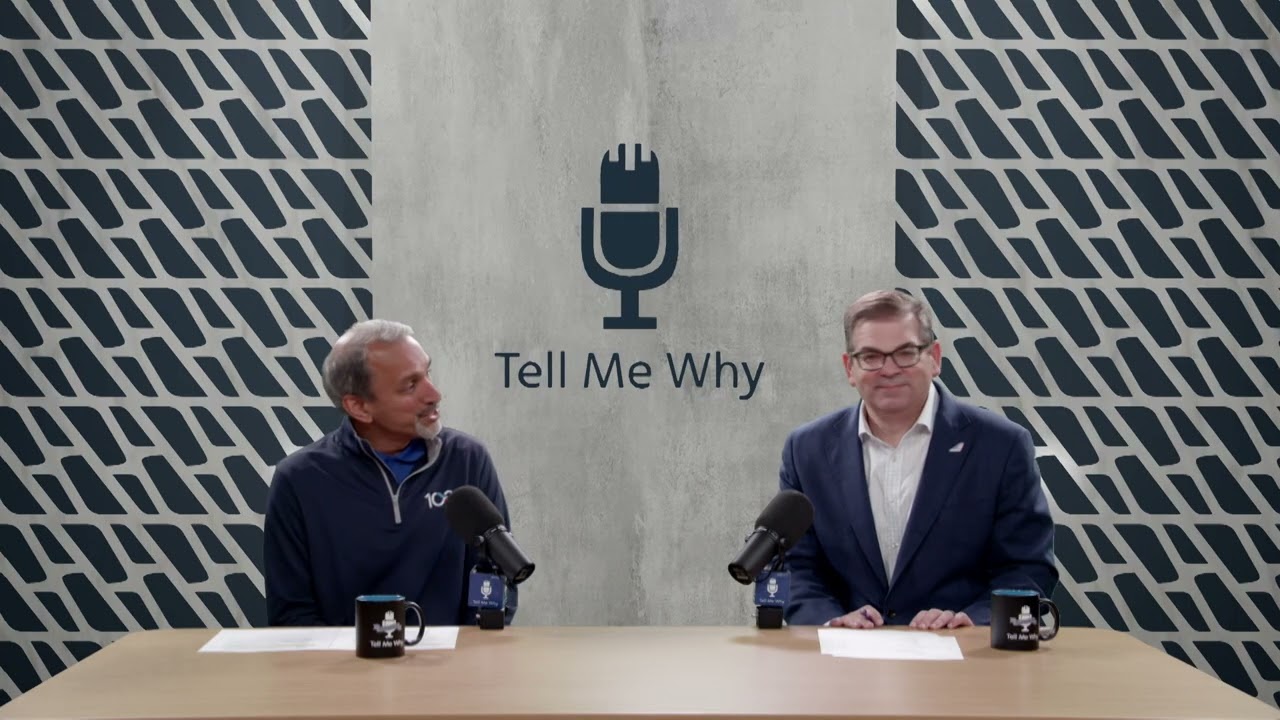
The production also adopted a one-take policy. Corporate video usually treats every pause as an enemy and every rough edge as a tiny emergency. Tell Me Why let some air remain in the room. The point was authenticity, not lacquer. Audio versions were released publicly, giving customers and industry watchers a window into conversations originally shaped for employees.
The results were unusually tangible. Ragan reported that the first 48 episodes earned more views than 98 percent of American's other internal communications content. The videos approached half a million internal views, while public audio versions accumulated more than 70,000 plays. Producers DeFeo and Adib Abrahim won the podcast category in Ragan's 2018 Employee Communications Awards.
The show survived the novelty of being new. In a 2023 LinkedIn post, DeFeo called hosting it the most fun he has at work and noted that it had reached a sixth season. By 2026 it was in Season 9. Recent guests have included GE Aerospace chief Larry Culp on engine technology and the long partnership between the companies, and American's digital chief Ganesh Jayaram on technology, artificial intelligence and a more efficient airline. Chief Commercial Officer Nat Pieper joined for a conversation about network, revenue, loyalty and customer experience.
The executive as translator
DeFeo's work now sits where reputation, employee understanding and customer expectation overlap. That includes large public moments. Ahead of American's centennial year, he explained a special Flagship livery that paired an early orange lightning-bolt design with a modern Boeing 777-300. His description focused on the balance: honor the airline's history while looking toward its next century. Branding, at that scale, is memory painted on aluminum.
The quieter work is leadership. DeFeo is a member of Page, the professional association for senior communications executives, and serves on the advertising and public relations executive advisory council at the University of Georgia's Grady College. He previously spent nine years advising The Plank Center for Leadership in Public Relations. When he speaks to students, his counsel is practical rather than decorative: get to the core of the work, assess yourself honestly, keep a good attitude, and seek perspectives from mentors and family.
His promotion to Global Engagement in 2018 made that interest operational. Alongside communications and community affairs, DeFeo took responsibility for leadership development and enterprise learning and engagement. The organizational logic was revealing. Employee experience would not be treated as a memo that appeared after managers made choices. Learning, recognition, communication and leadership would sit closer together, each informing the others.
One visible result was RIGHTstart, American's development program for first-time people leaders. DeFeo celebrated a cohort of 51 participants who completed 13 weeks of interactive work on leadership fundamentals and the particulars of managing inside the airline. The numbers matter less than the timing. A new manager's earliest habits can travel surprisingly far, especially in an operation where decisions pass from offices to gates, ramps, hangars and aircraft.
He has applied the same thinking to experienced leaders. In 2024, DeFeo described a Global Engagement gathering that stepped away from project deadlines and company deliverables. The group invited senior figures from the communications field to discuss careers, purpose and the development of future leaders. There was no pre-work. For an executive who recommends outside perspectives from mentors and family, the format put his own advice into the calendar.
This is a useful distinction in DeFeo's progression. His early career was about learning the craft well enough to respond. The later chapters have been about building teams that can respond without waiting for a single executive to supply every answer. Communication becomes less a performance by a central office and more a capability distributed through the organization. In a company measured by handoffs, that may be the most airline-like idea in his portfolio.
Taken together, those rules form a career compass more useful than a ten-year plan. Play the long game points forward. Attach yourself to the business points inward, toward the machinery. Lean into hard assignments points directly at the weather. The remaining instruction is the simplest and most durable: keep asking why.
The $5-an-hour intern did not become a reporter in the traditional sense. He became a translator inside businesses where the facts move quickly and the audience is enormous. The medium might be an employee note, a marketing campaign, a century-old paint scheme or a nine-minute podcast. The job remains recognizable: find the reason beneath the noise, and tell it clearly enough that people can carry it with them.