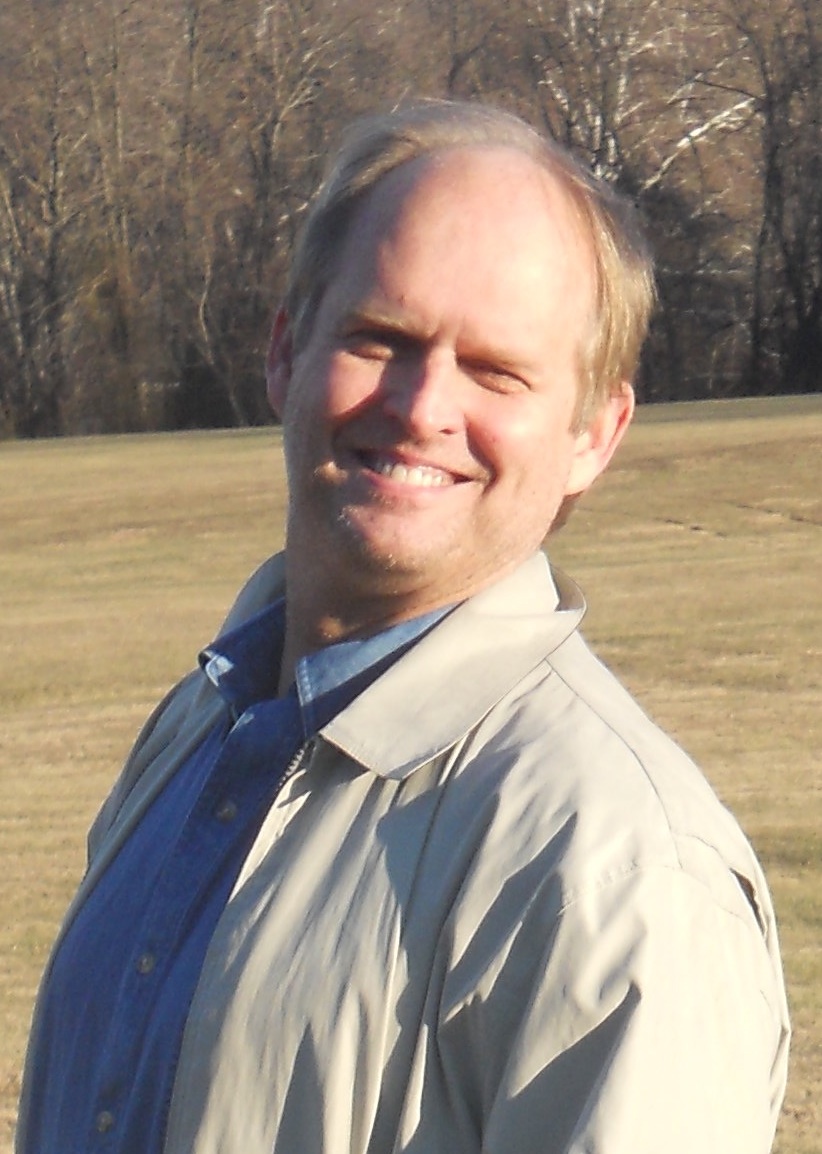
A man keeps asking the question polite company skips
Ask Robin Hanson why people go to the doctor and he will not say "to get healthy." He will say medicine is mostly about showing that we care, and being shown care. Ask him how to run a government and he will hand you a betting market instead of a ballot. Ask him what happens when you can copy a human brain like a file, and he will give you 500 pages of supply-and-demand curves describing the daily life of the copies. This is the Hanson move: take a question everyone treats as settled, and treat it as an open market.
Today he is an associate professor of economics at George Mason University, a department famous for housing economists who refuse to behave. He has spent three decades on a single conviction that sounds simple and turns out to be radical: most of what we say is signaling, and the cure for self-serving talk is to make people put money on what they actually believe. He built the tools to do exactly that.
Vote on values, but bet on beliefs.
— The futarchy proposal, in six wordsThe idea that follows him everywhere
In 1988 Hanson started writing, in detail, about something he called idea futures: markets where you could bet on whether a claim would turn out true. Not sports, not stocks. Will this drug pass trials? Will this policy cut unemployment? The price becomes a forecast, and the forecast comes from anyone willing to risk money on being right rather than on looking good at a dinner party.
He did not just theorize. In 1990 he was the principal architect of the first internal corporate prediction market, at the software company Xanadu. In 1994 he helped launch the Foresight Exchange, one of the first prediction markets on the web. Along the way he invented the logarithmic market scoring rule, a piece of math that lets a market keep quoting prices even when almost nobody is trading. That rule quietly became standard plumbing, later turning up inside the automated market makers that power large parts of crypto. The economist who wanted better forecasts ended up writing code that moves billions.
The market that scared Congress
From 2001 to 2003 Hanson helped design DARPA's Policy Analysis Market, a research project to aggregate forecasts about geopolitical events in the Middle East. Critics rebranded it a "terrorism futures market," and the political reaction was instant. The program was killed within days. Hanson's response was characteristic: the idea was sound, the packaging was unlucky, and the world would come back around to it. It largely has. He went on to help build IARPA's combinatorial forecasting markets DAGGRE and SCICAST between 2010 and 2015.
Out of all this grew futarchy, his proposal for a form of government built on prediction markets. The slogan does the heavy lifting: vote on values, bet on beliefs. Citizens would decide what they want, expressed as a measure of national welfare. Markets would decide which policies are most likely to deliver it. If the market clearly says a policy will raise expected welfare, it becomes law. Democracy keeps the steering wheel; markets read the map.
The great filter is whatever has prevented dead matter from giving rise, in our universe, to expanding, lasting life.
— On why the sky looks so emptyWhy the universe looks empty
In 1996 Hanson coined a phrase that escaped academia and went feral on the internet: the Great Filter. The setup is the Fermi paradox. The galaxy is old and vast, so where is everyone? Hanson's framing: somewhere between dead chemistry and a civilization that spreads across the stars, there must be at least one step that is staggeringly hard to pass. That step is the Great Filter. The unsettling question is whether humanity has already cleared it or whether it still lies ahead of us.
He returned to the theme in 2021 with the grabby aliens model, a spare three-parameter argument built with collaborators. It tries to explain why humans appear so early in cosmic history through a selection effect: civilizations that expand fast and visibly fill up the volume around them, so any civilization that asks the question must, almost by definition, arrive before its neighbors arrive to take over. The videos explaining it racked up serious view counts. Hanson tends to reach more people through diagrams and talks than through journals.
Two books, one obsession
His obsession is hidden motives, and his two books attack it from opposite ends. The Age of Em (2016) looks forward. It asks what civilization becomes once we can scan and emulate human brains. The emulations, the "ems," run faster than biology, copy themselves to fill demand, and reshape work, love, and law. It reads less like science fiction and more like a relocation guide written by an economist who took the premise completely seriously.
The Elephant in the Brain (2018), co-written with Kevin Simler, looks inward. The argument: we are strategically blind to our own motives because that blindness helps us get away with self-interest while looking generous. School isn't only about learning, charity isn't only about helping, and the elephant in the room is the one inside your own head. It is the inward mirror of his outward project. He wants the hidden incentives on the table, whether they sit in a market price or behind your own good intentions.
Add it up and a pattern emerges. The prediction markets, the futarchy, the Great Filter, the ems, the elephant: every one is a tool for prying apart what people say from what is actually going on. He started as a physicist, took an MS in physics and an MA in the conceptual foundations of science from Chicago, spent nine years as a research programmer at Lockheed and NASA, then earned a PhD in social science from Caltech in his late thirties. He came to economics late and on purpose, because it was the discipline that let him model the gap between stated reasons and real ones.
He blogs at Overcoming Bias, a site he launched in 2006 with Eliezer Yudkowsky before Yudkowsky left to build the rationalist community at LessWrong. The blog became one of the founding texts of that whole world. Hanson is still there, still posting, still betting that a price is more honest than a press release.
Four ideas with his fingerprints
Prediction Markets
Bet on whether a claim comes true. The price becomes the crowd's best honest forecast.
Futarchy
Governance where elected values set the goal and markets pick the policy most likely to hit it.
The Great Filter
The barrier that keeps dead matter from becoming a star-spanning civilization. Maybe it's behind us. Maybe not.
The Age of Em
A worked-out forecast of a world run by emulated brains that think faster and copy on demand.
The books
The Age of Em
Work, love, and life when robots rule the Earth. A serious, granular forecast of a society built from copied human minds.
The Elephant in the Brain
Hidden motives in everyday life. Why we don't know why we do most of what we do, and why that blindness is useful.