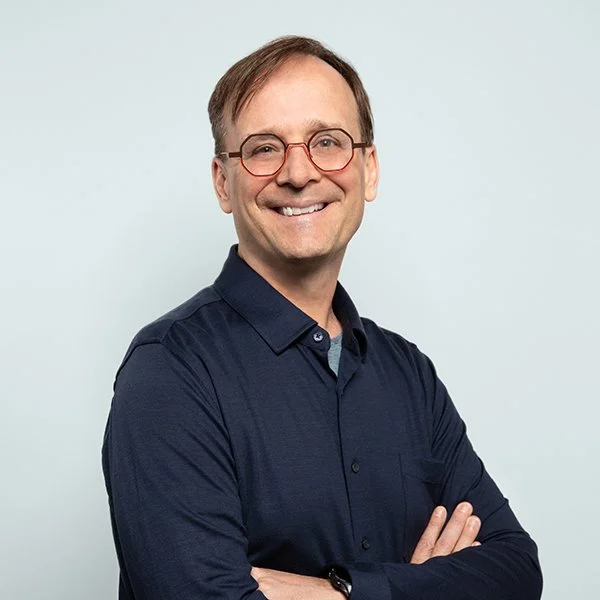
A double lock on the undruggable
In April 2025, a patient in the GUARDIAN-101 trial received the first dose of a molecule called CLSP-1025. The molecule does something most cancer drugs cannot: it ignores almost everything. It only acts when a cell shows two things at the same time - a specific p53 mutation, and the exact HLA type that displays it. Two locks. Both have to open. That is the entire idea Robert Ross sold to investors, and the entire reason Clasp Therapeutics exists.
Ross is the founding CEO of Clasp, a clinical-stage immuno-oncology company headquartered on Thames Street in Baltimore. He joined in November 2023, before the company had a public name or a press release, and helped raise a $150 million Series A that landed in March 2024 with Third Rock Ventures, Novo Holdings and Catalio Capital on the cap table. The science underneath came from two Johns Hopkins names that anyone in cancer biology knows on sight: Bert Vogelstein, the geneticist who mapped many of the mutations that turn a normal cell malignant, and Drew Pardoll, the immuno-oncologist whose work helped make checkpoint inhibitors a category.
The problem Clasp is built around is old and stubborn. Cancer's most common driver mutations - p53, KRAS, PI3 kinase - sit inside the cell, not on its surface. For decades they were filed under "undruggable" because antibodies cannot reach what they cannot see. Ross's answer borrows the cell's own filing system. When a cell makes a mutated protein, it chops fragments of it into peptides and displays them on its surface in the grip of HLA molecules. A mutated peptide in an HLA cradle is a flag that says, quietly, this cell is broken. Clasp's bispecific T cell engagers are designed to read that flag, grab a passing T cell, and bring the two together so the T cell does the killing.
Why specificity is the whole game
"What we are targeting is the mutated peptide in the context of HLA presentation," Ross has said, and the phrasing matters. The mutated peptide is the difference between a tumor cell and the healthy cell sitting next to it. Hit the mutation only where HLA presents it, and in theory you get a therapy that is brutal to cancer and quiet everywhere else. The trade-off is eligibility. "For a patient to be eligible to be treated, their tumor has to have both the mutation and the right HLA phenotype," Ross has noted - a narrower front door than a blockbuster, but a far cleaner shot once a patient walks through it. Clasp's platform, named pHLARE for the HLA-peptide complexes it reads, is built to expand across multiple HLA types so the door gets wider over time.
The lead molecule, CLSP-1025, goes after p53 R175H, one of the single most common mutations across solid tumors - gastrointestinal, lung, and gynecological cancers among them. In November 2024 the company laid out its preclinical case at the SITC annual meeting: selectivity, activity, the pharmacology. In spring 2025 it backed that up at AACR and then put the molecule into a human being. Clasp describes CLSP-1025 as the first tumor-specific T cell engager to reach clinical development. That is a claim with a clock on it, and Ross spent thirty years earning the right to make it.
The career that built the conviction
Ross is a physician first. He trained as a Fellow in Medical Oncology at the Dana-Farber Cancer Institute and stayed on as faculty, the kind of posting that means he treated patients with the exact tumors he now designs molecules against. From academia he moved into industry - Genentech, then Infinity Pharmaceuticals - learning how a drug actually gets made and moved. He ran oncology at bluebird bio as Head of Oncology. Then he took the top job at Surface Oncology, serving as CEO and board member, and steered the company through its acquisition by Coherus Biosciences. He has also sat as an independent director at Obsidian Therapeutics and Xilio Therapeutics, watching other people's boards from the inside.
That résumé reads like a slow accumulation of the exact skills a precision-oncology launch demands: the clinic, the molecule, the company, the deal. By the time Clasp came along, Ross had done every job in the building. Starting one from scratch was the part he had not done. So he did it.
One financing, one mission
The most revealing thing Ross said about the $150 million might be the most boring on its face. The money, he explained, "is meant to get us to clinical data before we have to raise money again." No hedging, no optionality theater - a single declared destination. In a market where biotechs raise to survive to the next raise, that is a deliberately narrow vow. It is also a bet on his own read of the science: that the data, when it comes, will speak loudly enough to fund whatever is next.
There is a tidy symmetry to the man and the method. Ross holds two undergraduate degrees from Stanford - biological sciences and philosophy - then an M.S. from Harvard Medical School, an M.D. from Columbia, and an internal-medicine residency at UCSF. Biology gave him the mechanism. Philosophy gave him the habit of asking what a thing actually is before deciding what to do about it. Clasp's whole approach is a philosophy-major's move dressed as a biology problem: define the tumor cell precisely - by its mutation and its HLA - and the treatment writes itself. Everything else is noise to be ignored, the way a good oncologist ignores everything on the scan except the one shadow that matters.
What happens next is being measured one patient at a time in a dose-escalation study. The thesis is clean. The molecule is in humans. And the man who has spent a career getting other people's drugs across the line is, for the first time, carrying his own.