He founded an academic journal and a software company for the same reason - because recovery support deserved both the research and the product to match.
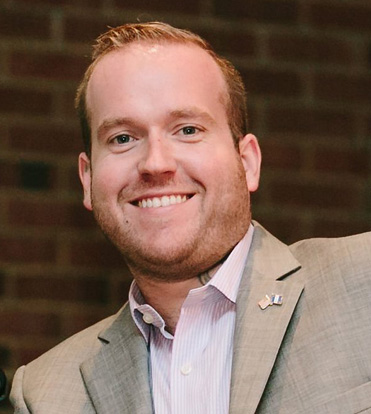
ROBERT D. ASHFORD, PHD, MSW · Co-founder & CEO, RecoveryLink. The guy who measures stigma in syllables.
Robert Ashford spends his days on a deceptively simple problem: when someone leaves a treatment program on a Tuesday, what happens on Wednesday? The clinical world has discharge papers. Ashford built the thing that picks up after them.
That thing is RecoveryLink, the Philadelphia company he co-founded in 2020 and runs as CEO. It is an online suite of tools for people navigating recovery from substance use, disordered eating, trauma, and more - and for the organizations trying to serve them. The product connects individuals and providers and lets them find and deliver peer-based support at the touch of a button, around the clock.
The pitch sounds humane. Ashford insists it is also a business. He and his co-founders - Chris Hart, the company's CIO, and Brent Canode, its CMO - looked hard at the digital health and virtual mental health tools already on the market and found pain points in every one of them. So they made their own. The wager underneath it all: that care management for recovery is not charity, it is a viable market with measurable value.
He is also Executive Director of Unity Recovery, a recovery community organization, and in 2025 the two outfits began drafting an AI toolkit for peer recovery specialists - the next attempt to give frontline supporters leverage they have never had.
"We still get sideways glances when we talk about recovery in pitches or meetings. But it's a conversation we need to continue to have. It's a viable market."
Most founders talk about traction. Ashford talks about language. A through-line in his scholarship is what he calls recovery dialects - the difference between a word that opens a door and one that quietly closes it. Call a person an "addict" and you have made a clinical judgment and a social one in the same breath. Call them someone "in recovery" and the math changes.
This is not wordsmithing for its own sake. In Ashford's research, label choice tracks with outcomes, and outcomes track with policy and funding. Get the vocabulary wrong and you build a system that punishes the people it claims to help. He has put that argument into more than 50 peer-reviewed articles and book chapters, and into the Journal of Recovery Science, which he founded and edits.
The academic credentials are stacked: a Bachelor of Social Work from the University of North Texas, a Master of Social Work from the University of Pennsylvania's School of Social Policy & Practice, and a PhD in health policy from the University of the Sciences in Philadelphia. Early on he held a research fellowship at the Treatment Research Institute and managed technical assistance on a SAMHSA project at JBS International.
Where the work lives
Lab, launch, and legislation - rarely in the same resume.
The goal is not a kinder footnote. It is to make recovery support a measurable, fundable field - with the data, the language, and the software to back it.
Robert Ashford · Recovery Scientist · Founder, RecoveryLink