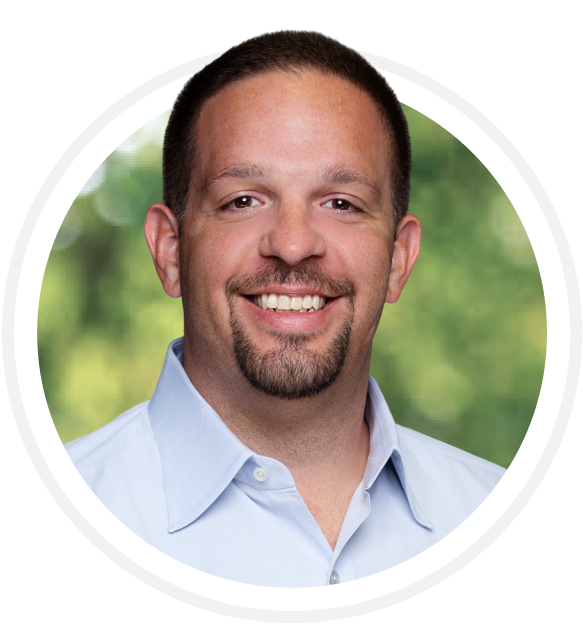
Picture a benefit dollar trying to get from a health plan to a carton of eggs. It changes hands six times, loses its way twice, and arrives as a coupon nobody can find. Robby Knight spent his career watching that journey - and decided to rebuild the road.
Robby Knight runs evermore, the company that until October 2025 went by Soda Health. The rename was not a pivot. It was a confession - that "benefits administration" was always too small a name for what the company actually does, which is decide whether a dollar spent on someone's groceries, over-the-counter medicine, or bus fare can be tied to a measurable outcome instead of disappearing into a transaction log.
The product is a Smart Benefits platform. Health plans load supplemental dollars onto it. Members spend those dollars at retailers - CVS, Walgreens, Kroger - on the specific things their plan intends to cover. Behind that simple card sits the hard part: item-level rules, real-time updates, and the data plumbing that lets a payer know a benefit actually closed a care gap rather than just clearing checkout.
Knight came to this through an unusual door. He trained as a social worker. Two of his four degrees are in social work - a bachelor's from the University of Alabama and a master's from Columbia. The other two, also from Alabama, are a master's in management information systems and an MBA. It is a strange transcript for a fintech-flavored founder, and it explains a lot. He thinks about benefits the way a caseworker thinks about a client: what does this person actually need this week, and what is standing between them and it?
"There had to be a better way for people to get their first-order needs met - in an economic model that isn't prohibitive for health plans and employers to scale."
Robby Knight, on why he started the company
Before evermore, there was Walmart. Knight spent close to eight years there, and the resume reads like three jobs stacked into one. He was an architect of Walmart Health. He was a founding member of Walmart's health insurance brokerage. And he built the retailer's flex card business into a $2 billion revenue stream inside of three years. That last line matters more than the others. The flex card is the exact muscle evermore now flexes for the whole industry - a way to route benefit money to a register and have it land on the right product.
So when Knight left, he was not chasing an idea he had read about. He was taking a machine he had already built once and rebuilding it as neutral infrastructure - something a health plan could use without owning a retail empire the size of Walmart.
The Numbers
Small company, large rails.
$100MRaised to date
$2BWalmart flex card built
33MMA members in reach
2021Founded in Bentonville
In December 2024 the company closed a $50 million Series B led by General Catalyst. The cap table is a tell: Lightspeed Venture Partners, Define Ventures, Qiming, SVB Capital - and Bruce Broussard, the former CEO of Humana, writing a personal check. When the man who ran one of the country's largest Medicare Advantage insurers backs your benefits startup, the bet is not subtle.
Capital raised, cumulative (approx.)
In His Words
Three notes from the corkboard.
"We want to make healthcare smarter for the humans the system serves."On the mission
"We saw where the market was heading 7 years ago. Growth in supplemental benefits was unsustainable."On timing
Bringing members, plans, and retailers together - and adding value to all three at once.On the model
Why It's Different
Most founders chase the deck. He chased the footnote.
Supplemental benefits are a patchwork - a different program for food, another for OTC, another for transportation, each with its own card and its own rules. Knight's read, formed seven years before the rebrand, was that the growth in all this was unsustainable. Not the demand, the plumbing. Too many wallets, too little accountability, no shared rail.
evermore's answer is to be the rail. One platform that coordinates funds across programs, enforces what a benefit can and cannot buy down to the item, and reports back whether the money did what it was supposed to. The rebrand to "an outcomes company" is the whole thesis compressed into a name: stop paying for transactions, start paying for results. It is a social worker's worldview wearing a payments company's clothes.
There is a quiet irony worth sitting with. The company was born in Bentonville, Arkansas - not a coastal startup hub, but the town Walmart built. Knight took the lessons of the world's largest retailer and turned them into something a competitor of Walmart could use. The flex card he made for one giant is now a service for everyone who could never build one themselves.
The Detour
Between the giant and the startup, a running start.
The Walmart-to-founder arc skips a step. Before evermore, Knight was a founding member of a payor-focused management consultancy and built the growth function from zero to one at a health tech startup centered on value-based care. Read that as two separate apprenticeships: one in how insurers actually think and buy, the other in how you take a young company from no revenue to its first real traction. He has now done the 0-to-1 motion twice - once as an employee, once as the person whose name is on the door. The first time is luck. The second is a method.
It also clarifies why evermore is structured the way it is. The product touches three parties who rarely sit at the same table - the health plan paying the bill, the retailer ringing the sale, and the member holding the card. Most startups would pick one and build for it. Knight's whole career has been about the seam between them, which is exactly where benefit money leaks. The platform is less a clever app than a referee that all three sides agree to trust.
Food, Medicine, And The Line Between
When eggs become a prescription.
A recurring phrase in evermore's world is "food is medicine" - the idea that a carton of produce, bought at the right moment by the right person, can be as clinically meaningful as a pill. The trouble has never been the idea. It is the enforcement. How does a plan let a member buy healthy food with benefit dollars but stop the card at the soda aisle? That is item-level restriction, and it is unglamorous, finicky, real-time work. It is also the difference between a benefit that changes behavior and a coupon that funds whatever is nearest the register.
evermore lives in that finicky layer. The platform handles item-level rules, real-time benefit updates, and the analytics that tell a payer whether a benefit closed a care gap. Spelled out, that is the entire reason the company stopped calling itself a benefits administrator. Administration moves money. Outcomes ask whether the money mattered. The rename to evermore in October 2025 was Knight planting a flag on the harder of the two.
For a founder who started in social work, none of this reads as a career change. It reads as the same job with better tools. A caseworker asks what a person needs and removes what is in the way. Knight has simply scaled that question to 33 million people and wired it into a payments rail. The card in someone's wallet is the smallest, most visible piece. The conviction behind it - that a benefit should be judged by what it actually does - is the part that took four degrees and a $2 billion detour to earn.
The Company He Keeps
You can read a founder by his co-signers.
Knight did not build evermore alone, and the lineup says something. Three co-founders sit beside him - Daryl Risinger, Chris Brown as chief technology officer, and Jared Dauman - a bench deep enough to split the work of payments, technology, and operations without one person pretending to do all three. The investor roster is its own resume: General Catalyst leading the Series B, with Lightspeed, Define Ventures, Qiming, and SVB Capital alongside. The signature that lands hardest belongs to Bruce Broussard, who spent years running Humana, one of the largest Medicare Advantage insurers in the country. A retired payer chief does not back a benefits startup for sport.
Put the pieces together and the shape of the bet is clear. Knight is not trying to win a feature war. He is trying to become the rail that everyone else routes across - the boring, trusted layer that health plans and retailers both plug into because building it themselves is a decade of work neither wants to do. The members are the point; the rail is the moat. Seven years after he first called the old model unsustainable, the market has spent $100 million agreeing with him. The renamed company is the receipt.