Most designers hand off specs. Most engineers implement them. Rauno Freiberg does both simultaneously, and neither group can fully claim him. He is Estonian, self-taught, and presently working as Staff Design Engineer at Vercel - where his job is, roughly speaking, to make one of the web's most influential platforms feel as good as it works.
The story starts in 2005, not with a MacBook or a design school curriculum, but with a pirated copy of Photoshop 7.0 and a DeviantArt account. Young Rauno was making signatures for forums - cropped images, custom typography, layered filters - the kind of hobbyist pixel work that wouldn't look impressive on a resume but teaches you, involuntarily, that visual decisions carry weight. That weight never left him.
By 2016, he was supposed to be an economics student. Instead, he discovered that web development could be self-taught and threw himself into it with the slightly alarming commitment of someone who had found their thing: roughly 15 hours a day, reverse-engineering other people's websites, failing job interviews, and eventually landing somewhere between design and engineering in a space that barely had a name.
"Work with the material. If you aspire to be really good at making websites, the materials you need to master are HTML, CSS, and JavaScript - not design or vibe coding tools."- Rauno Freiberg
The pivot from economics to code is less surprising than it sounds. Both disciplines are obsessed with systems, constraints, and the gap between how things appear and how they actually function. The difference is that interfaces are visible, tactile, and immediate in a way that economic models never are. Rauno found his medium.
At The Browser Company, he spent years designing and building the Arc browser - a product that became known for exactly the kind of interface thinking he would later write about: intentional animations, spatial memory, interactions that felt not just functional but right. Arc was a case study in what happens when designers and engineers stop arguing across a handoff document and start solving problems in the same room. In Rauno's case, that room was often just himself.
Then came Vercel. His title is Staff Design Engineer, which sounds like a compromise but is in fact a precision tool. He works on the platform's design system, marketing pages, and Next.js Dev Tools - territory where a pixel out of place is a trust problem and a slow animation is a performance complaint. At Vercel, the product is the experience of building products. The stakes, for someone who cares about craft, are real.
"Creating software with tiny details that feel exciting to build, experience, and remix."- Rauno Freiberg
The essay that made the design internet sit up and pay attention was published in mid-2023: "Invisible Details of Interaction Design." Three thousand words on why great interfaces borrow from physics (interruptibility, momentum), psychology (Fitts's Law, context as input), and sensory design (fidgetability, responsive feedback). It became a reference document - the kind of piece that gets linked in design systems Notion docs and pinned by senior engineers who felt something unnamed finally articulated.
The follow-up was not another essay. It was a course: Devouring Details. Twenty-three chapters, twenty-three downloadable React components, three units covering principles, prototypes, and resources. At $249, it positions itself as professional development, not casual content. This is not a YouTube playlist. It is Rauno's actual thinking, made executable.
His open-source contribution, cmdk - a command menu React component - gets downloaded millions of times per week. Not millions per year. Per week. It's the kind of infrastructure that disappears into other products and makes them better without the end user ever knowing the word cmdk. That quiet ubiquity seems to suit Rauno fine.
Next up: a "History of Software Design" - an upcoming interactive exhibit tracing how software came to look the way it does. If the essay was a thesis and Devouring Details was a textbook, this sounds like a museum. Which means Rauno Freiberg is building his own cultural institution, one rendered HTML element at a time.
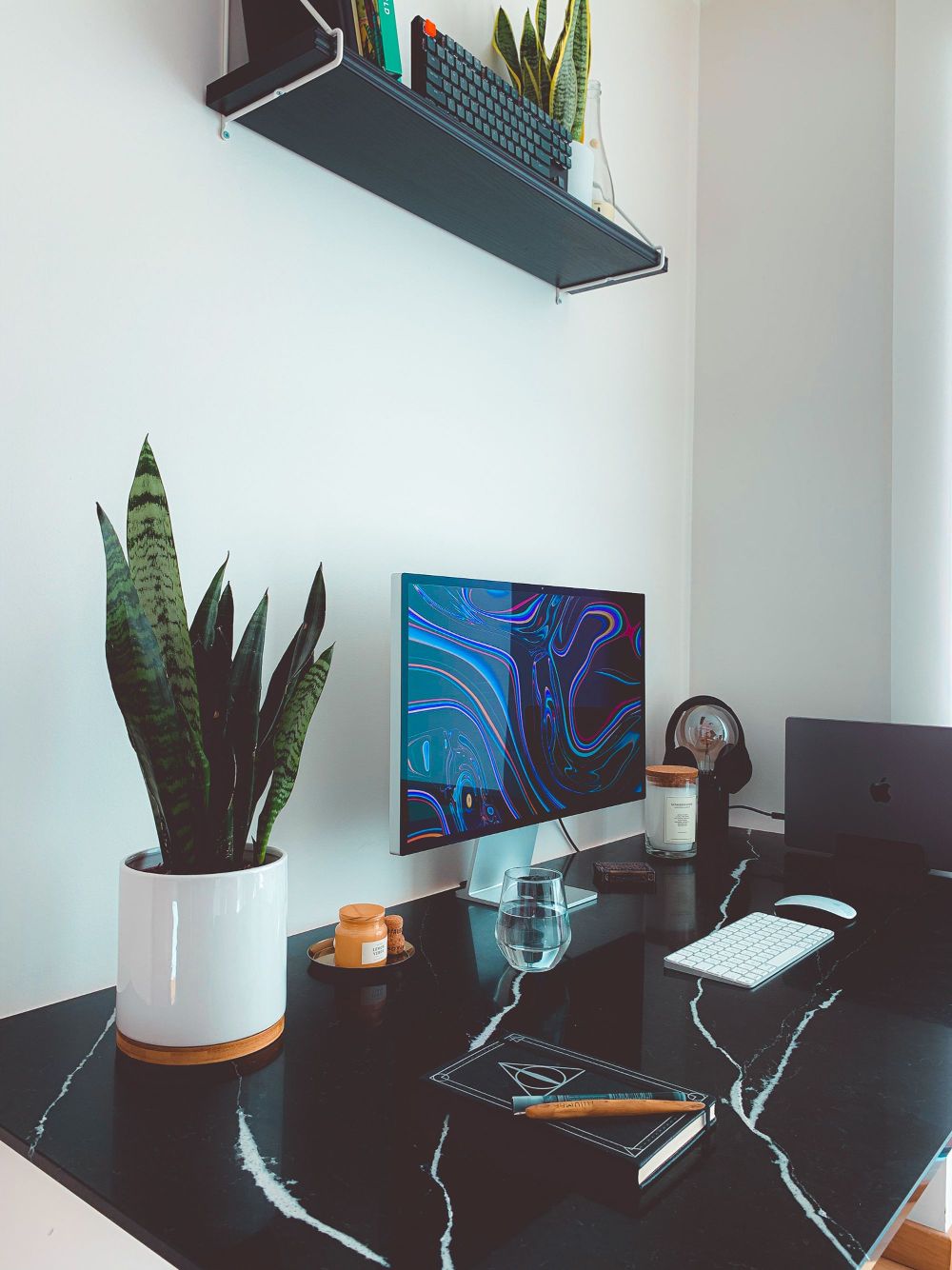
He lives and works in Estonia. His workspace features a quartz tabletop. His main Figma file is called 'asdf'. He uses VSCode with a dark vesper theme. He owns an Iron Man MK II helmet. He takes walks when the creativity stops flowing. He is, in short, a person who thinks carefully about everything except the name of his Figma file.
"Both groups want to make a cool thing, but one works with the constraints of a platform while the other in possibility land."- Rauno Freiberg, on designers vs. engineers
The design community often talks about "taste" as though it were a personality trait you either have or develop mysteriously. Rauno treats it as a skill with a method: spend time with the material, observe how real interactions feel, notice what is imperceptible when it works and jarring when it doesn't. The invisible details are invisible precisely because they work. His job is to find them, name them, and put them back.
There is a word for the kind of maker Rauno Freiberg is, and it is not "unicorn" - that breathless Silicon Valley shorthand for someone who can do both design and code. The word is craftsman. The kind who knows that fast, beautiful, consistent, careful, timeless, and soulful are not marketing adjectives. They are six separate problems that each require their own solution, usually at 11pm, usually in a dark VSCode window, usually with the details nobody will ever consciously notice.
That is the point. That is always the point.