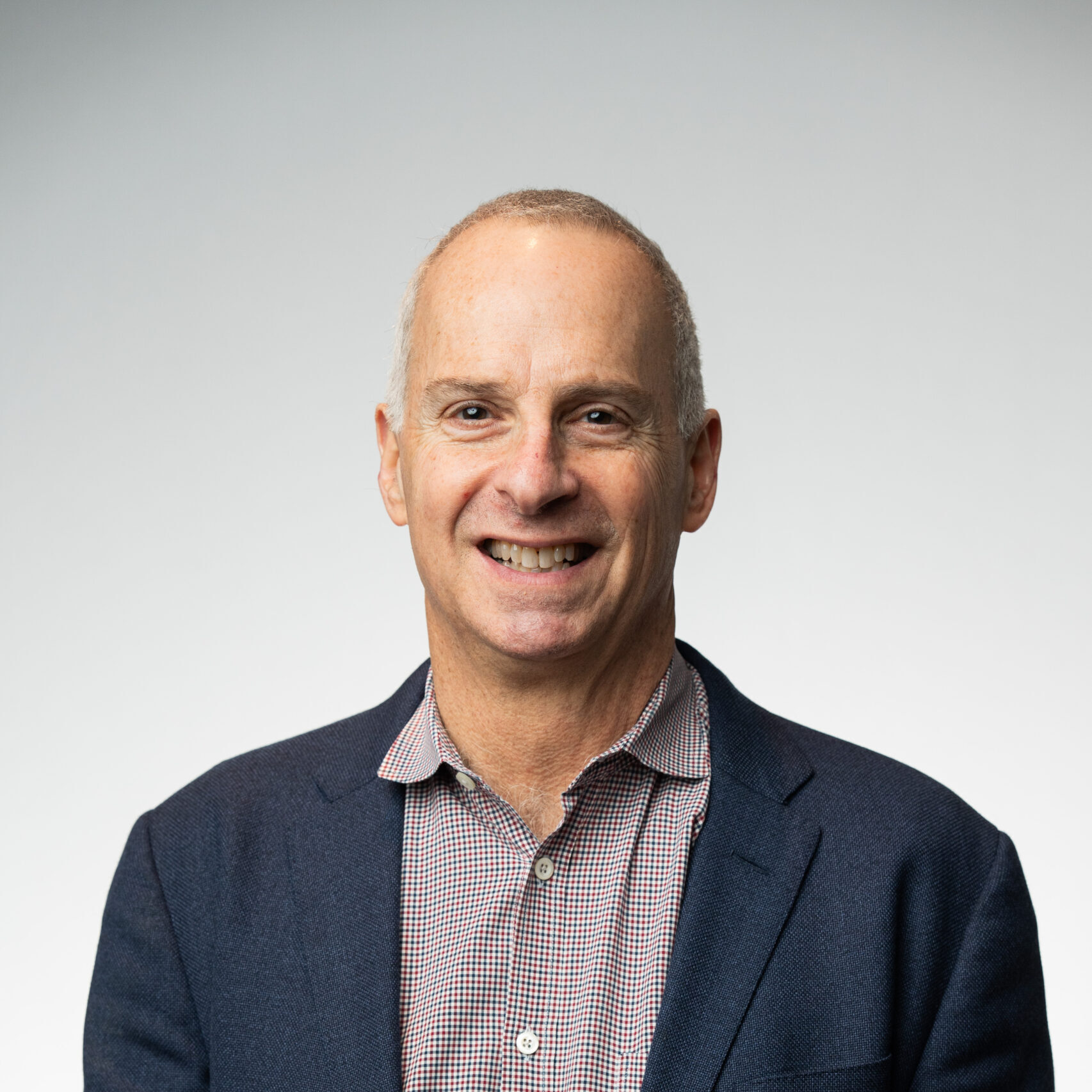
He has spent forty years making complicated technology disappear into something you'd actually use. The current trick: encryption strong enough for the Pentagon's suppliers, quiet enough that nobody has to think about it.
CEO & CO-FOUNDER, PREVEIL // BOSTON, MASSACHUSETTS
PreVeil sells a promise that sounds like a riddle: take anything you want off our servers, and you'll walk away with nothing useful. Battat co-founded the Boston company in 2015 around end-to-end encrypted email, file sharing and storage, built on cryptography research out of MIT and Berkeley. The server never sees your plaintext. So a breach hands the attacker a pile of ciphertext and a headache.
The customers who care most are the ones who read the fine print: defense contractors chasing CMMC certification, ITAR-bound manufacturers, healthcare and legal teams who can't afford a leak. PreVeil's clever move is the approval group - instead of one all-powerful administrator holding the master key, access can require, say, three of ten admins to agree. Remove the single point of failure and you remove the attacker's favorite target.
Battat's real obsession isn't the math. It's the friction. He keeps repeating that encryption only matters if people actually turn it on, which is a lesson he learned long before PreVeil - back when he was selling laptops.
You cannot steal what you cannot see.
His resume is a tour of how computing kept reinventing itself. Thirteen years at Apple, where he ran worldwide product marketing and then the PowerBook division - shipping a laptop that had to feel inevitable. Then Motorola's Internet & Networking Group as senior vice president, just as the internet became plumbing.
In 2000 he took over Airvana and grew it from a whiteboard idea into a 400-person global company and the number-two supplier of CDMA infrastructure software, with Verizon and Sprint among its carriers. He stepped down as CEO in 2014, chaired the board into 2015, and then did the unusual thing for a successful executive: he started over, on a harder problem, with cryptographers.
Thirteen years, ending as VP of Worldwide Product Marketing and VP of the PowerBook Division.
SVP of the Internet & Networking Group as the web went mainstream.
President & CEO. Startup to 400 people; #2 in CDMA infrastructure software.
New England Technology E&Y Entrepreneur of the Year.
Co-founded with Sanjeev Verma and Raluca Ada Popa. CEO today.
Traditional security guards the walls and trusts whoever's inside. End-to-end encryption flips it: the data is unreadable everywhere except the endpoints, so the walls can fall and the loot is still gibberish. Below is the rough idea Battat keeps coming back to - what an attacker actually gets when they breach a server.
It's a worldview as much as a product. As he puts it, the stuff that should stay secret is "pretty much everything that you do."
Illustrative - shows the design intent, not a benchmark.
PreVeil grew out of MIT and UC Berkeley cryptography research, including co-founder Raluca Ada Popa's work. Battat became the operator who turned dense math into a product people could install before lunch.
PreVeil splits access across an approval group - three of ten admins might be required to unlock data. There's no all-powerful administrator account for attackers to phish.
PowerBook, CDMA, encryption: the same instinct each time. Take something fiendishly complex and make it feel like nothing. "Ease of use is the fundamental key to getting encryption adopted."
PreVeil's base skews toward defense contractors and regulated industries - CMMC, ITAR, HIPAA. Not an audience you can charm. An audience you have to actually satisfy.
After running a 400-person company and chairing its board, he chose the blank page again - a startup with cryptographers and a problem most executives would call solved.
A Stanford EE degree underneath four decades of product and CEO roles. He markets the thing, but he also understands how it works.
The bad guys cannot steal what they cannot see.
If everything is encrypted and the server can never see the plaintext, you can take anything off the server but you'll never get anything useful.
The stuff that should remain secret is pretty much everything that you do.
Ease of use is the fundamental key to getting encryption adopted.
End-to-end encryption is rapidly emerging as a new way to add more protection to information.
Instead of every administrator having key access, you can set it up so three out of ten have to agree.
Battat wants strong encryption to become invisible infrastructure - the kind of thing that protects a defense contractor, a hospital, a law firm or a finance team without anyone needing to become a cryptographer to use it. The endgame isn't a security product people admire. It's a security product people forget is even there, right up until the breach that gets the attacker nothing.