CEO of Pixelence Won the Deep-X track, Selangor Twin Accelerator 2025 From mobile games to medical imaging AI Founder, The Game Loop Based in Cyberjaya, Malaysia Playing the two-year game on purpose CEO of Pixelence Won the Deep-X track, Selangor Twin Accelerator 2025 From mobile games to medical imaging AI Founder, The Game Loop Based in Cyberjaya, Malaysia Playing the two-year game on purpose
YesPress Profile / Founder

Raheel Zubairi

He taught a machine to fake the contrast dye in a brain scan - no needle, no injection. The rest of his story is just as unlikely.

Deep TechMedical Imaging AIFounderCyberjaya
Raheel Zubairi
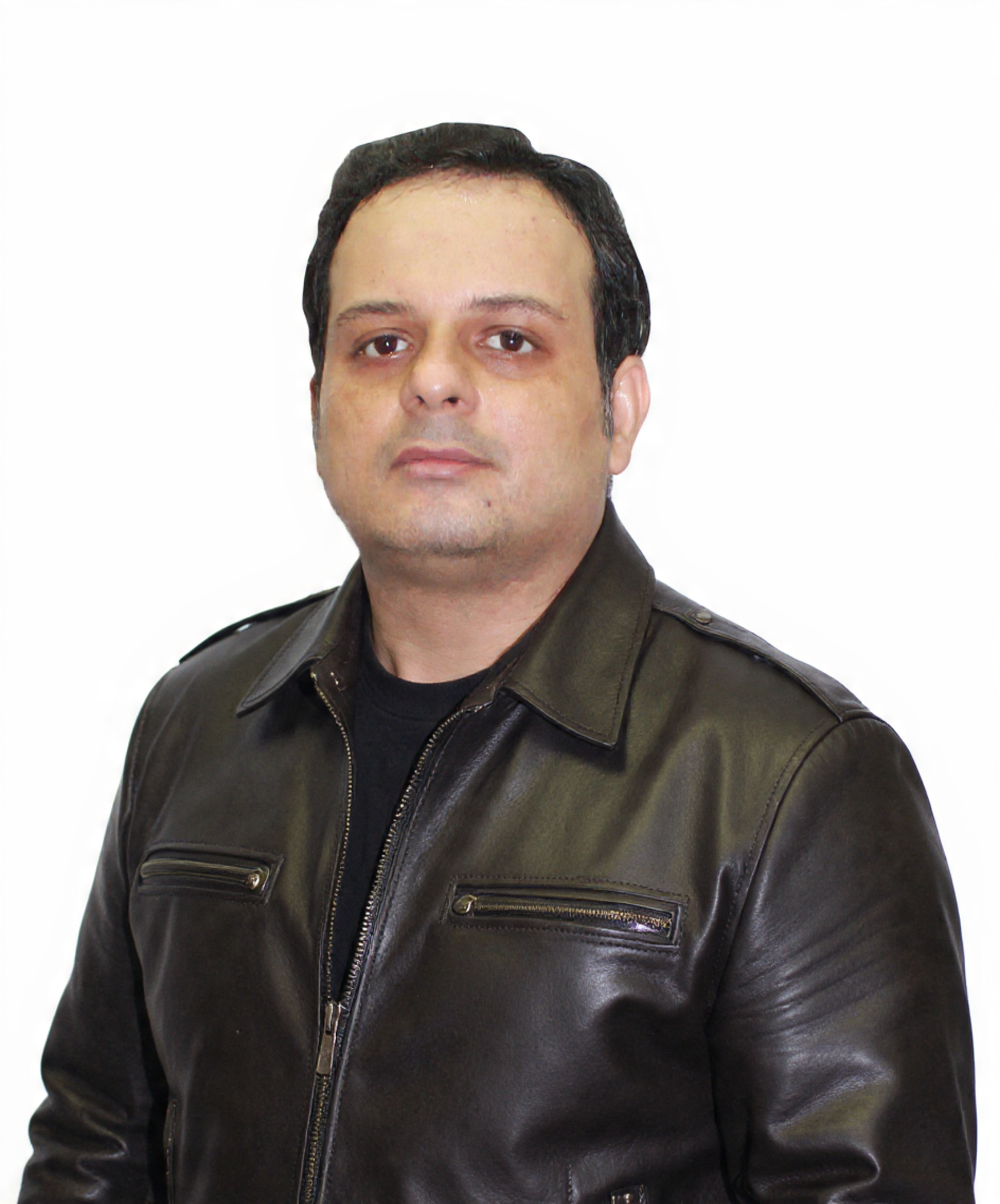
Raheel Zubairi - building the slow, hard thing.
The Dispatch

A radiologist needs contrast to see the thing that matters. The usual route is a dye, injected, doing its work from the inside. Raheel Zubairi's company, Pixelence, asks a different question: what if the machine could imagine the contrast instead? Feed it a plain brain scan and it produces a contrast-like image - the glow without the needle. That is the bet he is running out of Cyberjaya, Malaysia, and in 2025 it won the Deep-X track of the Selangor Twin Accelerator, complete with a trophy and an innovation trip to South Korea.

2
Countries: Pakistan to Malaysia
Deep-X
Selangor Accelerator track won
Top 10
2025 life-sciences cohort
3+
Companies founded or led
Mid-Stride

The contrarian who bet on the slow lane

Most founders in Southeast Asia learn the same lesson fast: build something you can launch in six months, show traction, raise the next round. Zubairi heard the lesson and walked the other way. Pixelence is deep tech - medical imaging AI - and deep tech does not move on a six-month clock. It moves on a two-year one. He says so plainly.

"The problem with those markets is the ticket size is very small," he told kr-asia, describing why regional investors flinch at the long timelines his kind of work demands. "They prefer something you can launch in six months and see traction. For us, you have to wait more than two years. They don't have the patience."

That is not a complaint so much as a thesis. He is trying to prove that a hard, patient technology - the kind that needs years and real research before it earns a dollar - can be built and funded from this corner of the world. Pixelence's job is to make brain scans cheaper and safer to read, and his job is to keep the lights on long enough for the science to land. The Selangor accelerator win, and a spot in its top-10 life-sciences cohort, are early evidence the bet is not crazy.

He is an engineer first and a salesman second, trained in mathematics and computer science at FAST NU in Pakistan, then sharpened with an MBA from IOBM. He describes himself, with no embarrassment, as a lean-startup growth hacker and an Apple enthusiast. He shows up at the meetups - the entrepreneur gatherings, the startup fxckups nights, the AI panels - because the deep-tech long game is lonely and the room helps.

The Pixelence Bet

Investor patience wanted6 mo
Deep tech actually needs24+ mo
Needles required by his AI0

The gap between what investors will wait for and what the science demands is the whole problem he is trying to close.

For us, you have to wait more than two years. They don't have the patience.
Raheel Zubairi, on deep tech in Southeast Asia
The Back Catalogue

Before the brain scans, there was a game loop

The detail that gives the game away: his earlier company was called The Game Loop. In programming, the game loop is the heartbeat of every video game - the bit of code that runs over and over, reading input, updating the world, drawing the next frame. He named a mobile studio after it and set out to take over the action category of the App Store, shipping titles built in Objective-C and Cocos2D from a small offshore team.

Look at the arc and the pattern repeats. A game loop is a feedback loop. So is a startup. So, for that matter, is a neural network learning to turn a flat scan into a contrast-like one. He has spent his career building loops that read a signal, change something, and read again - first for entertainment, now for radiology.

In between, he did the unglamorous work that pays for the moonshots. He built offshore software teams for enterprises and startups, ran BMN Enterprise Solutions, and logged time across fintech and venture building - stints around Antler, MYPINPAD, EBP and GoodCore Software. He learned the Web2 and Web3 worlds as an AI/ML product manager, the kind of operator who can sit between the engineers and the people writing the cheques and translate. That translation skill is exactly what a deep-tech CEO lives or dies on.

What ties it together is not a single industry - he has bounced from games to payments to medical AI - but a temperament. He likes problems that take a while. He likes building the thing that compounds rather than the thing that spikes. And he keeps choosing the harder version of the question on the board.
The Route

Karachi to Cyberjaya

2001 - 2005

Studies mathematics and computer science at FAST NU in Pakistan, then adds an MBA from IOBM.

2010s

Founds The Game Loop, a mobile studio chasing the action category of the App Store.

2010s

Builds offshore software teams for enterprises and startups; leads BMN Enterprise Solutions.

2020s

Works across fintech and venture building - stints around Antler, MYPINPAD, EBP and GoodCore Software - as an AI/ML product manager.

2025

As CEO of Pixelence, wins the Deep-X track of the Selangor Twin Accelerator and joins its top-10 life-sciences cohort.

The Ventures

Things he has built

NOW

Pixelence

Deep-tech startup using AI to generate contrast-like brain scans without injected dyes. Cheaper, safer reads for clinicians.

FOUNDED

The Game Loop

Mobile gaming studio aimed at the action category of the App Store, built on Objective-C and Cocos2D.

LED

BMN Enterprise Solutions

Enterprise software and offshore team building for startups and companies that needed engineering muscle.

He named a company after the loop at the center of every game. Then he built a feedback loop into the center of a brain scan.

In His Words

On patience, markets, and the long game

The problem with those markets is the ticket size is very small.

They prefer something you can launch in six months and see traction.

For us, you have to wait more than two years. They don't have the patience.

The Margins

Notes from the edges

  • The studio was named after a loop. The Game Loop borrows its name from the bit of code that keeps every video game alive.
  • Two diplomas, two disciplines. Engineering at FAST NU, business at IOBM - the rare founder fluent in both the model and the cap table.
  • Apple guy, openly. He describes himself as an Apple enthusiast and a lean-startup growth hacker, and he is not shy about either.
  • From Cocos2D to neural nets. His career runs from hand-built iPhone games to AI medical imaging - a jump almost nobody makes.
The Aspiration

What he is actually chasing

To prove that deep, patient technology - the kind that takes years, not months - can be built and funded from Southeast Asia. And to put AI-driven medical imaging into the hands of clinicians who need cheaper, safer scans. Less a sprint, more a vigil.

Find Him

The links

Pass It On

Share this profile

From game loops to brain scans - a founder worth knowing. Send it to someone who thinks deep tech can't be built from the long lane.