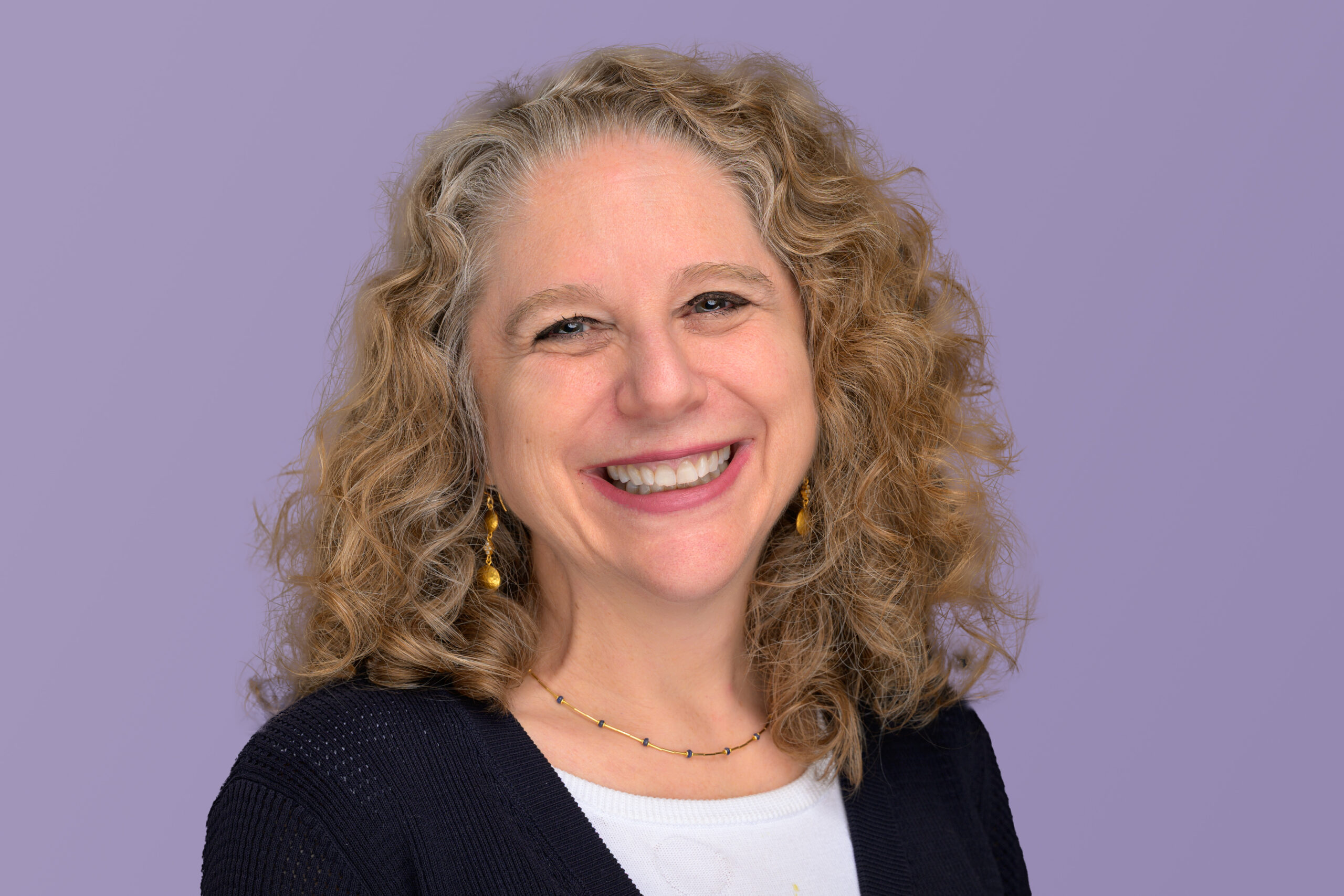
She helped three cancer drugs reach patients inside big pharma. Then she walked into the part of the tumor everyone else avoids and started a company there.
PRESIDENT & FOUNDING CEO // NORMUNITY // WEST HAVEN · BOSTON
Most cancer immunotherapy works on tumors that are already smoldering. Rachel Humphrey decided to work on the ones that are stone cold.
Her own line for it is short: “Here, we're actually striking the match.” The companies around her fan flames that already exist, fanning a T-cell response that the tumor has already let in. Normunity, the company she founded and runs, is built for the tumors that never lit at all. A tumor with no T cells inside it, she points out, will not respond to anything on the shelf today. So she is trying to get the cells in.
That is an unusual place for a person with her resume to be standing. Humphrey spent a quarter century helping move cancer drugs through the machinery of Bristol Myers Squibb, AstraZeneca, and Bayer, the kind of work that produces approvals and revenue and rooms full of people who already know how it goes. She had three marketed therapies attached to her name. She could have kept doing the thing she was demonstrably excellent at. Instead, in 2022, she became a first-time founder, on purpose, at the hardest open question in her field.
Normunity calls its drugs immune normalizers. The premise is almost rude in its simplicity: stop engineering exotic workarounds and instead free the immune system to do the job it was already built to do. “We're developing a new way to uncloak the tumor and allow the normal immune system to do what it was meant to do,” Humphrey says. It is the kind of sentence that sounds obvious until you realize nobody had drugged the biology underneath it.
The standard immunotherapy toolkit assumes the immune system has already shown up. Normunity's bet is on the tumors where it hasn't.
The science traces to Lieping Chen, the Yale immunologist whose lab discoveries underpin much of modern checkpoint biology. Normunity runs as a tightly integrated alliance between Chen's lab in West Haven and Humphrey's drug-development team, which is its own quiet rebellion against the usual wall between academia and industry. Chen finds the biology. Humphrey turns it into medicine.
Three approved cancer therapies carry her fingerprints. Each one came from a different company and a different mechanism.
Then came the biotech years: chief medical officer at Black Diamond Therapeutics, CytomX Therapeutics, and Mirati Therapeutics, three turns in the seat where science meets the clinic. By the time she started Normunity, she had seen the drug-development gauntlet from nearly every angle - the regulatory grind of big pharma and the everything-at-once urgency of small companies. The founder's chair was the one role left.
She came up through biochemistry at Harvard, medicine at Case Western, internal medicine at Johns Hopkins, then an oncology fellowship at the National Cancer Institute at the dawn of modern immuno-oncology. The thread is consistent: she has been circling the immune system and cancer for her whole working life, and Normunity is where the circle closes.
BA in biochemistry.
Medical degree, MD.
Internal medicine residency.
Oncology fellow and staff physician.
Led development of Yervoy (BMS), Nexavar (Bayer), Imfinzi (AstraZeneca).
Black Diamond, CytomX, Mirati Therapeutics.
Co-founded with Lieping Chen; launched with $65M Series A.
Co-led by Samsara BioCapital and Enavate Sciences; NRM-823 heads to Phase 1.
In January 2025 Normunity closed $75 million, co-led by Samsara BioCapital and Enavate Sciences. The new money brought in Regeneron Ventures, Pfizer Ventures, and YK Bioventures, alongside earlier backers including Canaan Partners, Sanofi Ventures, Taiho Ventures, Osage Venture Partners, HongShan, and Connecticut Innovations.
The proceeds have one headline job: get NRM-823 into people. It is a first-in-class T cell engager aimed at a novel, highly specific tumor target found across multiple solid cancers, with the Phase 1 trial planned to begin in the second half of 2025. The rest funds a broader pipeline of anti-cancer programs going after drug mechanisms nobody has touched.
She has worked both sides of the cancer-drug world: three marketed blockbusters inside big pharma, then three chief-medical-officer seats in emerging biotech, before founding her own.
Normunity lives in two states at once - research in West Haven next to Yale, headquarters near Boston - so the company is genuinely New England, not just one city's biotech scene.
She started as a biochemistry major, not a pre-med cliche, and landed at the NCI right as immuno-oncology was becoming a real field. The timing reads like a long setup for Normunity.