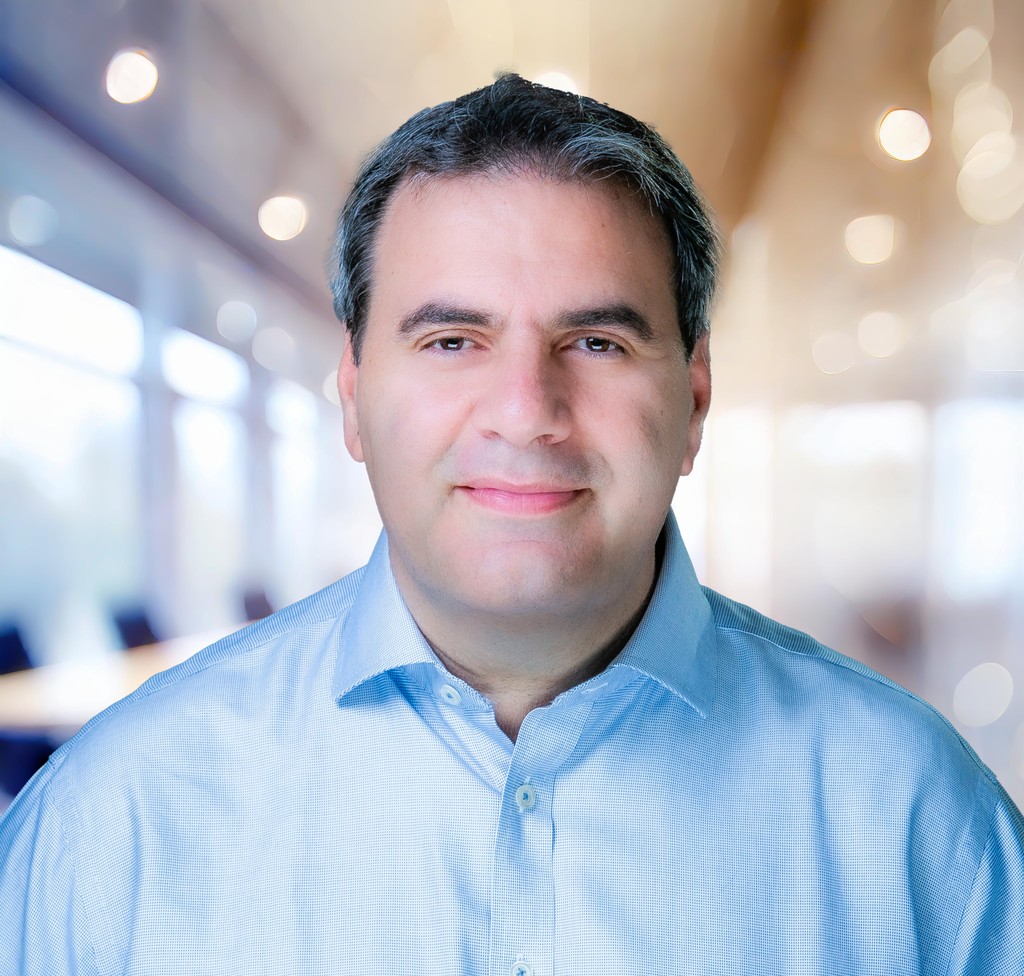
The man at the keyboard learned finance the hard way first
Rabih Ramadi runs a company most people will never log into and every wealth client will eventually feel. Avantos, which he co-founded in New York in 2024, calls itself an AI-native operating system for client management. Strip the category language away and the bet is simpler: the part of finance where a human is supposed to take care of you - the onboarding forms, the servicing tickets, the quiet promise that someone knows your account - has been held together by point solutions and email threads for a generation. Ramadi thinks it should run on one continuously updated brain instead.
That brain is a knowledge graph. It connects clients, products, service teams and the actual work into a single system of context, so that AI agents and human advisors can operate from the same picture rather than re-discovering it on every call. Onboarding, servicing, growth - Avantos puts all three on one layer and slots it underneath the systems a bank already owns. It is unglamorous plumbing for an industry that runs on trust, which is exactly the kind of problem Ramadi has spent his career standing next to.
The investors agree the problem is real. In February 2026 Avantos announced a $25 million Series A led by Bessemer Venture Partners, lifting total funding to $35 million on top of a $10 million seed that closed in September 2024. The cap table is its own kind of endorsement: The Guardian Life Insurance Company of America, SEI and Vanguard came in alongside earlier backers M13, Mercer Advisors, Blue Collective and the MIT-affiliated E14 Fund. When the firms you are trying to sell software to start writing you checks, you are either onto something or very good at meetings. Ramadi has a record that suggests the former.
He keeps arriving before the building is finished
Before Avantos there was Unqork, the no-code enterprise platform, where Ramadi was a founding team member. He held the Head of Industry Solutions seat and then Chief Revenue Officer, which is the polite title for the person who has to turn a bold technical idea into signed contracts with institutions that distrust bold technical ideas by default. He did it inside the same vertical - financial services - that he is now selling into again. The pattern is hard to miss. Twice now he has joined at the founding moment rather than the safe one.
Rewind further and the credibility comes into focus. He was a Senior Partner at KPMG, where he led the Capital Markets sector - a job that means sitting across the table from the largest banks in the world and being trusted to tell them how their own machinery should work. Before consulting, he worked on technology strategy at The Bank of New York, learning the gap between what a financial institution wants its systems to do and what they actually do at 4 p.m. on a settlement day. That gap is the whole thesis of Avantos. He did not read about it. He lived inside it.
An engineer who learned to sell, then learned to build again
The resume reads like two different people stapled together. The Cornell side is an engineer - a Master of Engineering, the kind of training that makes you suspicious of hand-waving. The Wharton side is an MBA, the kind of training that makes you fluent in the room where budgets get approved. Most founders pick a lane. Ramadi spent a career refusing to, and that refusal is the point: Avantos is a deeply technical product sold to deeply non-technical buyers, and it needs someone who can hold both halves of that sentence at once.
It also explains the company's unusually flat top. Public listings show both Ramadi and co-founder Bassam Chaptini carrying the title Co-Founder & CEO - a split that would make most governance lawyers wince and that the two of them apparently wear without flinching. The company line is that Avantos grew out of an insight shaped by both founders' financial-services experience. Read between the titles and you get a partnership of equals who decided the problem was big enough to share the steering wheel.
That board seat - Non-Executive Director at the global executive-search firm Leathwaite - is the tell of an operator who is now being asked for judgment as much as execution. Search firms recruit him for the same reason capital-markets clients once did: he has watched a lot of organizations try to digitize, and he knows which transformations are real and which are slide decks. The appointment was noted for his expertise in North American expansion and business digitalization. It is a quiet credential, the kind that does not trend but tends to mean something.
Why the knowledge graph, and why now
The wager underneath Avantos is timing. For years the obvious move in finance was to bolt another tool onto the stack - a better CRM, a slicker onboarding flow, a chatbot. Ramadi's read is that those were patches on a missing foundation. Without a shared system of context, every tool re-asks the same questions, every handoff loses information, and every AI you bolt on hallucinates because it has no ground truth to stand on. Build the graph first - the unified, always-current picture of who the client is and what is happening - and suddenly the agents have something true to act on.
The customers he is chasing are not consumer apps but the institutions that move retirement money: asset managers, private banks, insurance carriers, broker-dealers, independent RIAs and custodians. These are not buyers who fall for hype. They buy from people who can say, with a straight face and a real scar to point to, that they have lived the failure mode. That is the rarest thing on Ramadi's resume - not the Wharton MBA or the Cornell engineering degree or the partner title, but the fact that he has been the person inside the institution wishing this software existed.
What happens next is a question of speed. The Series A money is earmarked to expand the platform and help financial institutions modernize for the AI era as client complexity keeps climbing. Translation: hire, ship, and prove the thesis at more banks before a dozen well-funded competitors decide the same plumbing is worth building. Ramadi has done the zero-to-one version of this once already at Unqork. Avantos is the chance to find out whether the second time, with two decades of pattern recognition behind him, is the one that compounds.
There is a deliberate humility in the way Avantos positions itself, too. It does not ask a bank to rip out the systems it spent a decade and a fortune installing. It slots underneath them, reads from them, and hands back a layer of shared context the old stack was never designed to produce. That choice is a tell about Ramadi's instincts. The founders who fail in enterprise finance are usually the ones who demand a clean slate; the ones who win are the ones who make peace with the mess and route around it. Two decades on the inside taught him which kind survives a procurement committee.
The other thing worth noticing is the company he keeps. The Series A is not a list of tourist investors chasing an AI logo. Bessemer has been underwriting financial software for a generation. Guardian, SEI and Vanguard are not venture funds at all - they are the operators who would feel the pain Avantos claims to solve, and their money is a wager priced in something more valuable than returns: their own reputations with their own clients. When that crowd shows up early, it tends to mean the demo did something the deck could not.
He is not promising a revolution in the press release. There is no founder manifesto, no breathless quote about changing the world. The loudest voices in the announcement are the customers and investors; Ramadi mostly lets the cap table talk. For a man who spent years telling banks the unvarnished truth about their own systems, that restraint reads less like modesty and more like a habit. The work is the argument. The graph either holds the context or it does not. He has bet a company on the belief that it will.