Company Dossier · Safety Technology
Quin - the helmet that calls for help when you can't.
A device the size of a stick of gum, tucked inside your helmet, watching for the one moment that matters.
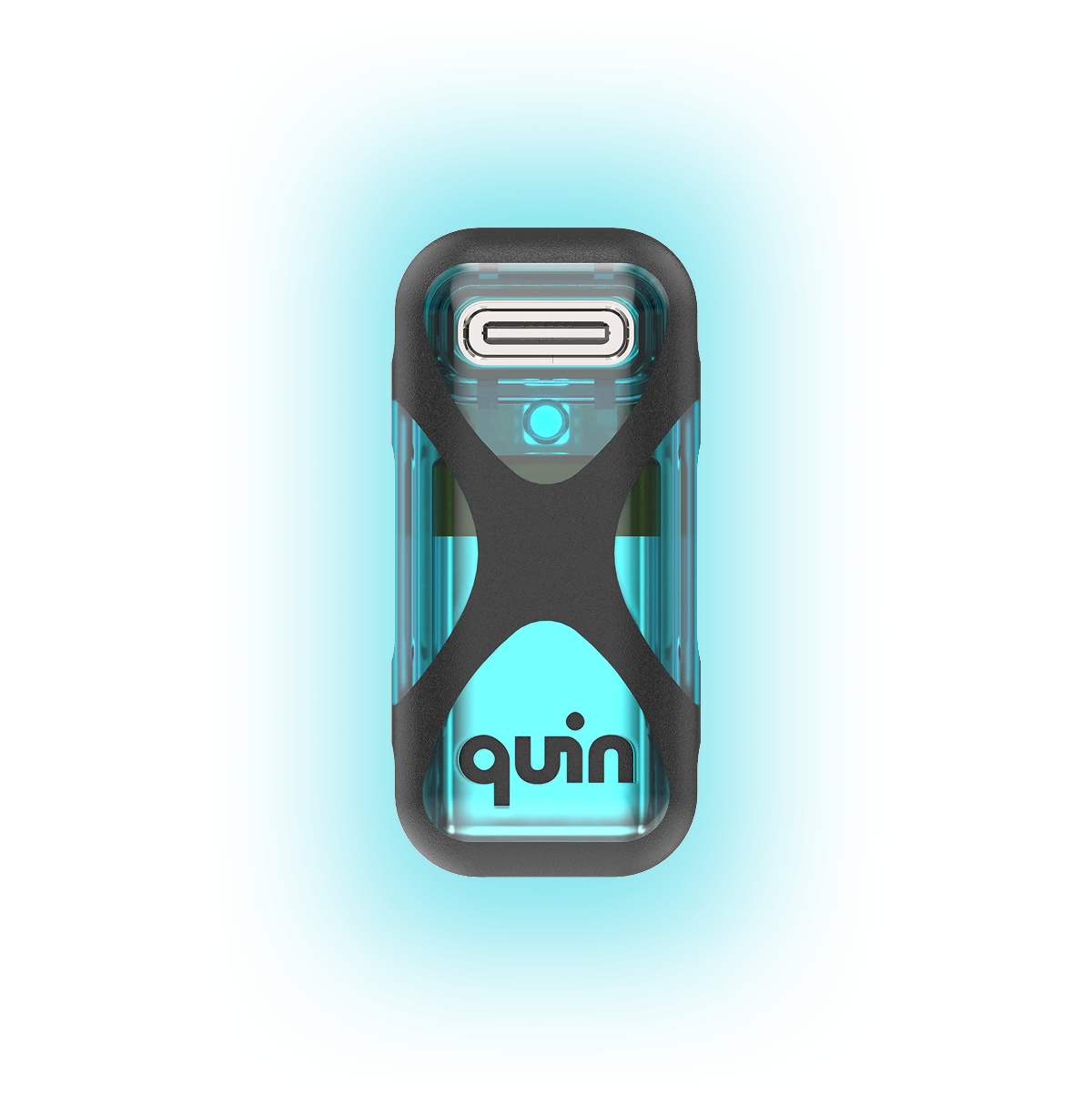
A device the size of a stick of gum, tucked inside your helmet, watching for the one moment that matters.
When designer Anirudha "Ani" Surabhi founded Quintessential Design in 2017, he wasn't chasing the connected-helmet trend of speakers, cameras and voice assistants. A friend's life-changing motorcycle accident had left him focused on a narrower, harder problem: the dangerous gap between a crash and the moment someone realizes you need help. Quin was built to live inside that gap.
The result was, by the company's account, the first motorcycle helmet with integrated crash detection and an SOS beacon. Small sensors - packaged in a "Quin Pod" only slightly larger than a piece of chewing gum - slot into approved pouches in a helmet's EPS lining, pair with the rider's phone over Bluetooth, and read motion up to 6,000 times per second.
When those sensors register an impact above roughly 100G, the companion app takes over: it can notify up to three emergency contacts with real-time location and status, and dispatch emergency services. In its own words, Quin wants to use "real-life data and motion analytics to reduce injuries and save lives."
The company started where most hardware startups do - selling its own products directly, with a 2018 Kickstarter and a 2020 line of helmets. But its most interesting move came later, when it stopped competing with helmet makers and started powering them instead.
Today Quin operates as an "ingredient brand." Its sensor fusion and emergency-response software are licensed into helmets from established names, turning passive gear across five sports into a connected safety companion. It is a smaller idea than a smart helmet, and a much bigger business.
Traditional helmets are passive - they protect your skull on impact and do nothing after. Quin's technology adds an active layer: it notices the crash, judges its severity, and acts. That shift - from protection to response - is the whole premise of the company.
Quin's tech reaches two audiences. Riders - motorcyclists, cyclists, mountain bikers, motocross racers, snow-sports athletes, climbers and equestrians - wear helmets equipped with it. Helmet manufacturers license the platform to differentiate their products. One safety layer follows the rider, not the sport.
Go down alone on a back road, a trail or a slope, and the danger isn't only the impact - it's the time that passes before anyone knows. Quin targets that survival gap. By detecting the event automatically and routing location and impact data to contacts and, through partners like RapidSOS, to emergency services, it aims to shorten the window between crash and care.
The Quin Pod reads motion up to 6,000x/second inside the helmet's liner.
Sensor fusion identifies a dangerous impact - forces above roughly 100G.
The app notifies up to three contacts with live location and rider status.
Professional monitoring can connect the nearest response team with impact data.
Figures per Quin's published product descriptions; behavior varies by helmet and app configuration.
Gum-sized sensor that slots into a helmet's EPS lining and syncs to your phone via Bluetooth.
Compact sensor tag that adds impact detection and emergency response to gear.
Measures real-time data, alerts contacts, and enables professional monitoring and dispatch.
The original crash detection + SOS beacon built into Quin's own McQ, Spitfire, Ghost and Quest helmets.
Sensor-fusion hardware and response software licensed to leading helmet brands.
Automated dispatch of emergency services with critical rider and impact data.
Most "smart helmet" attention goes to Bluetooth communicators from the likes of Sena and Cardo, which focus on calls, music and rider-to-rider talk. Phone makers now offer their own crash detection. Quin's difference is being embedded in the helmet itself and built specifically for cross-sport safety and emergency response - then offered to any brand as an ingredient rather than sold as a rival helmet.
Illustrative comparison of focus areas (relative emphasis, not market share):
Editorial illustration based on public product positioning - not verified benchmark data.
Quin began direct-to-consumer, selling its own helmets - the McQ ($299), Spitfire ($399) and the carbon-fiber Ghost. Reaching riders one helmet at a time is slow. So Quin re-cast its core asset - the sensing and response technology - as something helmet brands could license and embed. That, plus app-based professional-monitoring services, is the business today.
Helmet-safety leader Mips invested $7.3M for a roughly 25% stake and backed Quin's ~$9M Series A in 2023. Brand partners span cycling, moto and off-road:
Anirudha Surabhi starts the company after a friend's serious motorcycle accident.
Launches helmets with first-ever integrated crash detection and SOS beacon.
Quin's smart helmet wins in the safety equipment category.
McQ, Spitfire and Ghost launch; UK entry via iHelmets.
$7.3M for ~25% stake; integration to speed help to downed riders.
Refocuses on licensing its technology to leading helmet makers.
Joins ABUS, Fly Racing, Lumos and others adopting Quin's tech.
Ships across new helmets including Nolan's X-904 Ultra Carbon.
The Quin Pod is only slightly larger than a piece of chewing gum.
Founder Ani Surabhi previously designed the cardboard-honeycomb Kranium helmet.
Quin's carbon Ghost helmet weighed roughly 2.88 lbs.
Quin builds intelligent safety technology - sensors, a crash-detection/SOS system and a companion app - that lives inside helmets and can automatically call for help when a rider crashes.
Quin originally sold its own smart helmets (McQ, Spitfire, Ghost, Quest) but has shifted toward licensing its technology as an "ingredient" inside helmets from brands like ABUS, O'Neal, Fly Racing and Nolan.
A small Quin Pod measures motion thousands of times per second, identifies dangerous impacts (forces above roughly 100G), and via the app notifies up to three emergency contacts with location and status - and can dispatch emergency services.
Helmet-safety leader Mips invested $7.3M for a roughly 25% stake and backed Quin's ~$9M Series A in 2023.
Quin (Quintessential Design) was founded in 2017 by Anirudha "Ani" Surabhi. It is based in Dallas, Texas with operations in London, England.
Sources include quinwithin.com, Mips, RideApart, Motorcycle News, ADV Pulse, New Atlas, Bicycle Retailer and Motorcycle.com.