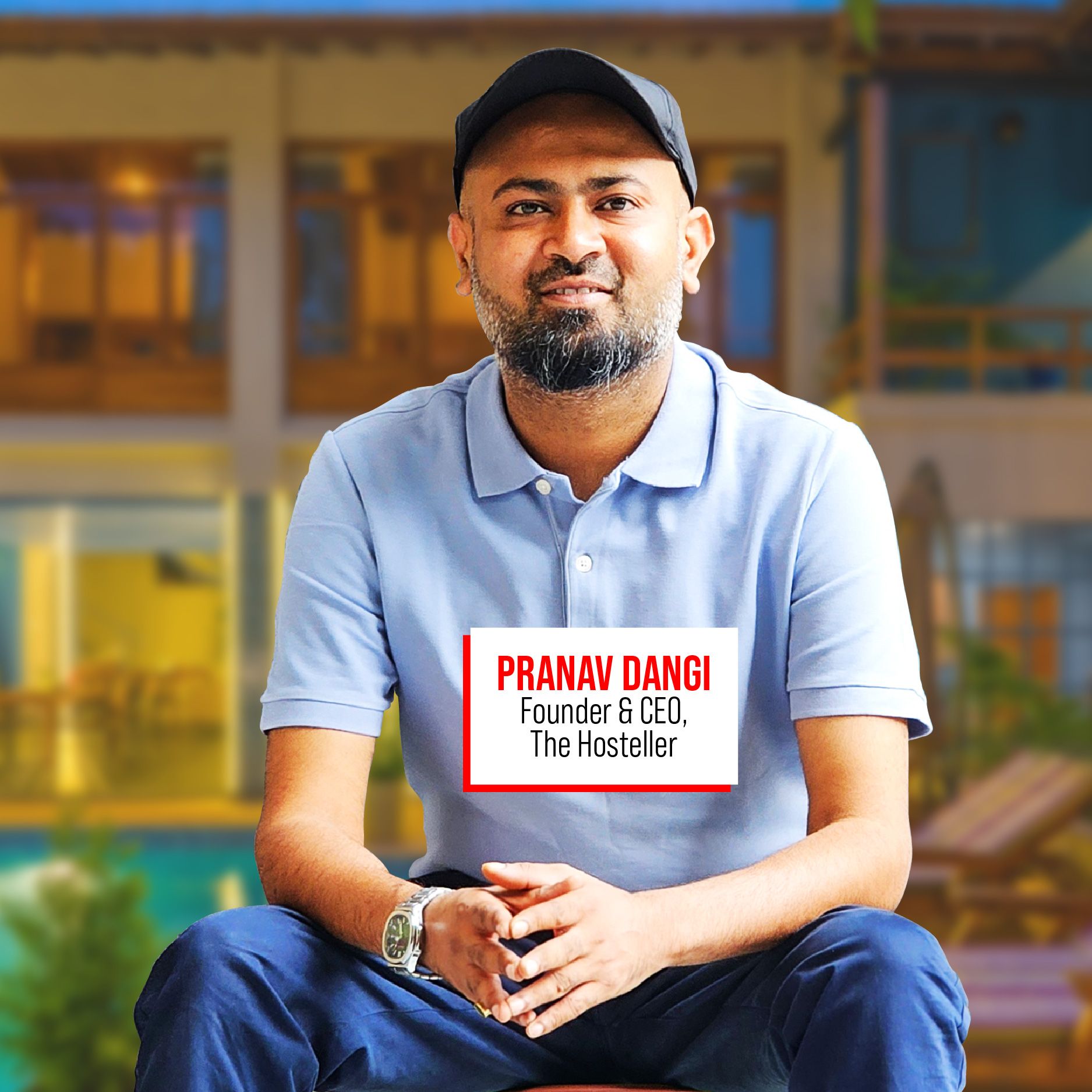
After ten at night in Geneva, Pranav Dangi had a practical problem. He had arrived without a hostel booking, and the hotels were expensive. Searching online, he found a couple preparing to launch a hostel who needed a volunteer. He sent an email. Within half an hour of correspondence, he had arranged a week of volunteering. At two in the morning, they came to collect him.
The detail that stays with you is the pickup. A listing on a screen had become two people willing to come out in the middle of the night. The episode supplied an unusually concrete lesson in hospitality: the welcome could matter as much as the room. Years later, Dangi would recall it while explaining the philosophy behind The Hosteller, the Indian backpacker hostel business he founded.
There is a pleasing irony here. A traveller who had neglected to make a reservation went on to build a company concerned with booking systems, operating procedures and consistency. The missing reservation belongs to the adventure. The systems belong to the person who must make the next traveller’s adventure possible. Dangi’s career sits between those two responsibilities.
Five rooms, and an explanation
Dangi grew up in Mount Abu, Rajasthan. In 2013, travelling in Europe during a management exchange programme, he encountered backpacker hostels as an affordable way to move around. Shared accommodation also offered a different social arrangement from the family holiday or business hotel. You could arrive by yourself and find people with whom to spend the evening.
The Hosteller took shape in 2014. In his own account of the early business, Dangi dates its first five-room Jaipur hostel to 2015. Remembering that beginning, he described the absence of deep pockets or a ready-made playbook. The first property was small enough for the idea to be tested at the scale of individual arrivals and conversations.
Selling a stay also meant explaining the format. A guest had to understand why sharing a room might be desirable, what a common area was for, and what kind of trip this arrangement made possible. The early task was educational as well as commercial. A dormitory photograph can show the beds. It has a harder time showing what happens when the people in them start talking.
In the company’s retelling, those early years included Jaipur, Delhi and Manali. These were places where travellers could encounter the idea in different settings: a city stop, a transit point, a mountain stay. The proposition had to survive beyond one attractive building. It needed to make sense to somebody who had never stayed in a backpacker hostel before.
Discovery
Takes shape
Five rooms
The common room has a back office
Dangi brought a technical and financial background to this apparently informal business. He studied engineering at Manipal Institute of Technology and finance at IMT Ghaziabad, with an exchange at KEDGE Business School. Before The Hosteller, he worked at EY on intangible asset valuation. The common room may encourage improvisation; the person paying for it still has to understand the accounts.
His explanations of the company repeatedly return to operational control. The Hosteller runs its properties itself, with shared procedures and staff training. Dangi has described the digital concierge Glu as a way for guests to manage parts of a stay, from checking in to booking activities. Behind the sociable surface is a fairly determined effort to remove small points of friction.
In a 2024 technology interview, he discussed mobile booking, contactless arrival and departure, food orders, rentals and housekeeping requests. These are ordinary tasks, which is precisely why they matter. A guest who spends an afternoon chasing a request has less of that afternoon left for the place they came to see. Good service gives time back without demanding applause.
The attraction of such tools is easy to understand without making technology the hero of every trip. A digital concierge can arrange an activity. It cannot guarantee that the person beside you at dinner will be interesting. Dangi’s business has to handle the things that can be organised while leaving room for the things that happen between guests.
A room for people with laptops
By December 2021, Dangi was writing about travellers who wanted to work from anywhere. His argument connected affordable accommodation with longer stays, reliable internet and the freedom to explore beyond a short holiday. The hostel could accommodate a different rhythm: work during part of the day, then join the life of the place around it.
That possibility adds a design problem. The guest on a call and the guest assembling a group for an outing may both have perfectly reasonable plans. Their preferred volume levels are less likely to agree. Work-friendly accommodation has to make room for concentration as well as company. A shared space earns its keep when different kinds of day can happen within it.
In January 2026, Dangi described improving quieter areas, connectivity and flexible stay options for people travelling while working. He also explained how the network’s mix of mountains, beaches, cities and heritage destinations could help balance seasonal demand. Different places become attractive at different times. The business can plan for that variation without requiring every guest to follow the same calendar.
This is one of the more revealing aspects of his approach. The freedom he offers travellers requires a willingness to study their habits. Length of stay, participation in activities and returning guests all become clues. The operator has to care about what people actually do after they arrive, rather than stopping the investigation at a completed booking.
Permission to bunk
For the 2025 monsoon campaign #BaarishMeinBunk, Dangi and his team talked about their own rainy-day memories: skipped classes, long walks, train journeys and rooftop singing. The premise drew on a familiar temptation to suspend the timetable when the weather has already disrupted it. The word “bunk” did useful double duty, pointing to both schoolboy escape and a place to sleep.
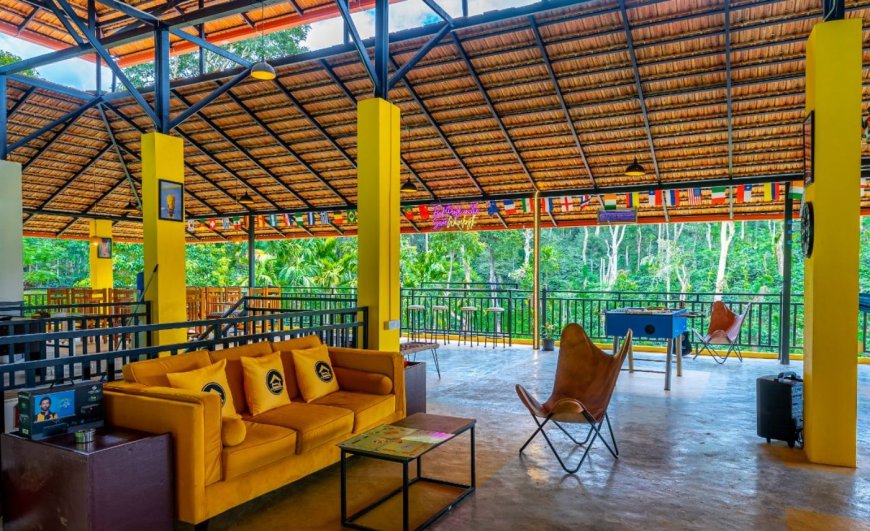
His description of the campaign made room for quiet encounters as well as organised activities. Somebody writing in a corner might meet another writer. A late meal might turn into a conversation with people who had been strangers a few hours earlier. These were examples of the atmosphere he wanted the properties to support, rather than a schedule every guest was required to complete.
In another interview, he discussed books placed in corners, common spaces that feel used, and the influence of his corporate years on systems and quality. There is a sensible modesty in the design principle: give people a setting in which something might happen. Hospitality becomes rather exhausting when every pleasant moment arrives with instructions and a branded hashtag.
Dangi also writes about partnerships as part of travel: local artisans, transport providers, guides and creators can contribute to what a guest experiences. That extends the job beyond the hostel walls. The founder who began with shared accommodation now has to think about the journey between places and the people whose work makes each place worth visiting.
Dangi’s platform ambition connects accommodation, food, mobility and experiences.
The arithmetic catches up
In November 2024, The Hosteller raised Rs 48 crore in a round led by V3 Ventures. At the time, Dangi spoke about expanding from 2,500 beds towards 10,000 over the following 15 to 18 months. He said most of the funding would go into properties, with a smaller share devoted to acquiring customers. Expansion had become a specific allocation decision.
A larger round followed in April 2026: Rs 150 crore, co-led by PROMAFT Partners and V3 Ventures. The announced ambition was 25,000 beds within 36 months, alongside a travel platform bringing together accommodation, food, mobility and experiences. Those are targets, with all the work and uncertainty the word implies. A funding announcement opens a demanding new chapter.
By that April, the network was reported at about 75 properties across 50 destinations. The five-room beginning had acquired a much larger operational footprint. The question facing Dangi had changed accordingly. Opening another property must add capacity while preserving the experience that persuaded people to book the first ones.
His answer involves making the basics more dependable. In April he described a shift towards revenue-sharing property agreements with minimum guarantees, reducing exposure to fixed rents during quieter periods. Accommodation, food, mobility and experiences also offer different ways to serve a traveller. This is hospitality viewed through the eyes of someone who knows that an empty bed still has costs.
A chess player leaves the itinerary open
Asked about a game that helps him understand business, Dangi chose chess. He described thinking across short and long horizons and changing a strategy when it stops working. His stated management preferences include avoiding procrastination and working with people more intelligent than himself. “Persistence is a virtue,” he says. That is a useful creed for a business built one property at a time.
Persistence in hospitality has a very physical meaning. Somebody must train the next team, prepare the next building and respond when a stay falls short. The founder’s early discovery can remain emotionally persuasive for years, but the guest arriving tonight needs the current version to work. The romance of the origin story has to earn its place in everyday service.
Dangi’s larger ambitions reach beyond a bed reservation towards a connected travel business. The idea follows the logic of his own experience: accommodation affects whom you meet, whom you meet affects where you go, and where you go affects the story you take home. The parts of a trip keep interfering with one another, usually in ways no booking form can fully anticipate.
That leaves him with an agreeable tension to manage. Travellers want the pleasure of discovering something for themselves. Operators need enough structure to welcome them properly. In Geneva, the structure was modest: an online notice, a fast exchange of emails and a couple who came out at two in the morning. The welcome did the rest. Dangi has been trying to make room for that kind of encounter ever since.
“Persistence is a virtue.”Pranav Dangi, on management