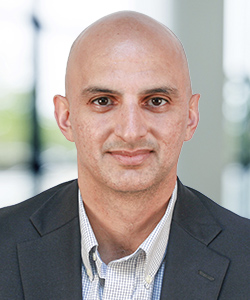
The Man on the Opinion Letter
Somewhere in the fine print of every large acquisition footnote there is a purchase price allocation - a table that carves the deal into goodwill, intangibles, and a residual line item nobody wants to explain. Somewhere behind that table is a firm like Valuation Research Corporation. And somewhere behind VRC is PJ Patel, its Co-CEO and Senior Managing Director, who has spent his career deciding what the numbers on those tables should be and then signing his name near the bottom of the page.
Patel runs VRC out of 100 Park Avenue, blocks from the auditors and bankers who commission the firm's opinions. From that address he oversees a practice that spans financial reporting valuations (ASC 805, 350/360, 820, if you follow the alphabet), portfolio marks for private equity and private debt funds, fairness and solvency opinions on deals, and the more exotic end of the price book: convertible bonds nobody trades, warrants that may or may not ever vest, contingent consideration structures that depend on a milestone that may or may not happen. VRC's business, in other words, is the pricing of illiquidity - the numbers you get when there is no ticker.
He also runs, as a second job, the global valuation services of the Valuation Research Group (VRG), the international network for which VRC is the U.S.-based partner. That is a coordinating role rather than a line one: aligning methodology across jurisdictions, brokering the occasional cross-border referral, and giving multinational auditors a single throat to call when a Berlin subsidiary needs a Delaware-flavored ASC 805 report.
The Credentials
Patel is a Chartered Financial Analyst and an Accredited Senior Appraiser. The CFA is the finance world's most recognizable letters; the ASA is more specialized, granted by the American Society of Appraisers to practitioners who can defend their work in front of auditors, regulators, and the occasional judge. Very few valuation professionals hold both. It is the credentialing equivalent of holding a black belt in two different martial arts - overkill, unless you are the one being paid to be certain.
Undergrad was a Bachelor of Science at the University of Toronto. The MBA came later, from Canisius College in Buffalo. Before VRC he was a Director at Marshall & Stevens, another respected valuation firm, where he worked the same three-purpose puzzle he works now: financial reporting, tax, and management planning. From that shop he moved to VRC, climbed through the ranks, and eventually to Co-CEO.
The Argument
Patel's central argument, made in trade press interviews and industry panels, is that valuation is drifting away from being a checkbox on the annual audit and toward being a live input in how companies get run. The traditional cadence, he told the International Valuation Standards Council, was quarterly. Now clients want monthly. Some want weekly. Private markets have grown to the point where their limited partners want something close to the continuous pricing that public markets provide, and someone has to build the plumbing that produces those numbers without producing lawsuits.
His second theme is the widening gap between market value and book value at large public companies - a shorthand for the argument that the modern economy is built on intangible assets that don't sit anywhere on a traditional balance sheet. Brands. Software. Customer relationships. Data. His firm exists in part to translate those into numbers accountants will accept.
His third theme is artificial intelligence, and here he takes a position that is exactly what you would expect a career valuation professional to take: judgement is more critical than ever in an AI world; the tools should augment the expert, not replace them. VRC, he has said, plans to lean into AI where it saves the analyst time on data assembly, and lean out of it where the model would be asked to make the actual call. Whether the market agrees will be settled by clients over the next several years. Patel's bet is that when the SEC or an audit committee asks who is responsible for a mark, they will still want a human name on the letter. His name, in many cases.