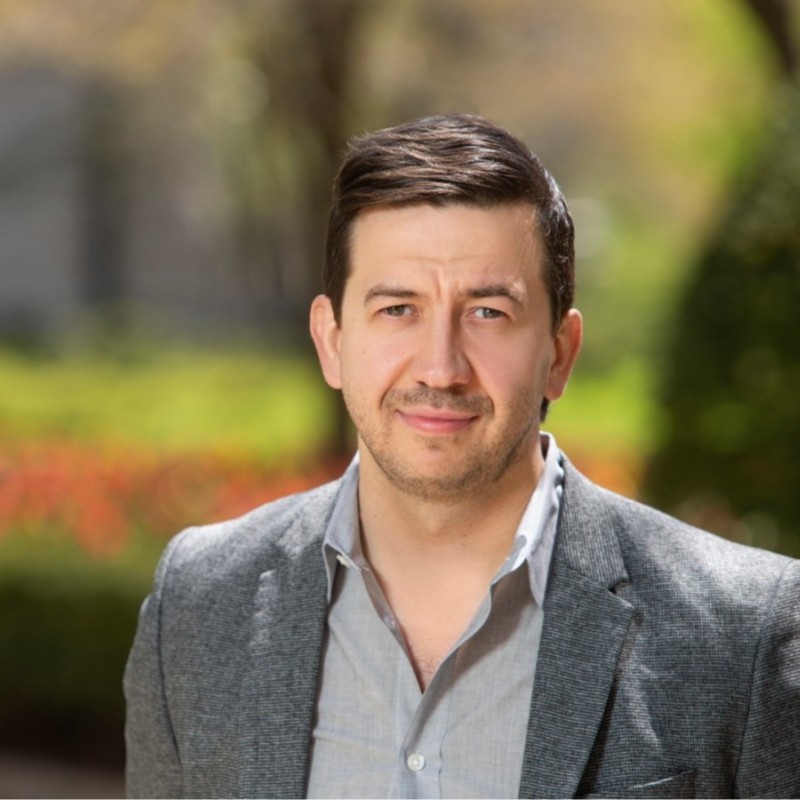
He Tried to Book a Cruise. He Couldn't. He Built the Company That Fixed It.
Pierre-Olivier Lepage didn't set out to revolutionize how Americans book vacations. He just wanted to go on a cruise - and the internet made it humiliatingly difficult.
There is a stat that Pierre-Olivier Lepage returns to often: 80% of cruise bookings still flow through travel agents. Not because travelers prefer it that way. Because the alternative - trying to comparison-shop 19 cruise lines across thousands of itineraries on a mobile screen - was, until recently, functionally impossible. When Lepage went to book his own first cruise, he ran straight into this wall. A Montreal-trained industrial engineer with two MIT master's degrees and years inside Booking Holdings, he looked at the booking experience and saw something that looked less like a product and more like an accident.
He co-founded Cruisebound in 2022. By 2024, the platform had raised $37.8M in total funding, listed over 27,000 global itineraries, and attracted the former CEO of Booking Holdings as one of its earliest backers. Its customers average 9.5 years younger than the typical cruiser. Eighty-three percent of reservations are completed without any agent assistance. The cruise industry's reliance on travel agents is not a feature. Lepage has decided it is a bug.
"As avid travelers, we were intrigued by the convenience and value of going on a cruise, but struggled to easily compare, find and book a cruise on the go."
- Pierre-Olivier Lepage, CEO, CruiseboundThe path to that insight wasn't obvious. Lepage grew up in Canada, studied industrial engineering at Polytechnique Montréal, and then enrolled at MIT in 2010 - simultaneously pursuing master's degrees in Transportation and Operations Research, finishing both in 2013. That's not multitasking. That's architecture. He then spent two years at McKinsey, the kind of training that teaches you to see an industry as a series of inefficiencies waiting to be named. Then he joined Rocket Travel, a Booking Holdings subsidiary, where he eventually became Head of Business Operations.
He left to build Cruisebound with co-founders Bjorn Larsen, Jay Hoffmann, and Tyler Barber. The timing was counterintuitive: the post-pandemic world had just sent cruise stocks into freefall, and nobody was celebrating the vacation industry. Lepage had data on his side. Two-thirds of existing cruisers, when surveyed, said they would prefer to book online - if only someone had built the product to let them.
"We launched Cruisebound two and a half years ago to help more people discover the joy of cruising."
- Pierre-Olivier LepageThe company's approach is specific to the point of being architectural. Cruisebound isn't a general travel site that happens to list cruises. It is exclusively a cruise platform - with multi-cabin booking (up to five), free 24-hour cabin holds, flexible payment plans, deferred deposits, and zero booking fees. The platform's AI chatbot now handles 42% of all customer service requests. Ninety-two percent of Trustpilot reviewers rate their experience five stars. In 2023, 91% of purchases came through mobile. By 2024, mobile's share sat at 57% - which sounds like a drop but reflects a rapidly growing share of desktop bookings as the product matured.
The investors who backed Lepage read like a greatest-hits of travel tech. Jeff Boyd, who ran Booking Holdings during its era-defining growth, led the Series A. Steve Kaufer, who co-founded Tripadvisor, joined the cap table. Steve Singh, founder of Concur, came aboard. The Series B, closed in October 2024, was led by Thayer Ventures with additional participation from Link Ventures, PAR Capital Ventures, Flybridge, and Plug & Play Ventures.
Lepage operates from New York - specifically the kind of coworking spaces (he favors Soho Works in the Meatpacking District for meetings) that serve as offices for founder-operators who believe geography is a variable, not a constraint. Cruisebound runs as a fully remote global team, with crew members across North America, South America, and Asia. His own responsibilities span product design, recruitment, customer acquisition, and supply chain management simultaneously - classic founder-operator scope.
The market framing matters. The cruise industry is projected to reach $66B in revenue by end of 2024, and 27% of passengers over the past two years have been new-to-cruise travelers. Lepage isn't fighting for incumbents' existing customers. He's building for the people who hadn't considered cruising at all - and the numbers suggest they are receptive. Cruisebound's average customer is 36 years old. The industry average is closer to 46.
Platform by the Numbers
On AI, Lepage is measured rather than evangelical: "Really, AI is allowing everybody to do more with less." The quote is from a panel at The Phocuswright Conference in 2025. Coming from someone running a 31-person team with 42% AI-deflected support volume, it lands as operational fact rather than buzzword. He's not using AI to replace the product; he's using it to scale a team size that should not, by conventional logic, be able to compete with companies ten times larger.
The Engineers Without Borders fellowship early in his career is worth noting - not as preamble to a charity narrative, but as signal about orientation. He built paper-based knowledge management systems in the field. Paper. The person who now runs a mobile-first booking platform once spent his working hours making information survive in environments with no electricity. The range is instructive.
Lepage's career trajectory has the shape of a compressed education: Montreal, MIT, McKinsey, Booking Holdings, then his own company. Each step added a different vocabulary - engineering, research, strategy, product, operations - and Cruisebound is the output of all of them running simultaneously. The product is a tool. The company is an argument. The argument is that most of the world's cruise passengers are being underserved by an industry that hasn't changed its distribution model in decades, and that a mobile-native, data-fluent, AI-assisted booking experience will change that - not incrementally, but structurally.
"Our goal is to build an efficient and profitable business."
- Pierre-Olivier LepageHe says it simply, without the founder-speak about disruption or transformation. The goal is efficiency and profitability. The method is an extremely well-designed cruise booking platform. The target is an $66B industry that still sends confirmation emails that look like 2004. If that sounds like an understatement, it probably is. Pierre-Olivier Lepage has spent his career making complex systems legible. The cruise industry is his current system. Watch the booking experience change.
Career Timeline
B.Sc. Industrial Engineering, Polytechnique Montréal
Operations Research Analyst, Air Canada - improved forecast accuracy systems
Dual Master of Science degrees, MIT - Transportation & Operations Research, simultaneously
Summer Business Analyst, McKinsey & Company
Business Analyst, McKinsey & Company - supply chain strategy
Rocket Travel (Booking Holdings) - ascended from Global Partnerships to Head of Business Operations
Co-founded Cruisebound with Bjorn Larsen, Jay Hoffmann & Tyler Barber
Series A: $10M raised, led by Jeff Boyd (former Booking Holdings CEO)
Series B: $13M raised, led by Thayer Ventures - total funding reaches $37.8M
Named to PhocusWire Hot 25 Travel Startups for 2026
Education
- Holds two MIT master's degrees earned simultaneously - Transportation and Operations Research
- Volunteered as Junior Fellow with Engineers Without Borders Canada
- Cruisebound's average customer is 36 years old - 9.5 years younger than the typical cruiser
- Early career included production internship at WSK PZL Rzeszow S.A. - a Polish aircraft engine manufacturer
- Cruisebound allows booking up to five cabins simultaneously - rare in online cruise platforms
- The cruise industry Lepage entered: 80% of bookings still flowing through traditional travel agents in 2022
- Prefers Soho Works in Meatpacking District for client meetings
Links & Profiles