The Dispatch
The Case for the Least-Loved Branch
In early 2025, a body called the Department of Government Efficiency announced it could close departments and cancel programs that lawmakers had funded. Most of Washington argued about whether it was legal. Philip Wallach asked a quieter, sharper question: where were the 535 people whose job this was supposed to be?
That instinct, to look past the spectacle and toward the empty chairs, is the whole of his career in miniature. As a senior fellow at the American Enterprise Institute, Wallach studies the separation of powers and the long, slow relationship between Congress and the administrative state. It is not a beat that trends. It is the beat that decides who actually governs.
His 2023 book, Why Congress (Oxford University Press), is the fullest version of the argument. The title reads like a sigh from anyone who has watched a shutdown standoff or a speaker fight. Wallach turns it into a genuine question and then answers it: the Framers built the legislature to be the pillar of the system, handing it more power and more responsibility than any other branch. When it refuses to use that power, the executive and the courts do not wait politely. They move in.
From the Edge of a Crisis
Before he made the case for Congress, he made a case about a catastrophe. His first book, To the Edge: Legality, Legitimacy, and the Responses to the 2008 Financial Crisis (Brookings Institution Press, 2015), worked through the legal gray zones of the bailouts, where officials improvised at the boundary of their authority and the country had to decide afterward whether to bless what they had done. It is a study of what happens when institutions act under pressure, and it set up the question he has chased ever since: who is supposed to be in charge, and what happens when they are not?
The path to that question ran through three very different institutions. He spent his early career as a senior fellow in governance studies at the center-left Brookings Institution. He moved to the libertarian-leaning R Street Institute as a resident senior fellow from 2018 to 2020. He now sits at the conservative American Enterprise Institute. Crossing that ideological terrain without changing his subject is itself a kind of argument: the health of Congress is not a left or right concern, it is a structural one.
Inside the Machine
In 2019 he stopped writing about the institution from the outside and stepped in, serving as a fellow with the House Select Committee on the Modernization of Congress, the rare bipartisan body whose entire purpose was to ask how the place might work better. It is one thing to diagnose dysfunction from a think tank. It is another to sit in the room while members try to fix the plumbing.
What he found there sharpened a recurring theme in his writing. The problem is not that legislators are incapable. It is that they have learned to see themselves as something other than legislators. "Legislators see themselves first and foremost as team players for their parties, not as members of the first branch," he has said. The institution atrophies not from a single blow but from a thousand small abdications, each one easier than the deliberation it replaces.
Writing in Public
Wallach does not keep the argument in the seminar room. His work appears across an unusually wide spread of outlets, from National Affairs and National Review to Law & Liberty, the Wall Street Journal, the Washington Post, Fortune, and the Los Angeles Times. He trained at Princeton, where he earned a master's and a doctorate in politics, after an undergraduate degree from Wesleyan University's famously demanding College of Social Studies.
The throughline is a stubborn, almost old-fashioned optimism. In an era when cynicism about Congress is the safest possible take, he keeps insisting the institution can be rehabilitated, that the messy work of bringing together a sprawling republic is worth defending precisely because it is hard. "The solution really has to be to rehabilitate this institution that is at the heart of our constitutional system," he argues. It is not a popular thing to believe. He believes it anyway.
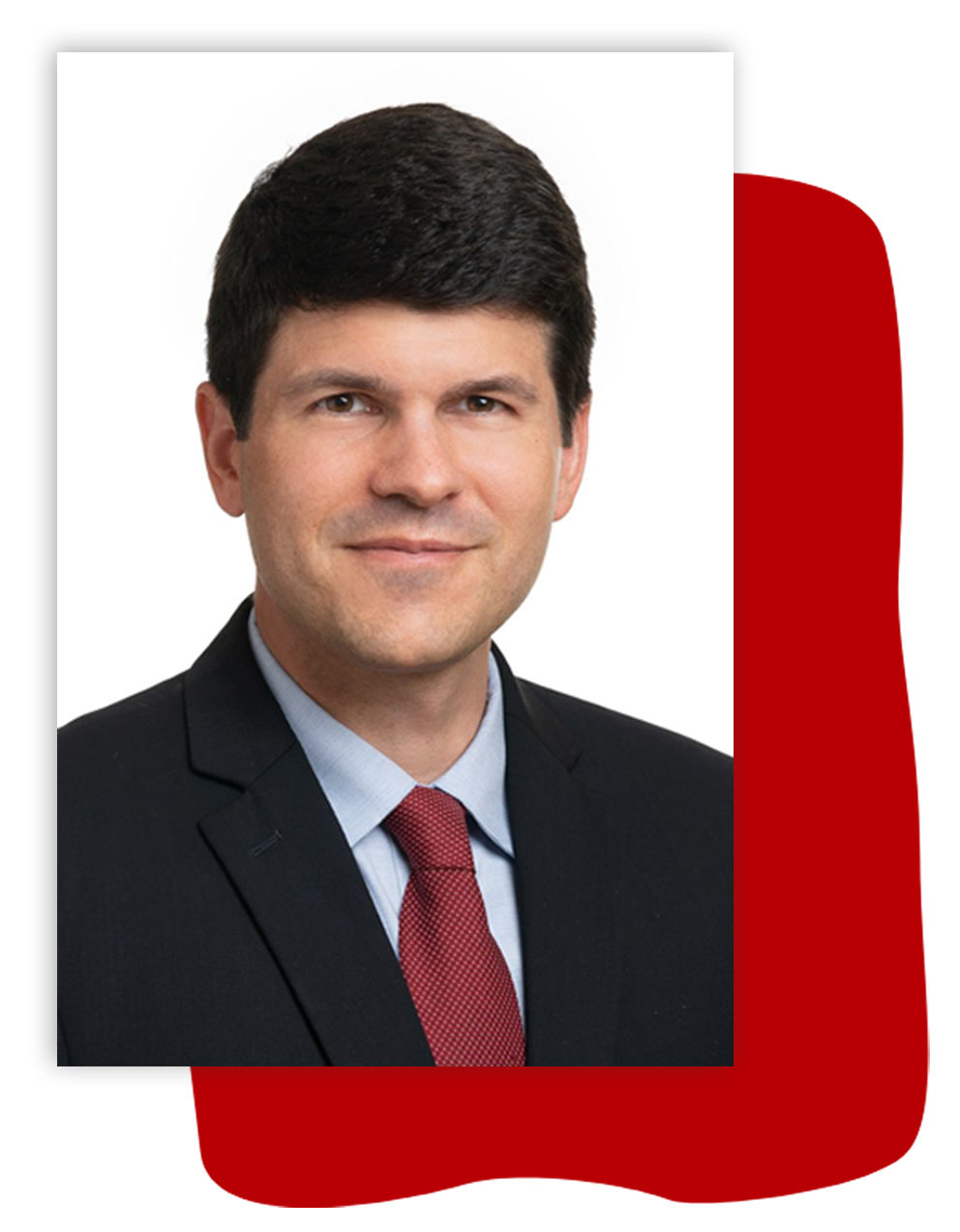 Reads the Constitution for fun. Means it.