Founder Files / Barcelona
Pedro
Pedro
Coelho
He wrote a clinical trial protocol in 90 seconds. The old way took a 10-person team a year and a half.
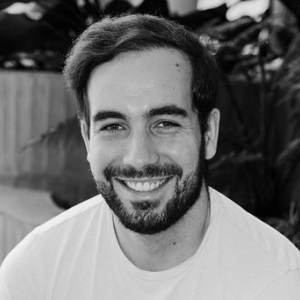 The look of a man counting days, not quarters.
He wrote a clinical trial protocol in 90 seconds. The old way took a 10-person team a year and a half.
The look of a man counting days, not quarters.
Most founders pitch you a market. Pedro Coelho pitches you a unit of measurement: days of life. At Biorce, the Barcelona company he runs, the productivity metric that matters is not revenue per head or burn multiple. It is how many days you can shave off the years it takes a drug to reach the person waiting for it.
That framing is not a marketing flourish. It is autobiography. A clinical trial once bought Pedro's father, dying of melanoma, ten extra months beyond his prognosis. Ten months is a strange, precise number to build a company on. It is also the whole thesis: somewhere in the machinery of how trials get designed and run, time leaks out, and the people who can least afford the wait pay for it.
Biorce builds software that designs and manages clinical trials with AI. The flagship work compresses something that used to take a ten-person team eighteen months - writing a trial protocol, the dense hundred-page rulebook every study runs on - into roughly ninety seconds, at about 86% accuracy. Users report saving something like 236 hours for every hour they spend in the product. The model sits on a proprietary library of more than 530,000 annotated clinical studies.
In February 2026 the company closed a $52 million Series A led by DST Global - the largest Series A in Iberian healthtech and AI, and it landed only six months after the previous round. The cap table reads like a who's-who of European software: Arthur Mensch of Mistral, Nik Storonsky of Revolut, Paulo Rosado of OutSystems, Albert Nieto of Seedtag. Software people, betting on a biology problem.
The enemy wasn't just the disease. It was the time lost to inefficient processes that kept life-saving treatments from reaching the people who need them most.- Pedro Coelho, on why Biorce exists
The idea arrived on a plane. January 2024, a flight from Lisbon to San Francisco for the JPMorgan Health Conference - the annual gathering where biotech goes to raise money and gossip. Somewhere over the Atlantic, the consultant who had spent eight years watching the industry trip over its own processes decided to stop describing the problem and start dismantling it.
Pedro was not new to the room. He had logged more than eight years in life sciences consulting before that flight - clinical trials, drug development, commercial strategy. He had been Chief Commercial Officer at Konspol Holding and, as Senior Vice President at Talentmark, built and ran TMFS, a contract research organization aimed squarely at oncology and cell & gene therapy. He had operated the machine he now wanted to rebuild. He knew exactly where the time went.
His read on the industry is unsentimental. Trials keep getting more complex, he points out, while the way protocols are designed and managed has barely moved in decades. A single protocol change can freeze patient recruitment for weeks and add something like a million euros in cost. Globally, trial management runs north of $120 billion a year. That is a lot of leaking time to go after.
Studies Business Administration at EU Business School, graduating Summa Cum Laude. Later adds executive education at Harvard Medical School and the University of Pennsylvania.
Builds a career across life sciences consulting and commercial strategy, including Chief Commercial Officer at Konspol Holding.
As SVP at Talentmark, creates and leads TMFS, a CRO focused on oncology and cell & gene therapy.
Conceives Biorce on a Lisbon-to-San-Francisco flight to the JPM Health Conference.
Founds Biorce in Barcelona with Clara Bernardes, José Faria and Diogo Pisoeiro.
Raises €3.5M led by YZR Capital and Mustard Seed Maze.
Raises €5M from Norrsken VC to push into the US.
Closes a $52M Series A led by DST Global and opens an Austin, Texas office.
What makes the arc unusual is the order of operations. Plenty of AI founders come to healthcare as tourists, dazzled by the size of the prize and unbothered by the regulation. Pedro came the other way around. He ran a CRO. He knows what an FDA submission feels like and why an EMA reviewer's question can stall a study for a month.
He did not build Biorce alone. The founding team pairs him with Clara Bernardes, the chief scientific officer, José Faria running engineering, and Diogo Pisoeiro on product design - scientists, in the company's own phrasing, who became builders. The culture leans on three words: excellence, ownership, ambition. Or, as the team puts it, they are not here to optimize pharma. They are here to give people back time.
Clinical trials are becoming increasingly complex, yet the way protocols are designed and managed has barely evolved in decades.- Pedro Coelho
Biorce's product line has carried names with a wink - an assistant called Jarvis, work later referenced as Aika. The point underneath the branding stays fixed: take the slow, manual, error-prone parts of trial design and let a model that has read half a million studies do the first draft.
A hundred-page protocol that once took three months now generates in about a minute and a half, at roughly 86% accuracy - a first draft humans then sharpen.
The model is trained on a proprietary database of more than half a million annotated clinical studies, spanning oncology, neurology and beyond.
The long-term ambition the team keeps repeating: design decisions reduced to a single, reliable click - the operating system for AI-driven trials.
On the EUVC podcast, fresh off the Series A, he described his way of working with a line that fits him: conviction often means running straight at the wall instead of mapping it first. It is the kind of thing a careful consultant learns to say only after he has stopped being one.