Where they are nowProduction, finally.
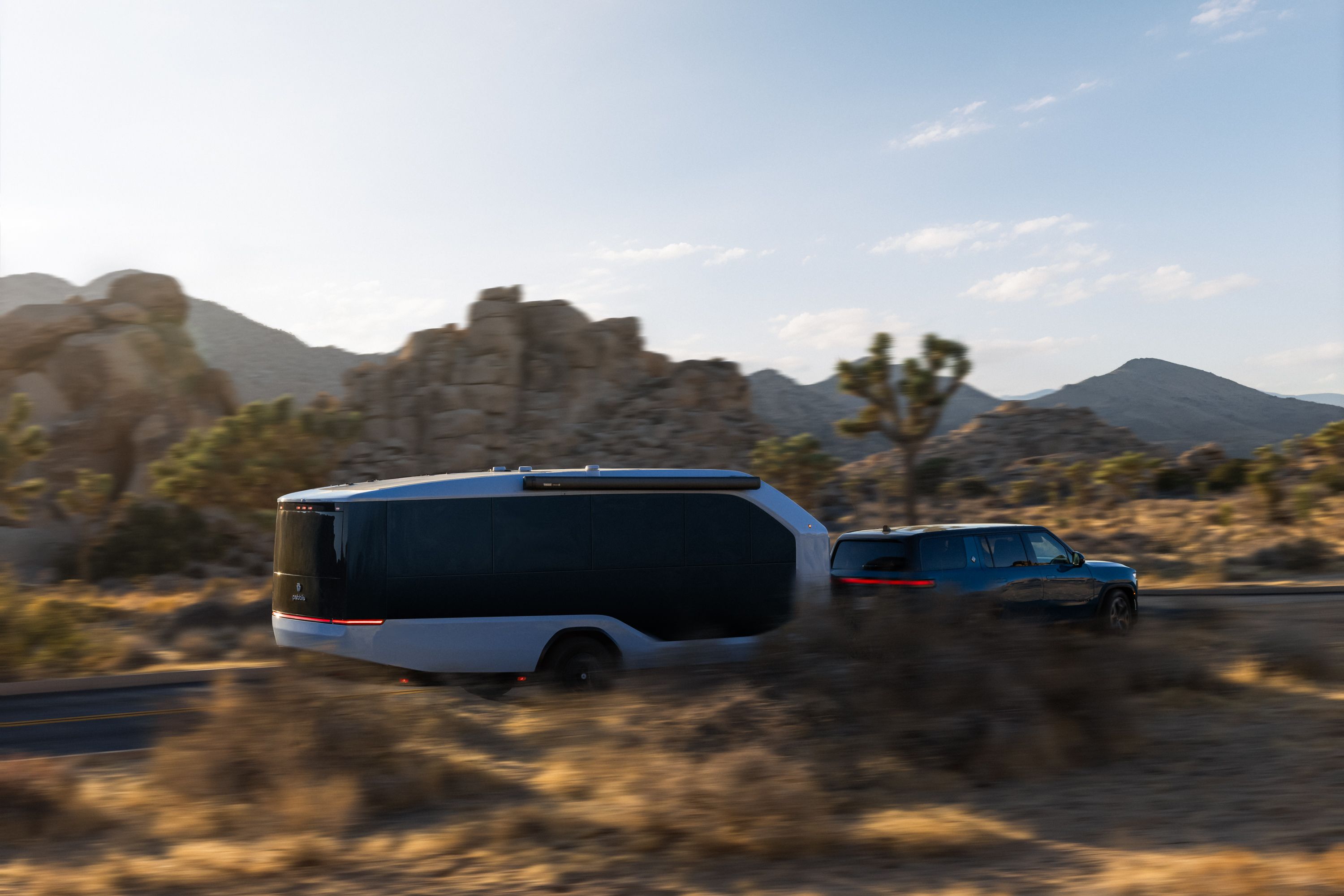
On a Tuesday morning in Fremont, California, technicians in blue shirts roll a 25-foot trailer off the line. It is silver, low-slung, suspiciously sleek for something you would tow behind a pickup. A pair of solar panels glints on the roof. Inside, there are no propane lines. There is no generator. There is a 45 kWh battery, a panoramic window, and a couch that folds into a queen bed. It is a Pebble Flow, and after three years of renders, reservations, and CES demos, Pebble is finally building them in the only place that matters: real life.
"We're not making a better RV. We're making a different category."
- Bingrui Yang, Founder & CEOThat sentence is the kind of thing every founder says. The interesting part is that the founder used to work at Apple, his CTO came from Volvo and Zoox, his CFO came from Apple's finance org, and his head of design used to draw cars for Mercedes-Benz. The interesting part is that Pebble's first product, the Flow, is not a concept. It is a vehicle you can buy for $125,000 with a credit card and a few months of patience.
The founders' betHire people who have done this before.
Bingrui Yang's bet was unglamorous: most of the hard problems in modern hardware - thermal management, battery packs, smart sensors, OTA software - have already been solved by other industries. Pebble would not have to invent them. It would have to recruit them. So he did. The engineering bench is stocked with veterans of Apple's iPhone team, Tesla's powertrain group, Zoox's autonomy stack, Rivian's manufacturing line, and SpaceX. Page Beermann, head of design, came from the automotive world. Chi Miller, the CFO, used to run a chunk of Apple's finance org.
"Pebble's team is more Silicon Valley than Elkhart. That alone is a thesis." - The Autopian
The result is a company that thinks in product cycles, not model years. The trailer ships with a mobile app. The drivetrain gets firmware updates. The battery powers your house if your house loses power. None of these are revolutionary ideas in isolation - they are just unusually new for a category that has historically prided itself on being timeless.
The productThe Pebble Flow, in numbers.
The Flow is 25 feet long, weighs around 6,200 pounds dry, and looks more like an Airstream's sci-fi grandchild than a traditional trailer. The headline trick is the Magic Pack: dual in-wheel motors that actively push the trailer along, dramatically reducing the towing load on your EV. You can range-anxiety yourself a lot less when the trailer is helping pull itself.
7 days
Off-grid capability
$125K
Starting w/ Magic Pack
Flow vs. a conventional travel trailer
Higher bar = more of the thing. Approximate, per Pebble and press testing.
"It hitched itself to my truck. I just stood there." - A Pebble Flow test driver, SF Standard, Jan 2025
The proofReservations, reviewers, and a real factory.
The skeptic's question for any high-priced hardware startup is: does it exist? In Pebble's case, the answer is comfortingly boring. A factory exists. A line exists. Trailers have rolled out of it. Reviewers from TechCrunch, CNBC, SF Standard, and Inc. have stood inside one, towed one, parked one. Reservation holders have given six-figure deposits to people they have never met. The Magic Hitch, the trick everyone wants to see, performs on demand for journalists who arrived expecting it to fail.
"The Tesla of the RV world." - SF Standard, after a test drive
The investor list is also unusually adult. Lightspeed Venture Partners led, with Vision+ Fund and UpHonest Capital following. There are no celebrities, no crypto angels, no thirty-tweet announcement threads. Just a quiet pile of patient capital, which - in a hardware category - is the only kind that matters.
The missionHome, but with wheels.
Pebble's tagline is "Where Home Meets the Road." It is the kind of phrase that sounds vague until you spend an afternoon inside the trailer. The interior is more studio apartment than camper: a dinette that becomes a queen bed, a galley with an induction cooktop, panoramic windows that turn from clear to opaque at the tap of an app. Plug into shore power and it is a guest room. Charge it from the sun and it is an off-grid office. Wire it into your house and, in a blackout, it is a 45 kWh backup battery on wheels.
The company is betting that "RV" is the wrong word for what it is making. The right word is something more like "a second small house you happen to be able to tow." Whether that bet is right is, of course, the unresolved question - and the answer will be written in deliveries, not press releases.
"A world where home can be anywhere you want to take it." - Pebble, on what it is for
Why it matters tomorrowThe boring revolution.
It is fashionable in 2026 to predict that everything will be electric. The trick is that "everything" usually means the obvious things - cars, trucks, buses. The category that nobody talks about is the towed vehicle: the 11 million trailers on American roads, dragging behind internal-combustion pickups, leaking aerodynamic efficiency and burning extra fuel. If Pebble's bet pays off, the trailer will not be the passive cargo anymore. It will be a co-pilot, a battery, and, occasionally, a guest room. Not the loudest revolution. But possibly the most useful one.
Back in the Fremont factory, the technicians wheel another Flow off the line. It is silver. It is suspiciously sleek. A pair of solar panels glints on the roof. Three years ago, this was a render. Today it is a vehicle - and if you are honest about it, the camping industry is going to have to change to keep up.