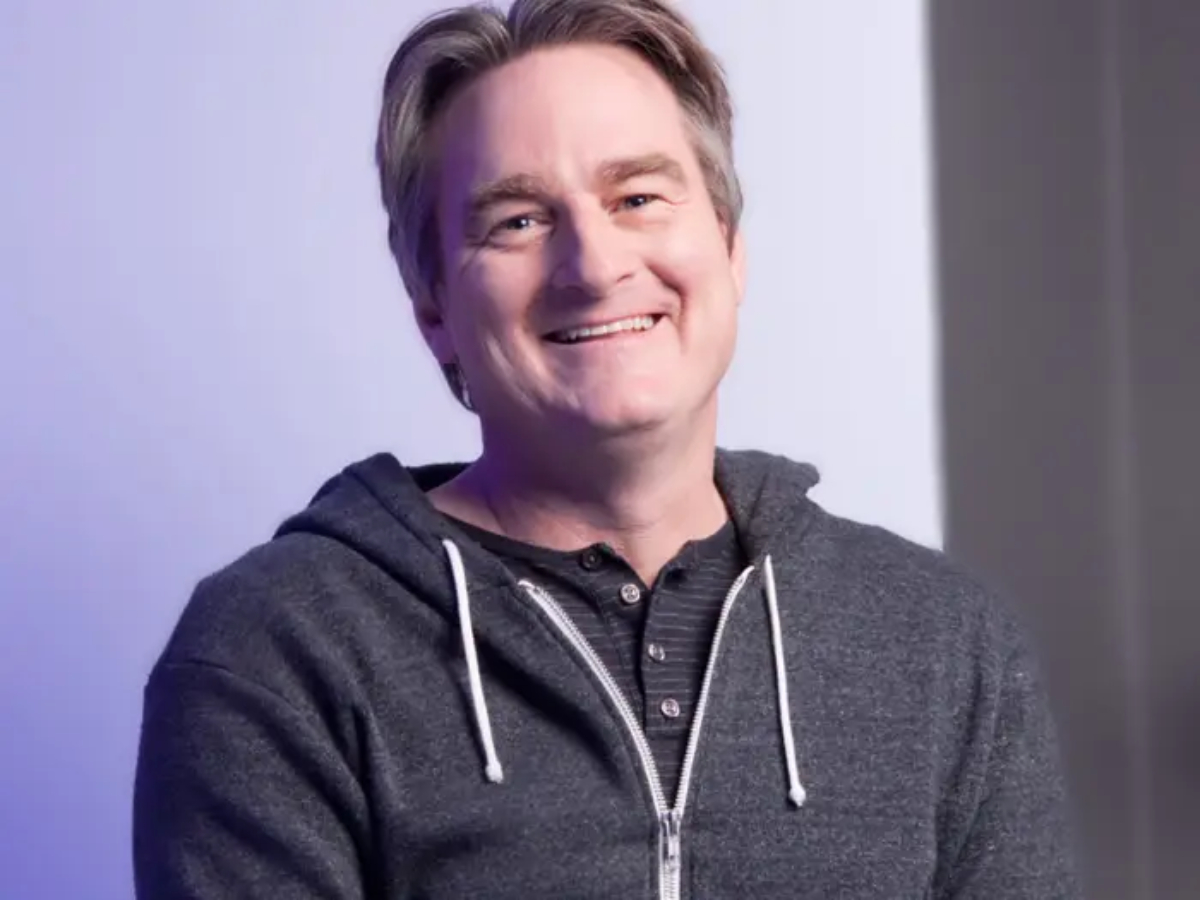
Boston, 1963. Six siblings, three bedrooms, nine people, and one unheated attic where young Paul English slept and stewed. His father, a pipefitter for Boston Gas. His mother, a substitute teacher who was seriously ill for the first decade of his life. Aunts stepped in to help raise the brood.
It was that scramble — the Irish Catholic chaos of West Roxbury, the not-enough of it all — that forged something fierce. Paul enrolled at Boston Latin School, joined the band, played piano and trumpet, and stumbled into the Computer Club, where a dumb terminal changed everything.
At 12, he hacked his teacher's password to get more computer access. He wasn't a troublemaker. He was simply impatient for more. That hunger — for speed, simplicity, and access — would later define every product he ever built.
In 1981, his mother brought home a VIC-20 computer. Paul treated it, as one writer put it, "like the restoration of a missing limb." He taught himself to code. The rest is history — or rather, a very long, very interesting, and still-unfinished story.
When you typed "K" into Google, the first result was Kayak. That's not SEO. That's a product people actually remembered.
Diagnosed with bipolar disorder in his late twenties while at Interleaf, Paul hid it for over a decade. By the time Kayak launched, he'd started telling colleagues. By the time the Boston Magazine profile ran, he'd gone fully public — and never looked back.
He has said that Kayak might not have been as successful without his bipolar disorder — the energy, the grandiosity, the unstoppable drive. But he's equally honest about the cost: depressive episodes that made getting out of bed impossible, reckless decisions, and a team that had to manage a boss whose ideas arrived faster than anyone could implement them.
He now practises Buddhist meditation, openly discusses his mental health, and founded the Bipolar Social Club. He believes there is no healing in secrecy. "I've often said people follow confidence but are loyal to vulnerability."
The Harvard Business Review, Inc. Magazine, and Business Insider have all covered his story. He may be the most open tech billionaire in America about mental health.