YesPress Profile · The Builder
Paul Gutierrez
The President and CEO of California Drywall Co. signed the paperwork on the day a 77-year-old family business stopped being a family business. The new owners report to themselves.
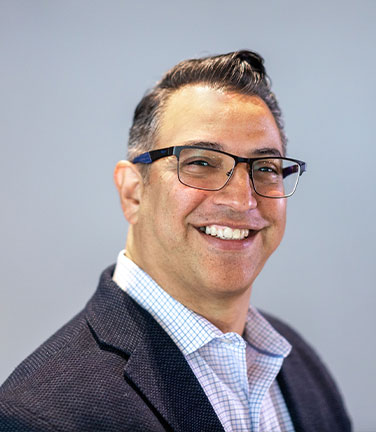
The President and CEO of California Drywall Co. signed the paperwork on the day a 77-year-old family business stopped being a family business. The new owners report to themselves.
San Jose · est. 1946 · ESOP era 2023→
Paul Gutierrez took the top job at California Drywall in 2023, the same month its previous owner walked out the door and put his shares into a trust. There was no auction. No private-equity logo on the press release. There was a memo, a signature, and a roster of office employees who woke up that morning with a stake in the company.
He runs a wall-and-ceiling contractor that puts up drywall, plaster, lath, framing, ceilings, fireproofing, and the unglamorous insides of the Bay Area's glamorous buildings. The kind of work that disappears behind paint. About 700 people on payroll. Roughly a quarter-billion in annual revenue. Eighth-largest of its kind in the country.
And the new bit, the part that made a 77-year-old construction outfit briefly newsworthy: every office employee, from receptionist to executive, now owns shares of the place they show up to. The field crews, who are unionized, keep their union deal. The trust covers everyone else. Paul Gutierrez is the CEO who put his name on that page.
We firmly believe that by empowering our employees through ownership, we will forge an even stronger and more prosperous future together. — Paul Gutierrez, August 2023
To understand why Paul Gutierrez's job description changed in August 2023, you have to understand the place he runs. California Drywall was not started in a boardroom. It was started in a garage, in San Jose, in 1946, by a man named Leonard Eckstrom. Eckstrom was 55. He'd spent his career selling gypsum board for US Gypsum, the big national supplier. He'd watched contractors install the stuff. He decided he could do it himself, and so he did, with the small detail that he put everything he had into the bet.
It worked. By 1957 the company was hanging drywall in the Eichler homes that defined mid-century Northern California suburbia. By 1965 it was on its first high-rise, the Eichler Summit in San Francisco. Leadership passed through generations of Eckstroms and Bowles, the family steering the boat through the booms and busts that come with building anything in California. By the early 2020s, Steve Eckstrom was at the helm. The company had grown into one of the largest wall-and-ceiling contractors in the country, with offices, fabrication, prefab shops, and crews in the field doing drywall and plaster and metal stud framing and fireproofing for clients who do not skip details on the contracts.
Then in 2023 Eckstrom decided to retire. He could have sold to a competitor. He could have sold to a private-equity roll-up - those are everywhere in commercial construction now. Instead the company set up a trust, the trust bought 100% of the shares, and the office employees, all hundred or so of them, became owners. The decision was real in the sense that it had numbers attached: shares were distributed proportionally to salary, capped near $275,000 per employee. No employees paid anything. The shares vest over six or seven years. The company will buy them back, also over about seven years, when an employee leaves. The field crews, the unionized installers, were left out by design - moving them into the plan would require renegotiating collective bargaining agreements - but new office hires get in.
And Paul Gutierrez was named CEO.
The other thing worth knowing: he isn't doing it alone. His brother, Michael Gutierrez, was named Chief Revenue Officer in the same announcement. Two siblings at the executive layer of a 700-person construction firm in San Jose. The Eckstrom and Bowles families had run California Drywall for three generations; the leadership team that signed the ESOP paperwork includes a second generation of Gutierrezes already in the building. The handoff was not from one family to no family. It was from one family to a trust, with another family quietly doing the day-to-day.
Running California Drywall is not glamorous. The work itself is unsentimental: drywall installation and finishing, lath and plaster, acoustical and specialty ceilings, exterior framing, fireproofing, EIFS, rain screen, firestop systems. The company runs a fabrication facility, cold-formed steel engineering, automated roll-formers, laser and plasma cutting, CNC laser cutters, prefabricated wall panels, robotic total stations, BIM and VDC. Read the company's own materials and you see a contractor that has steadily moved into prefab, design-build, integrated project delivery, and the technical side of construction that used to be the architect's worry.
It is also a Bay Area company, which means it works in an environment where building anything takes years, costs more than anyone wants, and depends on the kind of long, patient relationships that the construction industry runs on. Sustainability, safety programs, productivity, a collaborative culture - the language California Drywall uses to describe itself is the language of a firm that knows its clients are going to ask about every one of those things on the next bid.
Paul Gutierrez sits at the top of that operation. He is the executive who has to keep the bids coming in, the projects on schedule, and now, the additional wrinkle, the share price of an employee-owned company that the office employees are watching like the 401(k) statement they also still have. Because they still have that, too. The 401(k) didn't go anywhere when the ESOP came in.
Family-to-employee transitions are not rare in the abstract. There are thousands of ESOP companies in the United States. But a 77-year-old specialty contractor at the eighth slot of its national ranking is a particular kind of business to convert. There are competitors with similar scale that quietly sold to roll-ups in the same year. The choice California Drywall made under Paul Gutierrez's name is therefore a structural statement: the company is going to keep being the company. Same headquarters at 2290 South 10th Street. Same client list. Same field crews. New ownership column on the cap table.
The quote Gutierrez gave on the day was short. He talked about belief in the potential of employees. He talked about empowerment through ownership. Press-release prose. But the prose was attached to a thing that actually happened. He is not the CEO who said the words. He is the CEO who signed the document the words describe.
The next phase of California Drywall is what every employee-owned company has to figure out: how do you actually run the place day to day so that the share price - the thing employees now care about, because they own a slice of it - keeps going up? In construction, that means winning the right projects, keeping margins on prefabrication, investing in the technology side, keeping safety incidents low, and resisting the temptation to chase revenue at the expense of profit. Gutierrez's job, in the boring practical sense, is to do all of that.
He has the assets. A fabrication facility, an engineering team, robotic total stations, an established client base, a brand the industry recognizes. He has the constraint. The trust holds the company. The employees hold the trust. The decisions have to make sense for that arrangement to keep working. That is the job he took.
Share allocations were proportional to salary, capped around $275,000 per employee. The cap is the cap. The math is the math.
If you leave early, your unvested shares redistribute to the people who stay. If you leave vested, the company buys you out over roughly seven years.
Paul is CEO. His brother Michael is Chief Revenue Officer. Two Gutierrezes at the top of a company that used to belong to two other families.
The company that now does cold-formed steel engineering and BIM started in a San Jose garage in 1946 with one founder, age 55, and his retirement savings.
If you've ever walked into one of those flat-roofed mid-century homes in the Bay Area, the interior walls were likely hung by California Drywall.
The ESOP did not replace the 401(k). It came on top of it. Employees who were saving for retirement are now also part-owners of a $250M contractor.