The Story
The CEO who keeps starting things, then merging them.
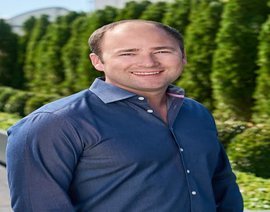
Owen Tripp's day job is making American healthcare feel less like a maze and more like a concierge desk. He runs Included Health, the San Francisco company that millions of employees and public-sector members rely on for navigation, virtual visits, second opinions, advocacy and the slow, unglamorous work of getting somebody to the right specialist on the first try. Most people, even the ones using it through their employer, have never said the company's name out loud.
That's fine with Tripp. He has the bearing of someone who would rather ship than be famous - clipped, plain, allergic to platitude. Ask him about leadership and he'll tell you the hardest part is doing what's unpopular. Ask him about hiring and he'll tell you he watches how candidates show up around ideas, whether they can process at the speed of the room. The room moves fast.
Included Health exists because Tripp engineered a merger that wasn't supposed to be possible. In 2021 he combined Grand Rounds - the expert-medical-opinion company he had co-founded a decade earlier - with Doctor On Demand, the virtual-care pioneer. Two companies. Two CEOs. One brand. The deal closed and the new company kept moving, eventually settling on the name Included Health and a stated mission of raising the standard of care for everyone, with particular focus on populations the U.S. system has historically served worst.
Before the merger, three founderships.
Tripp's resume is a series of co-founder credits, not a single anointed startup. He cut his teeth at Accenture's Health and Life Sciences group, then went to eBay - the early-2000s product school that minted a generation of operators. From there he co-founded Reputation.com, betting that one day people would care what the internet said about them. They did.
In 2011 he co-founded Grand Rounds Health, an idea closer to home: when somebody you love gets a bad diagnosis, you want a second opinion from the best person on the planet, not whoever your zip code assigned you. Grand Rounds productized that instinct - matching patients to top specialists - and spent a decade turning it into infrastructure that employers bought on behalf of their workforces.
By the time the Doctor On Demand merger came around, Tripp had a thesis. The American care experience is fragmented by design. Insurance is one company. Primary care is another. Virtual care is a third. Behavioral health is a fourth. The patient is the connective tissue, which is exactly the wrong way to organize a service business. Included Health's bet is that one company can do navigation, virtual primary care, specialty consults, behavioral support and advocacy under one roof - and that the savings (for employers) and outcomes (for members) follow.
The Stanford-to-startup arc, slightly off-script.
Tripp earned a BA with honors from Trinity College in Connecticut before heading west for an MBA at Stanford's Graduate School of Business. The pedigree is conventional. What he did with it isn't. Most Stanford GSB graduates do one tour at a venture firm, one tour at a big tech company, one tour at a startup they didn't found. Tripp went founder, founder, founder. The first two companies he started exited or merged. The third is the one he's still running.
The recognition column is filling up. Goldman Sachs put him on its 100 Most Intriguing Entrepreneurs list, then later on its Top 50 Builders + Innovators. Rock Health, the digital-health investor and convener, named him Most Beloved CEO - an award you don't get by being feared. The World Economic Forum has tagged the companies he's built as Global Technology Pioneers. Fast Company has cited them as Most Innovative.
What he sounds like in a room.
The interviews are consistent. He talks about clinical expertise plus software plus a human voice on the other end of the line. He talks about pace and clarity. He talks about why before what. He does not, in any interview I've found, talk about himself for very long. The Excoleadership profile that captured his "doing what's unpopular" line is essentially a portrait of a CEO who has internalized that the popular call is usually the wrong one in a company growing through structural change.
He shows up where founders show up: on Fortt Knox with Jon Fortt, in Floor Talk videos his own company produces, on The Health Care Blog with Matthew Holt, in the Chrissy Farr conversations that have become a barometer for serious healthcare-startup thinking. The cadence is regular. The talking points evolve. The thesis - integrate the experience, deploy AI in service of empathy rather than in place of it, charge employers a number that actually saves them money - doesn't.
The blunt instrument: AI plus EQ.
Included Health's pitch in 2025 leaned heavily into a phrase you'll see on Tripp's LinkedIn and the company's social: AI plus EQ. The idea is that the artificial intelligence layer is the fastest way to triage, match, route and follow up; the emotional-intelligence layer - actual human nurses, care advocates, doctors - is what closes the loop. The companies that win in care, in his telling, will be the ones that can do both at once. Software-only companies miss the human moment. People-only companies don't scale.
It's a thesis with a built-in audience: large employers tired of writing bigger checks every year for healthcare that members don't love, and public-sector buyers - state pension systems, retiree groups, agencies - looking for a way to deliver more care without more spend. CalPERS, the giant California public employee pension system, has Included Health in its provider stable. The growth math depends on that kind of buyer continuing to say yes.
The version you don't read in the press release.
Tripp lives and works in San Francisco. The company is headquartered at 1 California Street, on the edge of the Embarcadero, in a building old enough to have witnessed a few previous waves of San Francisco reinvention. He is active on X under his own name and on LinkedIn, where he posts in the cadence of a CEO who reads his own feed. He is not, by the available evidence, a man who chases personal coverage. His company gets the spotlight. He gets the work.
What he is building, finally, is a company shaped like the answer to a question he kept getting asked: where do I send my family when something is actually wrong? Reputation.com taught him the internet remembers. Grand Rounds taught him a second opinion can change a life. Included Health is the synthesis - care that knows you, software that doesn't sleep, and someone on the phone when you need them.
 Subject: O.W.T.