Othman Laraki - CEO, Color Health Color Health valued at $4.6 billion 7 million Americans served Twitter VP of Product - built first revenue products Google Chrome early engineer MixerLabs acquired by Twitter in 2009 AI-powered cancer care with OpenAI & Google Cloud Only non-clinician on American Cancer Society board ~66 angel investments including Pinterest, Slack, Instacart From Casablanca magazines to Silicon Valley icon Othman Laraki - CEO, Color Health Color Health valued at $4.6 billion 7 million Americans served Twitter VP of Product - built first revenue products Google Chrome early engineer MixerLabs acquired by Twitter in 2009 AI-powered cancer care with OpenAI & Google Cloud Only non-clinician on American Cancer Society board ~66 angel investments including Pinterest, Slack, Instacart From Casablanca magazines to Silicon Valley icon
Profile / Founder + Operator + Investor

Othman
Laraki

The man who taught a computer to fight cancer - one patient at a time, at population scale

Co-Founder & CEO - Color Health

He arrived in San Francisco at 18 with a head full of Tolkien and a talent for code he had taught himself by typing programs from Moroccan magazines. Thirty years later, he runs a company worth $4.6 billion that has touched 7 million American lives - and he is just getting started.

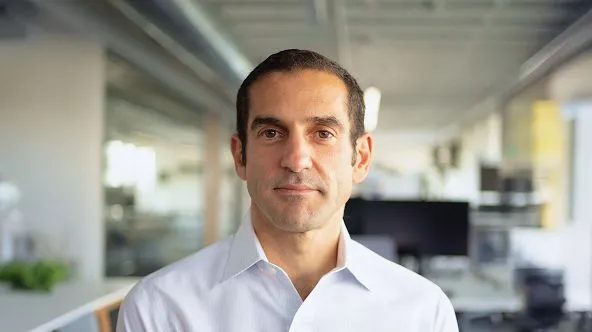
Othman Laraki, CEO of Color Health
$4.6B
Valuation
7M+
Patients
66+
Investments
14K
US Sites

Running at cancer with a tech company

Othman Laraki does not run a hospital. He runs what looks like a logistics company with a genomics lab, a national network of 14,000 physical sites, an AI copilot powered by GPT-4o, and a 50-state medical group that can see a cancer patient in any zip code in America. He calls it a Virtual Cancer Clinic. The American Cancer Society - an organization run almost entirely by MDs and PhDs - made him a board member. He is the only engineer in the room.

His path to this point is not the one you would design in advance. He left Casablanca at 18, arrived at Stanford in 1996, joined Google early, sold a geolocation startup to Twitter, and spent four years building Twitter's revenue business before pivoting into healthcare. The pivot did not look like a natural one. It looked like a man who had gotten good at large-scale infrastructure problems noticing that American healthcare was, essentially, a catastrophic infrastructure failure.

Color has now survived three complete reinventions. It launched as a genetic testing company, became a pandemic-scale COVID testing operation, and then shed both skins to emerge as the thing Laraki always wanted: a proactive, population-scale cancer detection and care machine. Most companies do not survive one pivot. Color has done three and is valued higher after each one.

The current version of Color uses AI agents that automate breast cancer screening workflows - eligibility checks, appointment scheduling, patient outreach - in a pilot targeting 20,000 to 30,000 women. A cancer copilot built on GPT-4o identifies missing labs, imaging, and biopsy results in five minutes that used to take weeks. The company has served over seven million Americans and expects two million through its Virtual Cancer Clinic by the end of 2025. This is not a startup anymore. It is infrastructure.

Quick Facts

Born
Casablanca, Morocco
Nationality
Moroccan-American
Current Role
Co-Founder & CEO, Color Health
Education
Stanford (B.S., M.S. x2) + MIT Sloan (MBA)
Previous
VP Product, Twitter; Early, Google
Twitter
@othman
Investors
General Catalyst, T. Rowe Price, Khosla Ventures
Total Raised
~$491 million
Board
American Cancer Society (only non-clinician)
"Most people have no agenda to offend you or to be in your way. The reaction you get from the world is extremely valuable signal - if you let ego stop you from hearing it." - Othman Laraki
$4.6B
Series E Valuation (2021)
7M+
Americans Served
14,000
Physical Sites in US
$491M
Total Capital Raised
150M
Twitter Users at Exit
Career Arc

Three Careers. One Compounding Logic.

Phase 01
The Infrastructure Years
2000 - 2008 / Google

Laraki joined Google in the early 2000s, when the company was still figuring out what it was. He worked on performance infrastructure and contributed to the early Chrome browser - the kind of work that never surfaces in headlines but shapes how a billion people experience the web. He was learning, at scale, how to build things that do not break.

Phase 02
The Network Builder
2008 - 2013 / MixerLabs + Twitter

He left Google in 2008 to co-found MixerLabs, a location data company that Twitter acquired in 2009 - one of Twitter's earliest acquisitions. He stayed as VP of Product and ran Growth, Revenue, and International. Under his tenure, Twitter went from 50 million to 200 million users. More importantly, he built the product that made Twitter a business: its first revenue products. He knew how to monetize attention at scale.

Phase 03
The Health Infrastructure Bet
2013 - Present / Color Health

In 2013, Laraki co-founded Color with Elad Gil and two others. The thesis: healthcare is an infrastructure problem, and infrastructure problems are solvable with the same tools used to scale tech platforms. A decade later, Color has served 7 million people, operates 14,000 sites, and is deploying AI agents that automate cancer screening at population scale. The thesis held.

What typing programs from magazines teaches you

The Casablanca Files

Grew up in Casablanca - Arab, Berber, Jewish, European and Sub-Saharan African all at once
Father brought home an Amstrad computer circa 1984 - ran programs from cassette tape
Commercial software was not available in Morocco, so young Othman typed programs out of printed magazines
A poor student until 16 - then one teacher and an obsession with Lord of the Rings changed everything
Moved to Silicon Valley at 18 in 1996 - precisely as the first dot-com wave was beginning to crest

The story starts with a cassette tape. Othman Laraki's father, a non-technical entrepreneur in Casablanca, brought home an Amstrad computer when Othman was six or seven. It loaded programs from cassette tape. Commercial software - the kind that fills shelves in American stores - was not available in Morocco. So Othman did what kids do when the easy version is unavailable: he improvised. He found printed magazines with program listings and typed them out by hand. Line by line. Character by character. This is not a metaphor for something. This is literally how he learned to code: by manually transcribing other people's programs until he understood why they worked.

This is also, it turns out, an excellent way to learn. There are no shortcuts in typing. You see every line. You internalize the logic. You make typing mistakes and then debug them. By the time most kids his age had clicked through a setup wizard, Laraki understood what was actually happening underneath.

He was not, by his own description, a standout student. He was poor at school until around sixteen. Then two things happened simultaneously: an exceptional computer science teacher who opened the subject up for him, and a private fixation on mathematical proofs and J.R.R. Tolkien. These things are not as unrelated as they sound. Tolkien builds a world through rules - the languages, the histories, the cosmologies all cohere. So do mathematical proofs. Laraki was learning, without knowing it, to love systems that hold together under pressure.

At 18, he moved to the San Francisco Bay Area to attend Stanford, arriving in 1996 at the exact moment the first internet wave was forming. The timing was not planned. But he was ready for it - a kid who had spent years building things from scratch, who knew instinctively that constraints are where creativity begins.

The family history with cancer, which Laraki has cited as a founding motivation for Color, adds another layer to the origin. When you grow up watching cancer work through a family without adequate tools to detect or respond to it early, you carry that. It shapes what kind of problems you decide are worth your full attention. The genomics company that became a virtual cancer clinic was not just a market opportunity. It was personal.
Color Health: three different companies, one vision

Color launched in April 2015 with one product: a hereditary cancer genetic test, focused on BRCA1 and BRCA2 mutations, priced to be accessible rather than premium. The prevailing wisdom in genomics was that genetic testing was a specialist product, sold through physicians to patients with family histories. Laraki thought this was backwards. He built a company to test what happens when you remove the friction.

It worked. Color became a genome center for the NIH's All of Us Research Program, helping sequence over a million Americans for precision medicine research. It became CLIA-certified and CAP-accredited. It scaled. Then, in 2020, a pandemic arrived.

Most companies would have stayed in their lane. Laraki pointed Color's logistics infrastructure, clinical operations, and laboratory capacity at COVID-19 testing. Color partnered with United Airlines and governments. COVID testing revenue rapidly came to exceed the company's original genomics revenue. This is the part that most companies do not survive - the successful pivot that makes you forget who you are. Color survived it because Laraki knew why they had pivoted. The tools were always in service of a longer thesis.

The current iteration - the Virtual Cancer Clinic - is that thesis, fully expressed. It is a 50-state medical group. It handles early detection, oncology care, and survivorship support as an employer health benefit. It uses AI agents to automate screening workflows. It is partnered with both OpenAI and Google Cloud. It is accessible to every zip code in America. And it is only getting started.

2015 - 2019
Chapter 1: Genomics Access
Launched with affordable BRCA1/2 hereditary cancer testing. Became a genome center for the NIH All of Us program targeting 1M+ Americans. CLIA and CAP certified. The core insight: remove friction from genetic testing and demand is enormous.
2020 - 2022
Chapter 2: Pandemic Infrastructure
Redirected labs and logistics to COVID-19 testing at a scale few private companies could match. Partnered with United Airlines, state governments, and federal programs. COVID revenue surpassed genomics revenue. Raised $167M at $1.5B valuation, then $100M at $4.6B.
2023 - Present
Chapter 3: Virtual Cancer Clinic
Launched vertically integrated, 50-state medical group for cancer care. AI agents automate breast cancer screening from eligibility to scheduling. GPT-4o-powered Cancer Copilot reduces result review from weeks to 5 minutes. 2M patients expected through VCC by end of 2025.
AI + Healthcare

What happens when you run healthcare like a tech stack

🤖
OpenAI Partnership
Cancer Copilot with GPT-4o

Color built a Cancer Copilot using OpenAI's GPT-4o that helps oncology clinicians identify missing labs, imaging, and biopsy results. A task that previously took weeks due to data fragmentation now takes roughly five minutes. The tool identifies 4x more missing clinical data than manual review. This is not AI replacing doctors. It is AI making it possible to do the job at the scale the crisis requires.

☁️
Google Cloud Partnership (Oct 2025)
AI Agents for Breast Cancer Screening

Color and Google Cloud launched a pilot in October 2025 to deploy AI agents automating the entire breast cancer screening workflow - from eligibility determination to appointment scheduling to patient outreach. The pilot targets 20,000 to 30,000 women as a social good initiative. The agents handle the coordination burden that currently causes millions of women to fall through the cracks.

🧬
NIH All of Us Program
National Genome Center

Color serves as an official genome center for the NIH's All of Us Research Program, contributing to a national effort to sequence over one million Americans. The data enables precision medicine research that will underpin the next generation of cancer diagnostics and treatment. This is Color's long game: not just treating patients, but building the scientific infrastructure for future prevention.

American Cancer Society Board
The Engineer Among the Doctors

Laraki is the only non-MD/PhD on the American Cancer Society's board. His presence there is a quiet signal about where oncology is heading: the people who built the internet's infrastructure now have a seat at the table where cancer policy is made. He is not there as a donor. He is there because the ACS recognizes that what Laraki is building is the delivery system that modern cancer care has been waiting for.

Signal over ego

Most people, like 99% of people around the world, really have no agenda to offend you or to be in your way. People's reactions and the reaction you get from the world and the market is extremely valuable signal.
On ego and feedback - Pear Healthcare Playbook
The quality of people you surround yourself with is by far the most important factor in your career and success.
On building a team - MIT Global Startup Workshop
Staying close to phenomenal people and learning from them is the single most important thing you can do.
On mentorship - various interviews
Healthcare is fundamentally an infrastructure problem. And infrastructure problems are solvable if you are willing to rebuild the stack from scratch.
On Color's founding thesis - TechCrunch Disrupt 2020
Angel Investor

66 bets. Some of them legendary.

Before "angel investing" became a brand, Laraki was writing $25K checks into companies that were going to matter. His portfolio includes early investments in Pinterest, Slack, Instacart, GitLab, and Airtable. He runs a syndicate on AngelList that co-invests in early-stage technology companies alongside his own capital.

The through-line in the portfolio is not a sector bet. It is a pattern recognition bet: he backs founders who are solving infrastructure problems that are larger than they look, in markets where friction is an artifact of bad design rather than genuine complexity. He has made roughly 66 investments over his career.

His most recent known investment is Bluenote AI's Series A in December 2024. He is also an investor in Evernow and Ber Sarai Labs, reflecting continued interest in health and AI infrastructure plays outside of Color itself.

Pinterest Slack Instacart Airtable GitLab AngelList Evernow Bluenote AI Ber Sarai Labs +57 more
Typical Check
$25K - $50K
Stage
Early-stage (Seed, Series A)
Platform
AngelList Syndicate
Total Known Investments
~66
Education - 01
Stanford University
B.S. Computer Science
M.S. Computer Science
M.S. Management Science & Engineering
1996 - 2000
Education - 02
MIT Sloan
MBA, Financial Engineering
2002 - 2004

The long game

1996
Moves from Casablanca to Silicon Valley at 18. Arrives at Stanford as the first dot-com wave forms.
2000-2008
Joins Google in its early years. Works on performance infrastructure and contributes to the early Chrome browser. Earns two master's degrees from Stanford and an MBA from MIT in parallel years.
2008
Co-founds MixerLabs, building GeoAPI - a location data engine for mobile developers. One of the early plays on mobile app infrastructure.
2009
Twitter acquires MixerLabs in one of its earliest acquisitions. Laraki joins Twitter as a consequence.
2009-2013
VP Product at Twitter. Builds the platform's first revenue products. Twitter grows from 50 million to 200 million users during his tenure. He runs Growth, Revenue, and International.
2013
Co-founds Color with Elad Gil, Nish Bhat, and Taylor Sittler. The thesis: apply technology infrastructure thinking to healthcare access.
2015
Color launches publicly with affordable BRCA1/2 hereditary cancer testing. Disrupts a market dominated by expensive specialist referrals.
2018
Color becomes a genome center for NIH's All of Us Research Program, targeting sequencing of 1 million+ Americans.
2020
Color pivots to COVID-19 testing. Partners with United Airlines and governments. Raises $167M at $1.5B valuation (Series D). COVID testing revenue exceeds genomics revenue.
2021
Color raises $100M at $4.6B valuation (Series E). Named one of Managed Healthcare Executive's 10 Emerging Industry Leaders.
2023
Launches Color Virtual Cancer Clinic - 50-state medical group for early detection, oncology care, and survivorship support as an employer benefit.
2024
Partners with OpenAI to deploy GPT-4o-powered Cancer Copilot for clinicians. Angel invests in Bluenote AI Series A.
2025
Partners with Google Cloud to deploy AI agents automating breast cancer screening (pilot: 20,000-30,000 women). Appears at Startup Grind 2025. Expects 2M patients through Virtual Cancer Clinic by year end.

The numbers you did not expect

01
He is the only non-MD/PhD on the American Cancer Society board - an engineer in a room full of physicians setting the agenda for American cancer care.
02
He learned to code by manually typing out programs from printed magazines in Casablanca, because commercial software was not sold in Morocco.
03
Color has pulled off three complete reinventions in ten years - genomics, pandemic testing, virtual cancer clinic - while its valuation kept rising after each pivot.
04
He arrived in Silicon Valley in 1996 at age 18 - timing his entry to the Valley with almost suspicious precision to the first internet wave.
05
Color operates in 14,000+ physical sites across America - more locations than most major US pharmacy chains.
06
His angel portfolio includes Pinterest, Slack, Instacart, and Airtable - written in $25-50K checks when these were still bets, not certainties.