Healthtech / Lagos & Cambridge
Oluwasoga Oni
The software engineer who grew up in his father's hospital, then went back to fix the part nobody else would: the diagnosis.
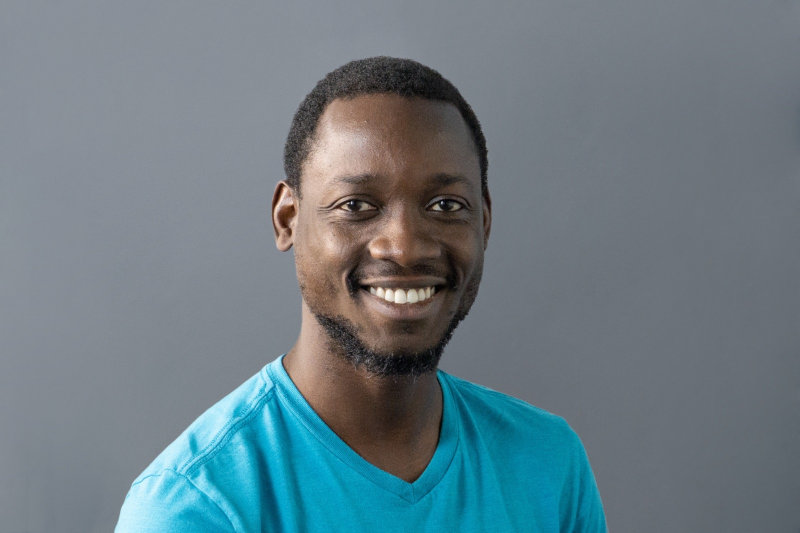
Soga Oni. Bought broken machines, then quit buying machines.
The software engineer who grew up in his father's hospital, then went back to fix the part nobody else would: the diagnosis.
A doctor's son who decided the fix for African healthcare wasn't a better hospital. It was a better answer to the question - what's actually wrong with this patient?
Walk into a BeaconHealth Diagnostics center in Lagos and the machines hum, the lights work, and a technician knows how to read the scan. None of that sounds revolutionary until you know what Oluwasoga Oni saw before he built it: a room filled with old, broken medical equipment, sitting useless in a Nigerian hospital. That room is the whole company in a single image.
Today Oni is CEO and co-founder of MDaaS Global, the company behind BeaconHealth Diagnostics - described as one of Nigeria's fastest-growing diagnostic clinic networks. It runs 16 or more centers across Lagos and smaller Nigerian cities, employs around 160 people, and has performed tens of thousands of diagnostic tests for patients who, a decade ago, would have been told to travel hundreds of kilometers or simply guess. The product is not a gadget. It's certainty.
Oni grew up in a small town in Ondo State, in the southwest of Nigeria. His father is a medical doctor who has run a hospital in that town for more than 35 years. The detail that stuck with Oni was not the heroism of medicine. It was the friction. He watched his father struggle to access the equipment he needed to run basic tests - the unglamorous, decisive moment where a diagnosis either happens or doesn't.
"My father is a medical doctor who has run a hospital in a small town in Nigeria for over 35 years," Oni has said, "and I witnessed the issues he faced accessing medical equipment." A child notices what frustrates a parent. Oni filed it away for two decades.
He trained as a software engineer, first in Nigeria, then in the United States. He earned a master's in computer engineering from the Illinois Institute of Technology and a comfortable career to go with it. By his own account he was living the American Dream. He was also, by his own account, miserable in a specific way: "I was living the American Dream, but I felt like a cog in a massive corporate wheel."
In 2015 he quit and enrolled at MIT in the System Design and Management program. There he hit a class exercise that reads like a dare: build a business that could impact a billion lives. Most students treat that as a thought experiment. Oni treated it as a spec.
"If you want to impact a billion lives," he reasoned, "there is no better group than doctors and patients to solve a problem for." The room of broken machines came back. So did his father. MIT supplied the second ingredient - nerve. "Being surrounded by people doing phenomenal work gave me the courage to leap."
He also found his co-founders there, including Genevieve Barnard Oni, whom he met at MIT and later married. The founding team - Oni, Genevieve, Opeyemi Ologun, and Joe McCord - assembled around the kind of diverse backgrounds that look good on a slide and matter enormously in a four-person startup. "Our diverse backgrounds, experiences, and strengths were extremely helpful in the early days when it was just the four of us."
MDaaS Global launched in January 2016 with a tidy thesis: import refurbished American diagnostic equipment, add on-the-ground technical support, sell to Nigerian doctors who couldn't otherwise afford new machines. It was logical. It was also, the team soon learned, the wrong business.
The economics didn't close. Rural doctors couldn't shoulder the cost of imported equipment, no matter how good the support contract. So in its second year the company did the hard thing a startup is supposed to do and rarely does: it abandoned the original plan. Instead of selling machines to doctors, MDaaS would buy the machines itself and open its own diagnostic centers, charging patients directly. BeaconHealth Diagnostics was born - not from a vision deck, but from a model that had failed in the field.
Oni frames the pivot as a discovery about where value actually sits. "We realised the path to impacting that billion didn't mean selling to the doctor but rather aggregating demand." Don't chase the supply side. Gather the patients, and the rest follows.
Running diagnostic centers in Nigeria means hiring radiographers, lab scientists, and doctors in a country actively exporting them. "Nigeria is currently facing a medical brain drain," Oni notes, and the people MDaaS most needs are the ones most likely to leave. His response was not to complain about the talent market but to manufacture talent: the company invested in its own recruiting and built training programs for young clinicians. If you can't hire the expertise, grow it.
The expansion has continued past basic testing. In 2021 MDaaS launched SentinelX, a membership-based preventive-health and screening subsidiary, aimed at the quiet epidemic Oni keeps pointing at - undiagnosed lifestyle conditions spreading across sub-Saharan Africa that go unnoticed until they're expensive. The logic is consistent with everything else he's built: catch the problem early, when a cheap test still changes the outcome.
Ask Oni where the real opportunity is and he doesn't talk about apps. "The biggest opportunities are in the health and the education sectors," he says, and the reason is structural: "Using technology to enable these historically fragmented sectors will unlock a lot of value." It's an engineer's read on a human problem. The fragmentation is the bug. The platform is the fix.
That framing earned recognition at the place that sharpened it. In 2026 the MIT Africa Business Club presented its inaugural Alumni Impact Award to Oni, honoring his work expanding diagnostic healthcare access across Nigeria. He called it a full-circle moment in a 15-year journey, and credited the school for the way it taught him to think. "The mindset, rigor, and systems thinking MIT cultivates are exactly what we need."
There is a personal degree of difficulty most founders never face. Oni's chief partner in the company is also his wife. "As all founders will know, it can be really difficult not to work on your business 24/7," he has admitted, "and being married to your co-founder can make that even harder." Their defense against MDaaS swallowing the marriage was deliberately ordinary: they took up beer brewing, running, and French classes together. Hobbies as a firewall. A man who builds systems for a living built one for his own life, too.
The arc is unusually clean for a startup story. A boy in Ondo State watches his father fight for working equipment. Twenty years later the same person, now armed with software and systems engineering, walks into a Nigerian hospital, sees the same broken machines his father fought, and decides the answer isn't to sell better equipment - it's to own the diagnosis itself. The room of broken machines is no longer a memory. It's a business plan that closed.
It would have been easier, and certainly flashier, to build a hospital or a telemedicine app. Oni chose the least glamorous link in the chain on purpose. A diagnosis is the hinge of the whole system. Get it wrong and every downstream decision - the prescription, the surgery, the referral - inherits the error. Get it right and a cheap intervention often does the job. In a context where money is scarce and specialists are scarcer, accuracy early is the highest-leverage thing you can sell. That is the engineer's instinct again: find the load-bearing component and reinforce it.
His read on the broader market follows the same logic. The conditions quietly spreading across Nigerian cities - hypertension, diabetes, the slow-burn illnesses that don't announce themselves - are precisely the ones a routine screen can catch before they become emergencies. SentinelX exists to push that screen earlier into people's lives, turning diagnosis from a panicked reaction into a scheduled habit. It is preventive medicine sold as a membership, which is a very software way to think about a very human problem.
Strip away the funding rounds and the award and what's left is a wager about where Africa's value gets unlocked. Oni keeps returning to two words: health and education. Both are enormous. Both are broken into thousands of disconnected pieces. And both, he argues, are waiting for someone to wire the pieces together. "Using technology to enable these historically fragmented sectors will unlock a lot of value," he says - and MDaaS is his proof-of-concept that the sentence is more than a slogan. The company is not trying to invent a new machine. It is trying to make existing machines reachable, affordable, and trustworthy, one center at a time, in the places the rest of the industry skipped. He could have stayed a comfortable engineer abroad. He chose instead to spend his thirties solving the problem his father couldn't. So far, the diagnosis is good.
If you want to impact a billion lives, there is no better group than doctors and patients to solve a problem for.
Quits a comfortable engineering career, enrolls at MIT, and meets a class brief: build something that touches a billion lives.
Co-founds MDaaS Global to import refurbished diagnostic equipment for Nigerian doctors.
Imports don't pencil out. Pivots to running MDaaS's own centers as BeaconHealth Diagnostics.
Closes a $1M seed round to scale the clinic network.
Raises a $2.3M seed extension and launches SentinelX, a preventive-health subsidiary.
Receives MIT Africa Business Club's inaugural Alumni Impact Award - a full-circle moment.
I was living the American Dream, but I felt like a cog in a massive corporate wheel.
We realised the path to impacting that billion didn't mean selling to the doctor but rather aggregating demand.
Being surrounded by people doing phenomenal work gave me the courage to leap.
Using technology to enable these historically fragmented sectors will unlock a lot of value.