She left General Catalyst to help run a Rochester company that turned a toilet seat into an FDA-cleared cardiovascular monitor. This was, she has been at pains to explain, the plan.
The first thing you should know about Olivia Lew is that the object she has organized her working life around is, in fact, a toilet seat. It replaces the one in your bathroom. It measures your pulse rate and your blood oxygen while you sit on it, using sensors embedded in the plastic. It transmits the results, encrypted, to a dashboard. The Food and Drug Administration has said the device works and can be sold. Casana, the Rochester-based company Lew runs day to day as chief executive, has raised roughly forty-six million dollars against the proposition that if you build a medical device that requires nothing of the patient - no strap, no button, no cuff, no charging cable, no discipline - you will collect better data than anyone selling a wristband can dream of. This is the whole thesis. It is somehow both a joke and, per the FDA, not a joke.
Lew arrived at this proposition through a route that looks strange only in outline. In detail it is the exact route many operators of medium-boring hardware companies take. She earned an MBA at Georgetown's McDonough School of Business between 2011 and 2013, walked directly into Capgemini Consulting, spent two and a half years advising the sorts of Global 500 clients that hire Capgemini, and by 2016 had migrated to General Catalyst, first as chief of staff and then as a principal on the firm's early-stage team. Her mandate there, she has said, was software companies bumping up against healthcare. She held board seats at a few of them. Around 2020 she wrote a check into Casana. Then, in a move that is not the standard next step in a venture career, she quit venture to go help run it.
What she has explained about this, in the small number of podcasts and press appearances she has done, is fairly consistent. "I loved being an investor," she told the AgeTech Collaborative in 2022. "But as an investor, you don't get the opportunity to go deep with the product and the market." The Casana product happens to be a piece of hardware you sit on. The Casana market is, in effect, every household in America that contains a person with hypertension or a physician who worries about one. Going deep, in this case, meant Rochester, New York, and it meant selling hospitals a bathroom fixture that costs more than any bathroom fixture they have ever purchased.
Casana was founded on research from the Rochester Institute of Technology by Nick Conn, who has been publicly explaining the toilet-seat monitor since around 2015. Its chief executive on the fundraising side was Austin McChord, the Datto founder who put Rochester on a certain kind of tech map. Its Series B, thirty million dollars, closed in early 2022; total funding sits near $46.4M. Lew's role, per the company org chart and per the trade press, has been to make the operational shape of the company match the ambition of the device. In August 2023 the American Heart Association's Boston chapter named her to its board. This is the sort of appointment that says less about heart disease than it does about the small, specific reputation Lew has built inside the cardiovascular device world.
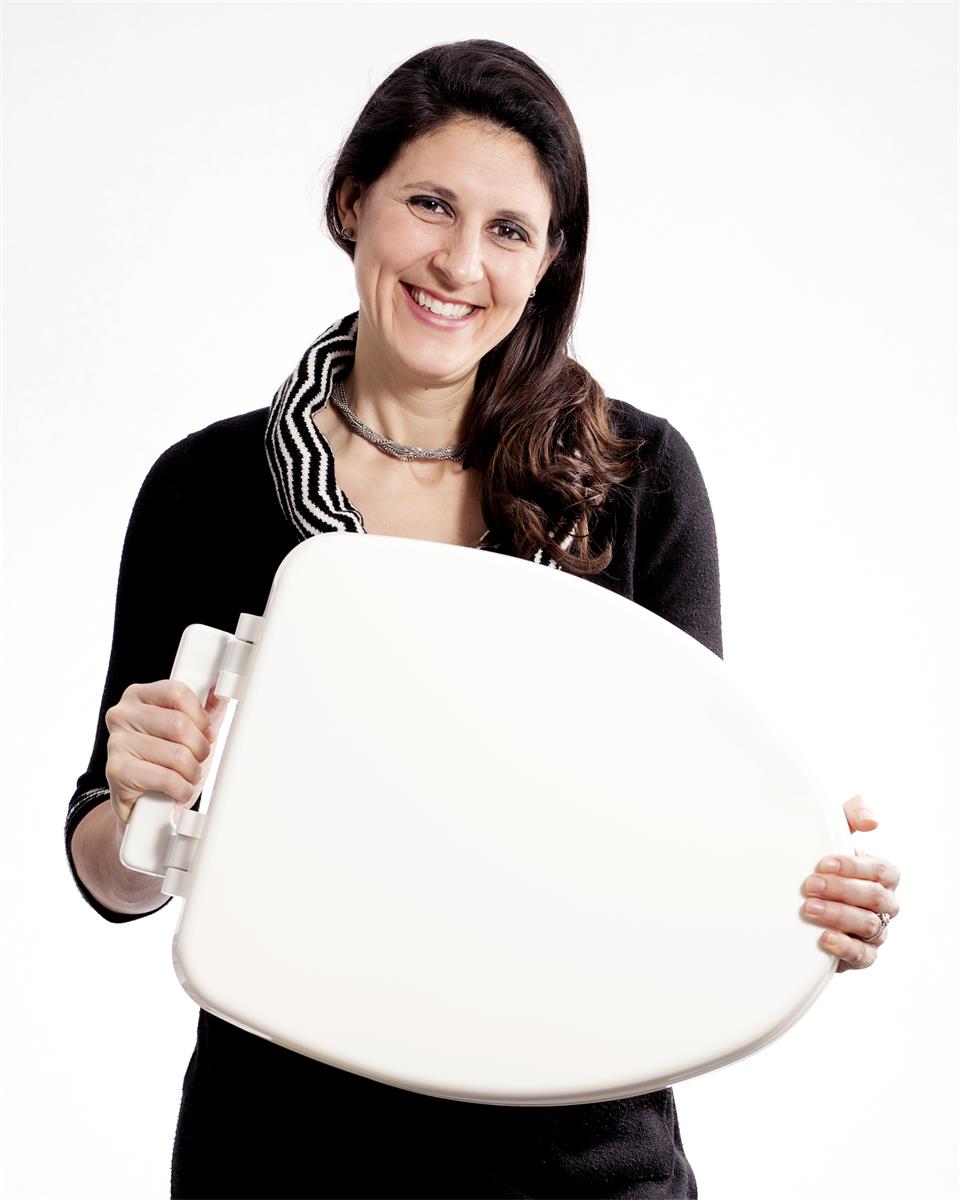
I loved being an investor. But as an investor, you don't get the opportunity to go deep with the product and the market.Olivia Lew, on leaving VC for hardware
MBA. This is the credential that gets her hired at Capgemini.
Senior Consultant. Enterprise transformation work for Global 500 clients.
Managing Consultant. Operations, change management, business strategy.
Chief of Staff. First seat inside a venture firm.
Principal, early-stage. Backing software-meets-healthcare founders. Board seats at several health tech startups.
Joined as an operator after backing the company as an investor. COO, then CEO. In charge of the commercial engine behind the Heart Seat.
Appointed alongside CEO Austin McChord.
Podcast: How Just Sitting Will Revolutionize Care at Home. The title is, in fact, the pitch.
Casana's flagship product, the Heart Seat, is not the first attempt at ambient home health hardware. It is the first one the FDA has cleared for pulse rate and functional oxygen saturation in a fixture you were already going to use several times a day. The design choice - toilet seat, not scale, not mirror, not chair - is the whole trick. Adherence in home monitoring, the industry term for whether the patient bothers to use the device, is roughly the entire problem. People take blood pressure cuffs out of the box, use them for a week, and put them back in the closet. People do not take toilet seats out of their bathrooms.
The commercial pitch Lew has been repeating is a version of this. The device is not aspirational. It does not ask its user to be more disciplined than they already are. It does not require charging. The output goes to a clinician-facing dashboard rather than a consumer app, which places Casana in the boring but durable business of selling medical devices to health systems rather than the flashier and less durable business of selling wellness gadgets to consumers.
The strategic effect of Lew's background here is worth noting. A former principal at General Catalyst was, until recently, exactly the sort of person who might have written a check into a smart-mirror company or a wristband-based ECG app. She has instead spent the last several years pointing out, gently, why the smart mirror and the wristband tend not to work outside their marketing videos. The company she operates is a bet against the wearable form factor as such.
Rochester is not incidental. The Heart Seat came out of the Rochester Institute of Technology; Casana's original name, Heart Health Intelligence, still sits at the top of its Crunchbase page. Casana's neighbors in that particular postal code include a nontrivial number of small hardware and imaging companies that inherited the local optics-and-instruments talent pool. The company employs about sixty-five people. Most of them are engineers, clinical researchers, or the people who talk to hospitals.
Source: Casana public filings, Crunchbase. Round sizes approximate; earlier rounds bucketed.
Lew backed Casana while at General Catalyst before leaving the fund to help operate it. This is a rare direction of travel. Most investors talk about it. Most investors do not do it.
She lives in the Boston area and holds a Boston AHA board seat. The company is Rochester, New York. The commute is a fact of medtech.
Across interviews the word "passive" recurs. Passive data, passive monitoring, passive collection. It is the exact opposite of the word "wearable" wants to be.
Capgemini before General Catalyst is not the usual VC pedigree. It shows up in how she talks about change management and operations - subjects most operators pretend not to be interested in.
Named to the board in August 2023, at the same time as Casana CEO Austin McChord. The two appointments together signaled Casana's arrival in the AHA orbit.
Casana came out of RIT research on ballistocardiography and pulse transit time. It is not, strictly speaking, a gadget; it has clinical validation studies with actual patient cohorts.
The Casana argument, translated: every home monitor that requires effort will fail on the tenth day. Every home monitor that does not require effort will still be running on the tenth year. Everything else is a UX problem. Lew has spent the last few years turning that argument into a company that answers the phone when a hospital procurement office calls.
An American healthcare technology executive who runs Casana, a Rochester, New York company making an FDA-cleared cardiovascular monitor built into a toilet seat.
She spent about four years at General Catalyst, most recently as a principal on the early-stage team investing in software and healthcare companies, after starting her career at Capgemini Consulting.
She earned an MBA at Georgetown University's McDonough School of Business, 2011 to 2013.
A replacement toilet seat that measures pulse rate and blood oxygen while a person is sitting on it. It is aimed at passive in-home cardiovascular monitoring.
Yes. She was named to the Boston American Heart Association Board in August 2023.