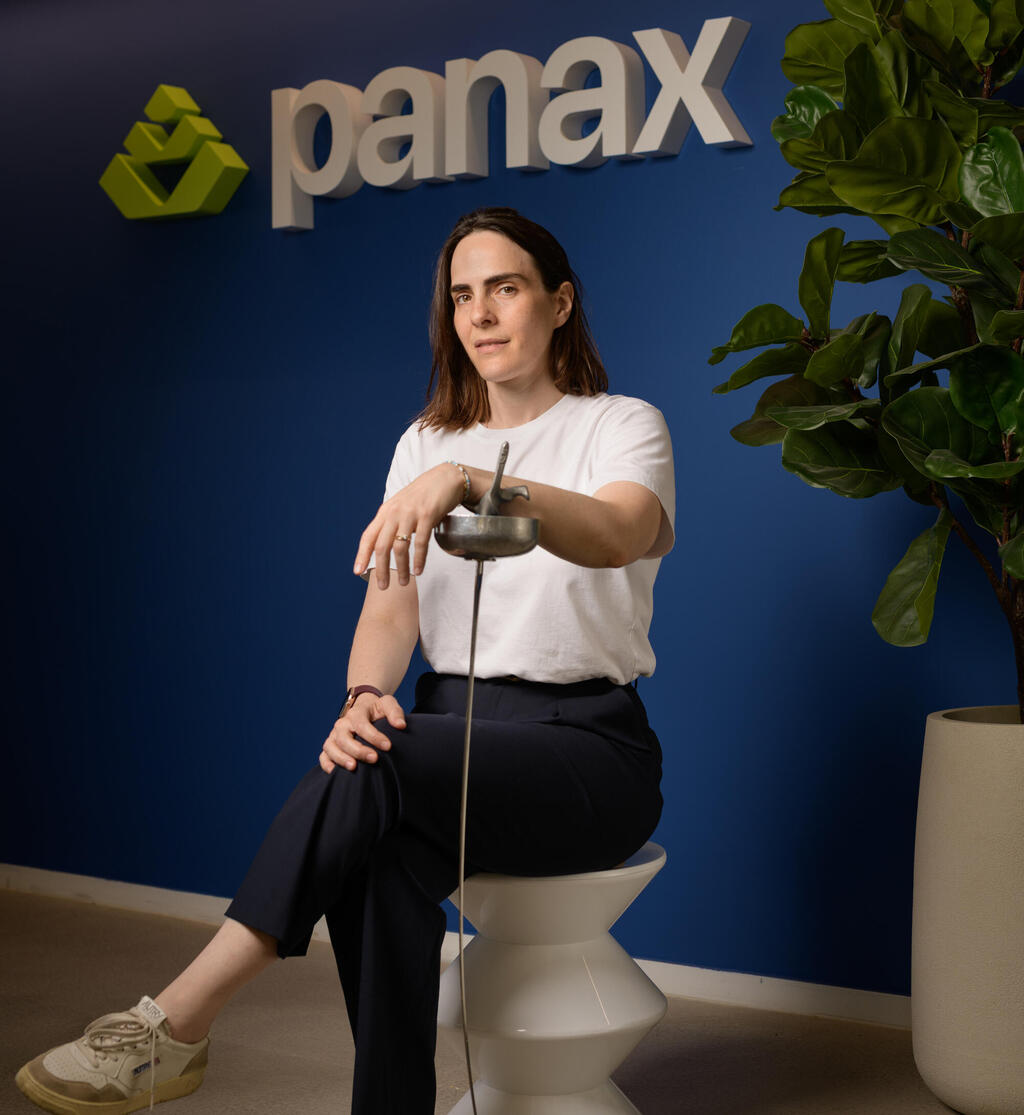
A scoreboard, then a balance sheet
Ask a finance team where the company's money sits right now - across every bank, wallet, and entity - and watch the room go quiet. Someone opens a spreadsheet. Someone else disagrees with it. Noam Mills built a company because that pause drove her a little mad. Panax, the firm she co-founded in 2022 and runs as CEO, connects a company's bank accounts and fintech tools and uses AI to answer the question in real time: identifying risks, flagging opportunities, and automating the reconciliation grind that finance teams have endured in Excel for decades.
Her phrase for it is blunt. Cash, she says, is "the oxygen of the company" - and far too often it gets tracked by hand. Panax sells to mid-market and enterprise finance teams who feel that pain every month-end. The pitch landed: in May 2024 the company raised $15 million led by Team8 Capital and TLV Partners, and by 2025 it sat at number 25 on Calcalist's Most Promising Startups list. Total funding now runs north of $20 million, with offices split between Tel Aviv and New York.
The reason she spotted the gap before most is that she'd lived on both sides of it. At FIMI Opportunity Funds, one of Israel's largest private equity shops, she kept meeting portfolio companies that could not give a straight answer to a basic cash question. Then she went operational as VP of Finance at Mixtiles, the fast-growing consumer photo startup, and felt the same fog from the inside. The problem wasn't that people were careless. It was that the tools were either ancient or shallow, and nothing in between actually understood cash.
Cash, the oxygen of the company, was often tracked manually in Excel.
Nineteen, ranked first, and not having fun
In 2006, at nineteen, Mills won two World Youth Cups in epee and finished the season ranked first in the world among under-20 fencers. Harvard's fencing coach, Peter Brand, had already clocked her a year earlier at the 2005 Maccabiah Games and recruited her to Cambridge. Two years after that top ranking she walked onto the Olympic piste in Beijing as the first Israeli ever to fence epee at the Games.
The fairy tale does not end the way a press release would write it. A month before Beijing she had placed seventh at the European Championships and beaten the fencer who would go on to take Olympic gold. At the Games themselves she lost in the first round. She has called it devastating. And she has been unusually honest about the years that led there: "At no point in my fencing career did I feel like I was living the dream. It was Sisyphean."
That candor is the tell. Plenty of athletes mythologize the grind. Mills audits it. By 2012, at twenty-six and before the London Olympics, she stepped away. Not because she was finished, but because she had decided - and could live with the decision. "I left knowing I still had more to give, but I made a decision, and I was at peace with it."
The bout she still talks about
Seventh at the European Championships. A win over the future Olympic champion. Then a first-round exit on the sport's biggest stage a month later. Fencing does not grade on a curve, and neither, it turns out, does cash flow. Both punish the gap between how prepared you feel and how prepared you are.
From "best in the world" to "biggest arena"
At Harvard she studied economics with a minor in neuroscience, then spent two years as a consultant in BCG's Tel Aviv office before returning for a Harvard MBA. The throughline from sport wasn't the trophies - it was the operating system. Decide, execute, adapt. Repeat under pressure. She has said the motivation itself rewired over time: in fencing she was driven by the fear of losing; in business, by the desire to win. "Today I'm driven by the desire to win, not the fear of losing. That's growth."
After BCG came FIMI, then the AI company SparkBeyond, then the finance chair at Mixtiles. Each stop stacked a piece of the eventual thesis: investors who couldn't see portfolio cash, an operator's view of how messy it gets inside a scaling company, and a working fluency in what machine learning could and couldn't do. In 2022 she put the pieces together with two co-founders - Niv Yaar, whom she knew from FIMI, and Sefi Itzkovich, a former Otonomo CTO and ex-Meta engineer who had spent nearly two decades in big data and cloud.
One thing fencing could not prepare her for, she has noted, was the company itself. A bout is a solitary act; you and one opponent inside a few meters of strip. Founding a company is the opposite. It required co-founders, a team, and a tolerance for problems you cannot solve with a single clean touch. She frames both choices the same wry way: "Both are irrational choices in many ways. The odds of success are low. But you do it because you believe the experience is worth it."
Make cash legible
Strip away the category jargon and Panax is a translation layer. It pulls in feeds from banks, ERPs, and fintech tools, normalizes the mess, and lets an AI do the categorizing, forecasting, and flagging that a finance analyst would otherwise do by hand at 11pm. The point isn't a prettier dashboard. It's giving finance teams back the hours - and the confidence - to be strategic instead of reactive.
Six lines that explain her
At no point in my fencing career did I feel like I was living the dream. It was Sisyphean.
I left knowing I still had more to give, but I made a decision, and I was at peace with it.
Both are irrational choices in many ways. The odds of success are low. But you do it because you believe the experience is worth it.
Today I'm driven by the desire to win, not the fear of losing. That's growth.
I won't enter a competition unless I'm the best trained and there to win. It's just not in my nature.
Cash, the oxygen of the company, was often tracked manually in Excel.
She still picks up the blade
She does not compete anymore, but she has not put the sport away either. She still trains recreationally with the Israeli team at the Wingate Institute and follows competitions closely - just without the old hunger to enter them. Her rule is characteristically absolute: she won't step into a competition unless she's the best-trained person there and shows up to win. Her mother, by all accounts, has not given up hope that she'll return.
It is a fitting tension for someone who measures everything. The economics-and-neuroscience student who became a consultant who became an investor who became an operator who became a founder hasn't really changed disciplines. She's still doing the same thing she did at nineteen: reading the opponent, choosing the action, and committing before doubt can catch up.