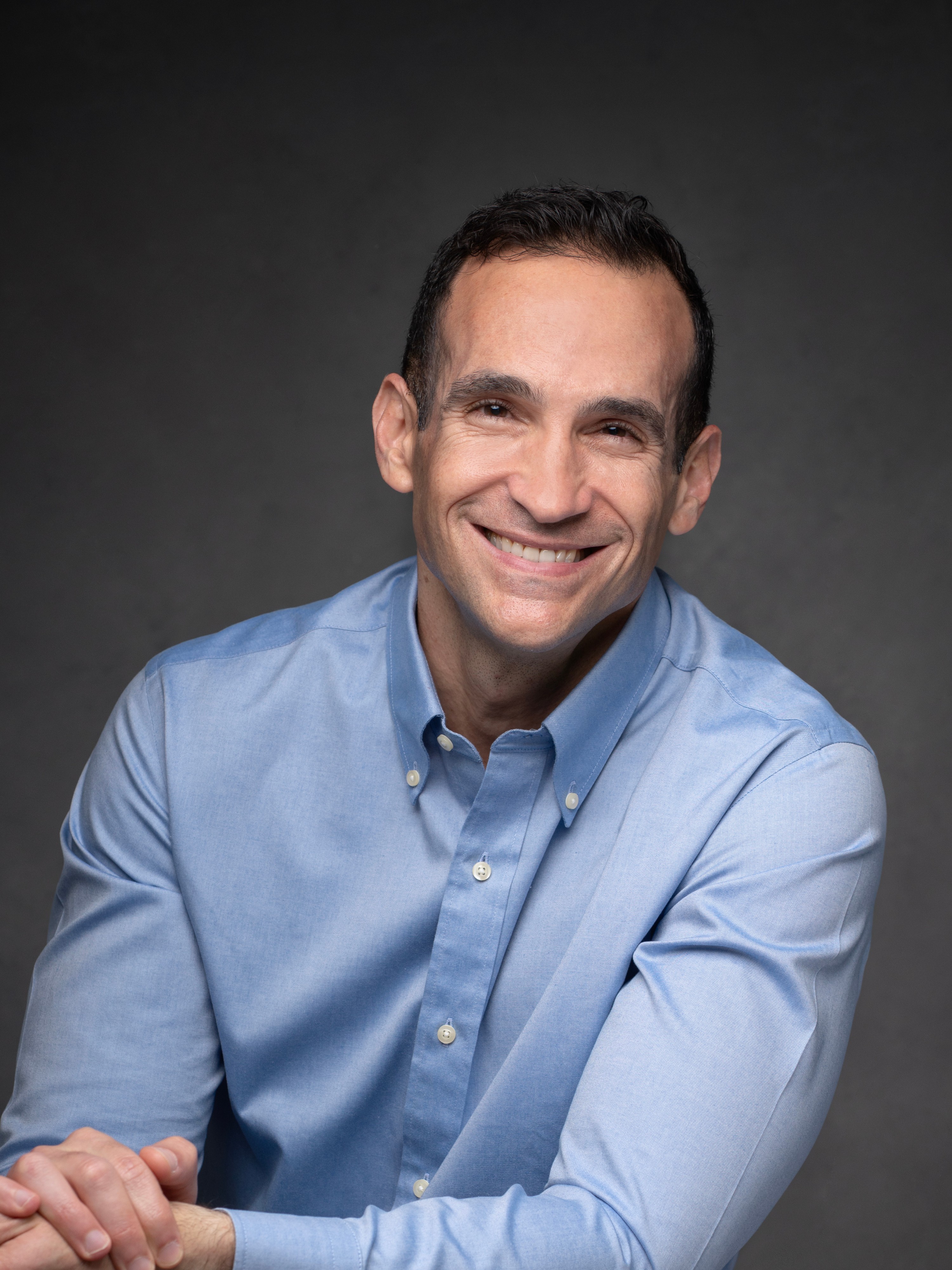
The most dangerous person in Silicon Valley isn't the one who builds the most addictive product. It's the one who explains, with academic precision and genuine warmth, exactly how your brain was colonized - and then hands you the map out. Nir Eyal has done this twice. He's now doing it a third time.
In 2026, Eyal published Beyond Belief with his wife Julie Li - a book arguing that the missing variable in human performance isn't motivation, incentives, or habits. It's belief. Not the "just think positive" variety. The specific, measurable, evidence-based claim that what you believe about your own capabilities shapes what you literally perceive, anticipate, and act on. The book landed on the New York Times bestseller list within weeks. It took five years to write.
This is the third chapter of a career defined by productive contradiction. In 2014, Eyal published Hooked - a framework so clean and actionable that it became the unofficial textbook of the app economy. In 2019, he published Indistractable - a manual for resisting the very systems Hooked helped build. Critics called it hypocritical. Eyal called it honest. Both assessments contain truth.
The Hooked Model: How Four Steps Changed Product Design
Before Nir Eyal, everyone in tech knew that great products were "sticky." After Nir Eyal, they knew why. The Hooked Model - Trigger, Action, Variable Reward, Investment - gave product managers a vocabulary and a roadmap. It was adopted at companies from Instagram to Duolingo. It appeared in MBA syllabi at Stanford, Wharton, and a hundred schools between them.
The model isn't complicated. That's precisely why it worked. A trigger (external or internal) prompts a behavior. The behavior requires the least possible effort. The reward that follows is variable - unpredictable in exactly the way a slot machine is unpredictable, which neuroscience tells us is maximally compelling. And crucially: the user invests something - time, data, social connections - that makes leaving feel costly.
Eyal didn't invent behavioral economics. He synthesized BJ Fogg's Behavior Model, B.F. Skinner's variable reinforcement schedules, and a decade of watching what actually happened inside technology companies. He had the MBA. He had the Stanford lectureship. But what he really had was a personal research project: he'd watched his own attention get colonized by the products his Stanford classmates were building.
Habit-forming products often start as nice-to-haves (vitamins) but once the habit is formed, they become must-haves (painkillers).
Nir Eyal, HookedFrom Hadera to Palo Alto: The Origin Story Nobody Leads With
Nir Eyal was born in Hadera, Israel in 1980 - a coastal industrial city that makes most tourism maps only by accident. His grandparents were Holocaust survivors. His family immigrated to the United States when he was three years old, landing in suburban Florida, a landscape defined by strip malls and theme parks. The contrast between that origin and his eventual perch at Stanford's design school is, to put it mildly, non-obvious.
He went to Emory University, then ran a solar panel startup (yes, really), then enrolled in Stanford's MBA program in 2006. At Stanford, he co-founded a company placing ads on Facebook - and found himself studying not the ad technology but the users. Why did people keep coming back? What was the grammar of compulsion? The company was eventually sold. The questions stayed with him.
He began teaching product design at Stanford in 2012, two years before Hooked was published. By then, he'd identified something that product managers felt but couldn't articulate: the most successful digital products weren't just useful, they were ritualistic. They fit into the gaps of daily life the way a good song fits into a commute.
The Paradox That Made Him Famous
A four-step blueprint that became Silicon Valley's engagement engineering bible. Used by the world's most downloaded apps.
A four-part counter-framework for reclaiming your attention from the very systems Hooked helped design. Eyal's personal toolkit. His daughter used it.
When critics noticed the irony - behavioral designer creates addiction manual, then sells escape manual - Eyal didn't retreat. He leaned into the contradiction and unpacked it. His argument: there is a difference between persuasion and manipulation. Products designed to serve user values can use the same mechanisms as products designed to exploit them. The Hooked Model is a tool. Like all tools, its ethics depend on application.
Whether you find this convincing depends largely on whether you believe individual willpower is an adequate defense against deliberately engineered compulsion. Eyal believes it is, if people understand the mechanics. Critics believe it isn't, and that reframing structural exploitation as a personal responsibility problem is exactly what the tobacco industry did for fifty years.
The most pointed critique: if Eyal's Hooked framework was used to engineer products that erode attention, selling those users a self-help book is a business model, not an act of conscience. Eyal's response - that he distinguishes between products that manipulate and products that persuade - is philosophically coherent but operationally vague. Most product teams optimizing engagement metrics don't pause to make that distinction. Most didn't read the chapter where Eyal explains they should.
Indistractable: The Antidote That Wasn't What You Thought
The most misunderstood thing about Indistractable is what Eyal claims distraction actually is. His argument - counterintuitive even now - is that distraction has almost nothing to do with technology. Phones are the vehicle, not the cause. The cause is the human drive to escape internal discomfort: boredom, anxiety, loneliness, uncertainty. We reach for the phone because the phone offers temporary relief from whatever we were trying not to feel.
This reframe changes everything about the solution. You can't fix distraction by deleting apps. You fix it by learning to sit with discomfort, scheduling your time around your actual values, and building environments (social pacts, friction, physical separation) that make following through easier than abandoning ship.
Most people don't want to acknowledge the uncomfortable truth that distraction is always an unhealthy escape from reality.
Nir Eyal, IndistractableThe book drew from a personal crisis: Eyal watched his own daughter growing up in a world where every dinner table was competing with a screen. The chapter on raising indistractable children wasn't a marketing hook. It was a parent working through something real. His daughter was homeschooled. The research became practice.
Beyond Belief: Five Years, One Missing Variable
The premise of Eyal's 2026 book arrived from a question that nagged at him after Indistractable: if distraction is caused by internal discomfort, and internal discomfort is manageable with the right frameworks, why do so many people still fail to change? They know what to do. They have the motivation. They have the tools. What's missing?
The answer, Eyal argues, is belief. Not belief as a spiritual concept or a motivational poster slogan. Belief as a cognitive mechanism that operates upstream of attention, emotion, and action. What you believe about your ability to succeed shapes what you perceive, what you anticipate, and whether you act when the moment arrives.
The key shift Eyal introduces: instead of asking "Is this belief true?", ask "Does this belief serve me?" This is not permission to believe convenient fictions. It's recognition that many limiting beliefs aren't empirically grounded - they're inherited, trauma-shaped, or simply outdated - and that examining them with scientific rigor can change what's possible.
Endorsements came from Charles Duhigg (Power of Habit), Daniel Pink (Drive), and Steven Bartlett. The book landed in 15+ countries before the ink dried in the US. It took five years because Eyal doesn't publish until something is solid. He revised relentlessly, gathered reader feedback, and had the full apparatus of behavioral science peer-reviewed before any chapter was final.
Three Books, One Thread
Read sequentially, the three books tell a single story. Hooked describes how external systems capture attention. Indistractable describes how internal discomfort drives us toward those systems. Beyond Belief describes why, even understanding all that, we still don't change - and what the actual lever is.
Eyal spent his career proving that behavior is downstream of design - that environment, incentives, and friction shape what we do more than willpower does. Beyond Belief is the first time he's argued for something internal as the primary variable. It's either a natural evolution or a pivot. Probably both.
The Trilogy
The Investor Nobody Talks About
Eyal's angel portfolio is quietly remarkable. He backed Canva before most people had heard of it. Canva is now valued at approximately $26 billion - a number that puts it in a category with companies most professional venture firms missed. He also backed Kahoot (now traded on the Oslo Stock Exchange), Eventbrite (NYSE: EB), and Anchor.fm (acquired by Spotify in 2019).
His investment thesis isn't mysterious: he bets on products that use behavioral science to genuinely improve users' lives. FocusMate (accountability software), Dynamicare (addiction recovery), and Cutback Coach (drinking reduction) are all companies that, to varying degrees, invert the Hooked Model - using the same psychological levers to build healthy habits rather than destructive ones. Mito Health, his most recent known investment (March 2025), is a longevity-focused startup. The portfolio rhymes.
The Writing Partnership That Actually Works
Every book Nir Eyal has published since 2019 was co-authored with Julie Li, his wife and partner for over twenty-five years. This is unusual enough to deserve a moment. Most writing partnerships between spouses produce one book, a restructured filing cabinet, and mutual exhaustion. Eyal and Li have now produced two together - with a third apparently underway.
Li is not a decorative co-author. She's credited with significant contributions to both the research and the prose in Indistractable and Beyond Belief. Their working process involves genuine disagreement - Eyal describes revising relentlessly, gathering reader feedback, and building arguments through conversation as much as through research. The blog NirAndFar.com (a pun on his own name, in case you missed it) is as much a platform for their shared thinking as it is a personal brand.
What Nir Eyal Actually Believes
He's skeptical of self-help. Not hostile, skeptical. He wrote three self-help books while being relentlessly critical of the genre's tendency to dress intuition in academic costume. Every claim he makes is grounded in peer-reviewed behavioral science. He cites studies. He acknowledges limitations. He changes his mind when data contradicts his framework.
He's also an atheist who identifies strongly with his Jewish heritage and Israeli roots. His grandparents survived the Holocaust. He immigrated at three. He ran a solar panel company before pivoting to behavioral science. These biographical details don't map cleanly onto the Silicon Valley archetype. He's not a Stanford lifer who built something in a garage and got lucky. He's a writer who watched something happening and decided to explain it clearly.
The clearest thing about Eyal's worldview is the consistent thread: behavior is understandable, systems are designable, and individual agency - while not unlimited - is real and improvable. He believes in tools. He believes in frameworks. He believes in showing your work.
Being indistractable means striving to do what you say you will do. Indistractable people are as honest with themselves as they are with others.
Nir Eyal, IndistractableThe interesting question - one Eyal himself has started circling - is whether belief is the last internal variable or just the next one. He spent a decade arguing that behavior is shaped by external design. He spent five years arguing that distraction is caused by internal discomfort. He spent another five arguing that belief is the upstream controller of everything else. The trilogy reads like a researcher drilling deeper into the same problem, each book revealing a layer the previous one assumed was bedrock.
Whatever comes next will probably make the last three books look like an introduction. That's either an exciting prospect or an alarming one, depending on your relationship with your phone.
In His Own Words
"Simply put, the drive to relieve discomfort is the root cause of all our behavior."
"Distraction isn't about the distraction itself - it's about how we respond to it."
"The cure for boredom is curiosity. There is no cure for curiosity."
"Believing is seeing. People literally perceive different realities based on their beliefs."