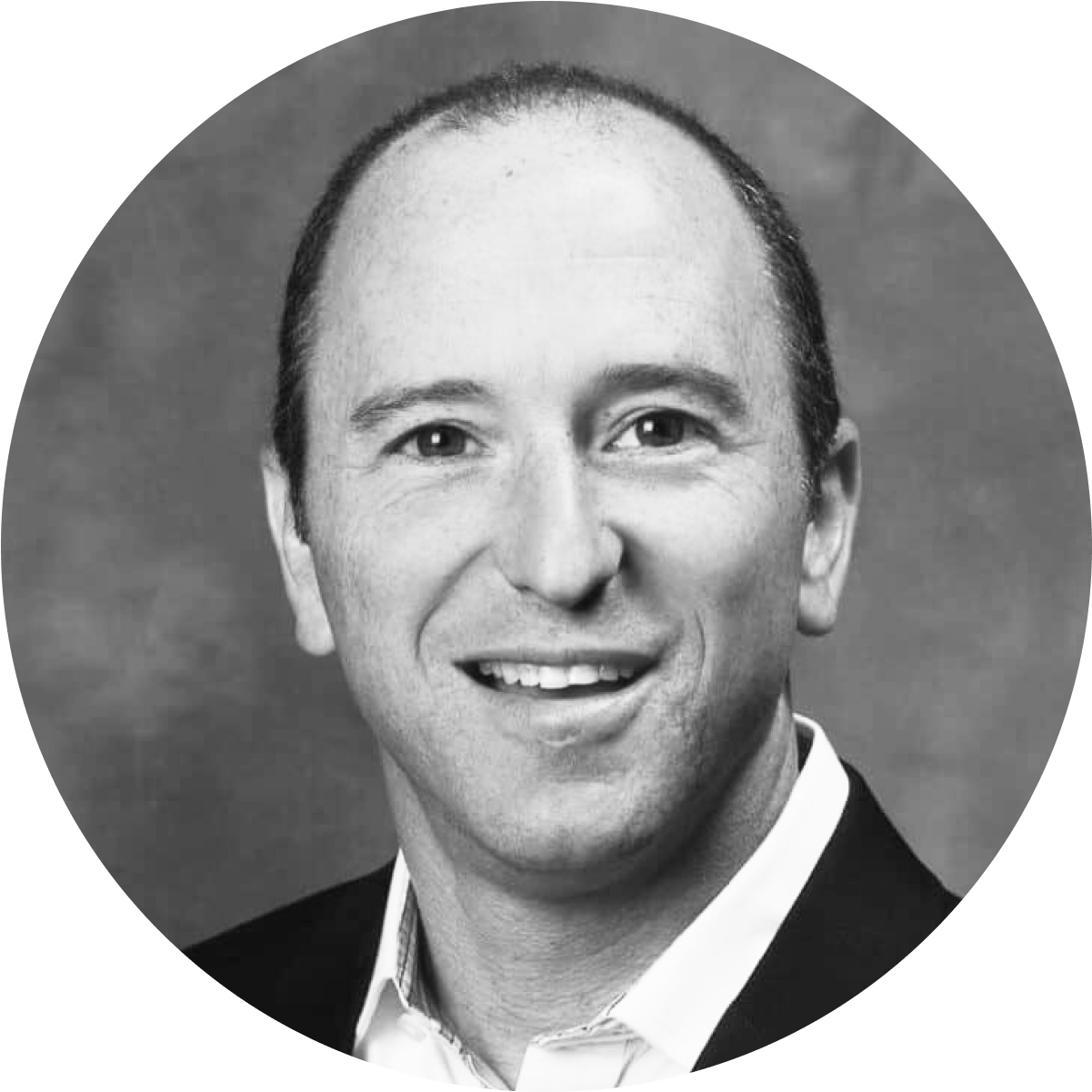
Nigel Ohrenstein runs Diagnostic Robotics, a Boston company teaching machines to predict which patients are about to get sicker - and which programs meant to help them are quietly losing money. The pitch is not subtle: stop reacting to illness, start anticipating it. It is the same argument he has been making, in one form or another, for twenty years. The difference now is that the math finally runs on AI.
His current title is Chief Executive Officer. His résumé reads like a tour of every layer of the American healthcare stack - pharmacy benefits, value-based care, digital therapeutics, hospital logistics, and now artificial intelligence. He has built businesses, co-founded one of them, and stepped in to run several others. What he has never done is treat a patient. That turns out to be the point.
Most people who fix healthcare arrive from inside it - a clinician with a grievance, a researcher with a paper. Ohrenstein arrived from the outside, twice over: first as a lawyer, then as a consultant, and never as someone who wore scrubs. The advantage of that distance is that he sees the system as a set of incentives rather than a set of departments. Where a doctor sees a patient, he sees a payment model. Where a hospital sees a bed, he sees a unit of time someone is paying for whether it heals anyone or not. That is a colder way to look at medicine, and a surprisingly useful one.
From a rounding error to half a billion
Early in his American career, at Express Scripts, Ohrenstein was handed a Medicare business that was barely a line item - under $10 million. He grew it past $500 million. That is not a promotion story; it is a fifty-fold story, the kind that follows an operator around for the rest of his career and gets him the next hard job.
Express Scripts Medicare: the build
The lesson he carried out of it was less about pharmacy and more about leverage: in healthcare, the money does not move where the medicine is. It moves where the incentives are. Find the misaligned incentive, fix it, and the dollars - and the outcomes - follow.
Medicare is also where the hardest version of the problem lives. The population is older, sicker, and more expensive, and the federal government is watching every dollar. Growing a Medicare business is not a marketing exercise; it is an exercise in proving, repeatedly and to skeptical buyers, that you can take on risk for a population and come out ahead. Doing it once is luck. Doing it at the scale of half a billion dollars is a method. The method is what the rest of his career has been about.
“I am delighted to join an incredible team that is solving four of healthcare's largest challenges: access, quality, affordability, and health equity.
— Nigel Ohrenstein, on joining Kaia Health
A lawyer who switched sides
Ohrenstein is British. He read law at the University of Cambridge, earning a BA and MA between 1992 and 1995, and began his career as a lawyer in the UK. Then he crossed the Atlantic and crossed disciplines, trading legal practice for management consulting. The law never fully left him - he still argues for a living - but the subject changed from statutes to spreadsheets, and the clients changed from defendants to health plans.
Consulting was the on-ramp. Healthcare became the destination. For more than two decades he has worked the same problem from different angles, each role a new vantage point on why a system this expensive can be this inefficient.
Co-founding the value-based bet
The defining chapter is Lumeris. Ohrenstein co-founded it and helped grow it into a leading value-based care company and one of the better operators of Medicare Advantage health plans. "Value-based care" is the wonky name for a radical idea: pay for health, not for procedures. Reward the doctor who keeps you out of the hospital, not the one who fills the bed.
At Lumeris he was not in one lane. He worked across sales, marketing, account management, operations, product development, partnerships, and strategy - which is another way of saying he learned the business from every seat. That breadth is why the companies that came next kept handing him the keys.
It is worth sitting with how early this was. For most of the last two decades, fee-for-service was the gravity of American medicine: do more, bill more. Value-based care asked everyone to fall up instead of down - to make less money by keeping people healthy and call that progress. Building a company on that premise meant betting that the incentives would eventually flip, and then helping to flip them. Lumeris became a reference point for what value-based care could look like when it actually worked, not just when it was pitched. Ohrenstein was in the room for the operations that turned the theory into a running business, not a slide.
Presidencies, plural
After Lumeris came the operator-for-hire years. He served as President of Kaia Health, a digital health company using motion-sensor technology to treat musculoskeletal pain and COPD from a patient's phone. Then President of TeleTracking Technologies, which runs the unglamorous but vital plumbing of hospital workflow and logistics - the software that figures out which bed, which patient, which minute.
Read together, the path has a logic. Pharmacy benefits taught him the money. Value-based care taught him the incentives. Digital therapeutics taught him the patient. Hospital logistics taught him the operations. Diagnostic Robotics is where all four converge - and where AI does the predicting he once did with spreadsheets and conviction.
Why Diagnostic Robotics
Diagnostic Robotics was founded by computer scientist Dr. Kira Radinsky, who serves as its Chief Technology Officer. She builds the AI; Ohrenstein decides whether the AI changes a patient's day. The company applies machine learning to triage, population health, risk stratification, and care management - the work of spotting trouble before it becomes a hospital admission.
One of his recurring themes is uncomfortable for the industry: most care management programs lose money. Lots of well-meaning outreach, little measurable return. His bet is that prediction - knowing precisely who to call, when, and why - is what turns good intentions into actual savings and better outcomes. The unsexy truth of his whole career is that he is less interested in the algorithm than in whether anyone's care actually improves because of it.
That distinction matters in an era where every healthcare company claims an AI story. The easy version sells the model. The hard version asks the question Ohrenstein has been asking since the Express Scripts days: did the spend go down, did the patient do better, and can you prove it to the person writing the check? AI raises the ceiling on prediction, but it does nothing on its own. A risk score that nobody acts on is just an expensive opinion. His job, the part that has nothing to do with neural networks, is making sure the prediction lands in the workflow of a real clinician at a moment when it can change what happens next.
It helps that he has seen the failure modes from the inside. He has run the digital therapeutics company whose technology lived on a patient's phone, and the logistics company whose software decided which patient went in which bed. He knows how often a clever tool dies in the gap between what it can do and what an overworked health system will actually adopt. Diagnostic Robotics is, in a sense, his attempt to close that gap with the most powerful prediction engine he has had access to yet - and the operating discipline to make sure it does not become another expensive opinion.
Things worth knowing
He went from arguing in British courtrooms to arguing American profit-and-loss statements - same skill, higher stakes.
He has helped run companies spanning nearly the entire healthcare stack: pharmacy benefits, value-based care, digital therapeutics, hospital logistics, and AI.
At Express Scripts he grew the Medicare line more than fiftyfold, a number that has opened doors ever since.
He co-founded Lumeris before value-based care was a buzzword, then watched the rest of the industry catch up to the idea.