Breaking
Nitricity raises $50M Series B led by World Fund + Khosla Ventures Delhi, CA facility breaks ground - sold out through 2028 $150M+ in binding offtake agreements Forbes 30 Under 30 - Nicolas Pinkowski Ash Tea fertilizer: 92% lower emissions than conventional Total funding: $95 million raised OMRI-certified, CDFA-approved organic nitrogen fertilizer Nitricity raises $50M Series B led by World Fund + Khosla Ventures Delhi, CA facility breaks ground - sold out through 2028 $150M+ in binding offtake agreements Forbes 30 Under 30 - Nicolas Pinkowski Ash Tea fertilizer: 92% lower emissions than conventional Total funding: $95 million raised OMRI-certified, CDFA-approved organic nitrogen fertilizer
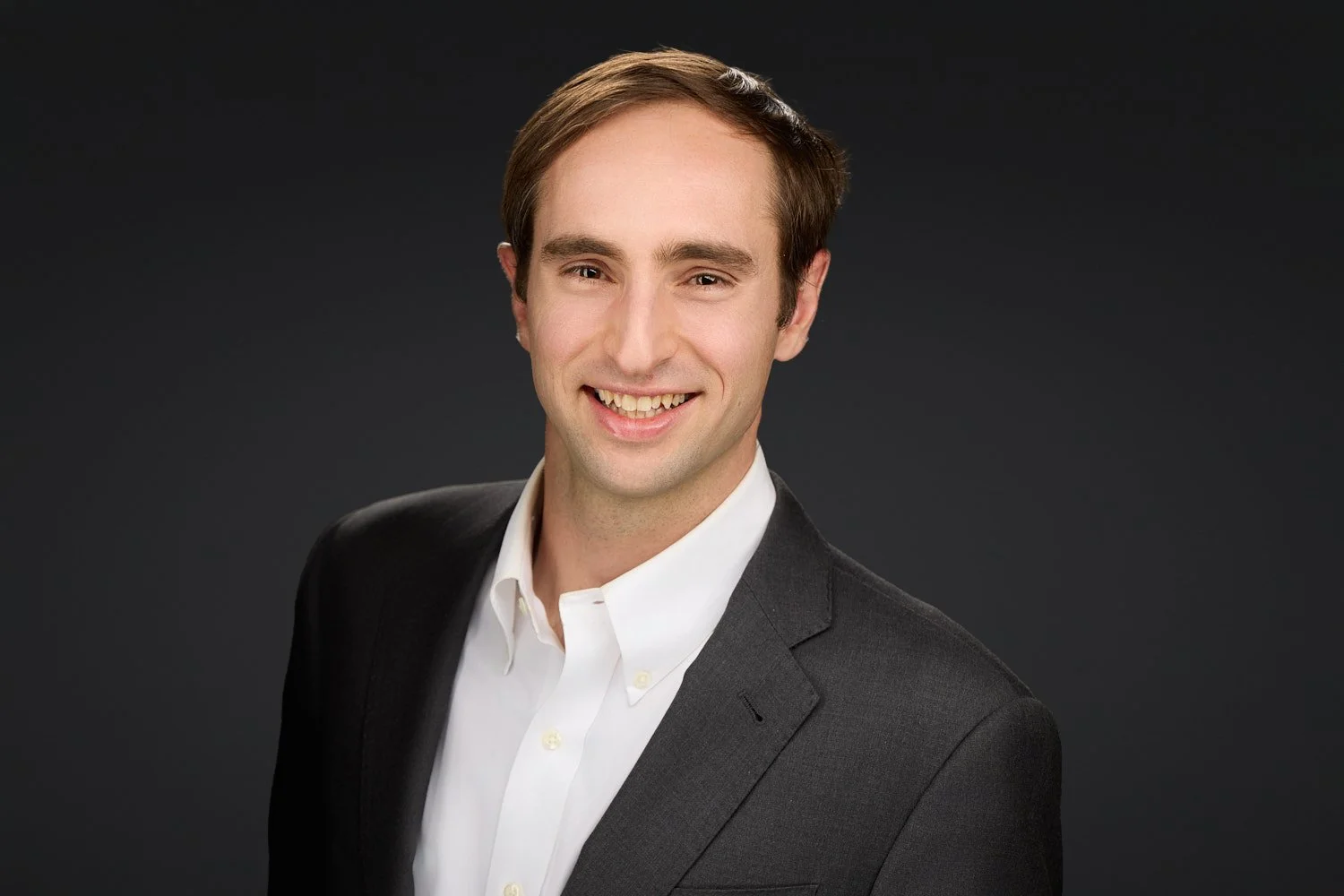
Nicolas Pinkowski, Co-Founder and CEO of Nitricity
Founder Profile  /  Climate Tech  /  California

Nicolas
Pinkowski

Stanford PhD  ·  Forbes 30 Under 30  ·  CEO, Nitricity

He pulled nitrogen straight from the sky and turned almond shells into fertilizer. Now, $95 million later, his company is proving that the most important chemical process in human history doesn't have to run on fossil fuels.

Clean Fertilizer Stanford PhD Regenerative Ag Series B OMRI Certified
$95M
Total Raised
$150M+
Offtake Agreements
92%
Lower Emissions
🏆
Forbes 30 Under 30
Class of 2021
🎓
Stanford NDSEG Fellow
PhD Energy Systems
🌱
Unreasonable Fellow
Food 2024
BASES 100K Winner
Stanford 2020
🚀
MIT Clean Energy Prize
Scholarship 2020
$95M
Total Funding Raised
30%
Yield Increase in Field Trials
92%
Lower Emissions vs. Conventional
46
Employees at Nitricity

◆ ◆ ◆

The Lemon Tree That Changed Everything

Before Nitricity had investors, a headquarters, or a groundbreaking ceremony, it had a lemon tree. Somewhere in a Stanford backyard, Nicolas Pinkowski and his co-founders rigged up a solar-powered system to test whether they could feed a citrus plant with nitrogen pulled from the air. The tree didn't care about their PhD credentials. But it grew. That was the proof they needed.

Nitrogen fertilizer is the foundation of modern agriculture. The Haber-Bosch process - invented in 1909, still running today - synthesizes nitrogen from natural gas and air at enormous scale, feeding roughly half the world's population. It also accounts for about 1% of global CO2 emissions and consumes nearly 2% of the world's energy supply. It is, by almost any measure, the most consequential industrial process ever developed. And Pinkowski decided, as a PhD student in energy systems at Stanford, that it was time to build a better version.

His path to that lemon tree ran through Colorado, not Silicon Valley. At the University of Colorado Boulder, he led a senior design team that built a CubeSat deployer prototype for NASA's Orion spacecraft program in partnership with Lockheed Martin Space Systems - and won first place at the ME Senior Design Expo. From orbital hardware to soil chemistry: the connecting thread is systems optimization. How do you make a complex process work under tight constraints? Pinkowski just keeps changing the domain.

After a master's degree at Stanford and then a PhD in Energy Systems - funded through the National Defense Science and Engineering Graduate Fellowship - he and co-founders Dr. Joshua McEnaney and Dr. Jay Schwalbe officially launched Nitricity in 2018. The premise was radical in its simplicity: use renewable electricity to pull nitrogen directly from air, combine it with agricultural waste, and produce organic fertilizer locally - no natural gas, no fossil fuel feedstocks, no long-haul supply chains.

"There's a big focus on decarbonizing the grid and that's great, but we have to start focusing on bigger industries and chemical industries - specifically fertilizer itself."
- Nicolas Pinkowski, CEO, Nitricity

"If you could decarbonize fertilizer production, it would lead to the decarbonization of many other chemicals and their production processes."
- Nicolas Pinkowski, CEO, Nitricity

Air. Water. Electricity. Almond Shells.

GD-17 Device

Nitricity's proprietary GD-17 system produces carbon-free ammonia through a novel metal-cycling process. Feed it air, water, and renewable electricity - it outputs reactive nitrogen. No fossil fuels. No methane reforming.

🌰

Ash Tea Fertilizer

Their flagship product combines GD-17-produced nitrogen with recycled almond shells - California's most abundant agricultural byproduct. The result is a liquid organic nitrogen fertilizer that's OMRI-certified, CDFA-approved, and compatible with standard irrigation systems.

📊

Field Performance

Third-party field trials across California show up to 30% yield increases compared to conventional fertilizers. Ash Tea delivers 92% lower lifecycle emissions. Farmers apply less, spend comparably, and get more - the agronomic case writes itself.

From Backyard to Breaking Ground

The competitive validation came fast. In 2020, Nitricity won Stanford's BASES 100K Challenge - the school's top entrepreneurship competition - in its first-ever virtual edition during the COVID-19 pandemic. The MIT Clean Energy Prize and the Stanford TomKat Grant followed. By 2021, Pinkowski appeared on Forbes' 30 Under 30 list for creating a startup that could "facilitate decarbonization of the chemical industry." He was still finishing his PhD.

Chipotle Mexican Grill noticed. In 2023, the chain's Cultivate Next venture fund made an initial investment in Nitricity - putting a major food brand directly behind the company's mission to clean up American agriculture's nitrogen supply chain. That kind of early commercial validator matters: farmers don't buy stories, they buy results, and Chipotle was willing to put capital behind the field trial data.

By 2025, the results were undeniable. In March, Nitricity secured $10 million in first-of-a-kind (FOAK) project funding from Elemental Impact and Trellis Climate to develop a commercial-scale facility in Delhi, California - in Merced County, at the heart of the Central Valley. Six months later, on September 10, Nitricity announced its $50 million Series B, co-led by World Fund (Europe's leading climate venture fund) and Khosla Ventures. Additional investors included Chipotle's Cultivate Next fund, King Philanthropies, Susquehanna Sustainable Investments, Energy Impact Partners, Fine Structure Ventures, and Change Forces.

Two days after the funding announcement, on September 12, 2025, Pinkowski and his team broke ground on the Delhi facility. The kicker: the plant's entire production capacity was already sold out through 2028. The $150 million-plus in binding offtake agreements were signed before the foundation was poured. That's not demand - that's a backlog.

Pinkowski's stated next move is global. Nitricity has begun pilot and field trials in Europe, which has an even larger organic fertilizer market than the United States. The company is hiring its first European team members and exploring local agricultural waste feedstocks - wood waste, olive oil production byproducts - to power region-specific fertilizer production. The architecture is the same; only the shells change.

Investor Highlight

World Fund + Khosla Co-Led the Series B

World Fund, Europe's top climate VC, and Khosla Ventures jointly led the $50M round - a rare transatlantic co-lead signaling confidence in both the technology and the global market opportunity.

The Chipotle Connection

Burrito Chain Backs Clean Fertilizer

Chipotle's Cultivate Next fund invested in 2023 and participated in the Series B. A major restaurant chain with a stake in sustainable farming gives Nitricity a commercial anchor few climate startups can claim.

Delhi, California

100x Capacity Increase

The first-of-a-kind Delhi plant represents a 100-fold increase in Nitricity's production scale. It will create 20+ jobs in Merced County and begin operating in 2026 - with output already committed through 2028.

Circularity

Almond Shells in, Nitrogen Out

California produces millions of pounds of almond shells annually. They're typically burned or landfilled. Nitricity turns them into a registered organic amendment - completing a local waste-to-resource loop inside California's Central Valley.
From CubeSats to Clean Fertilizer

2012 - 2016
Studied Mechanical Engineering at University of Colorado Boulder. Led team to first place at ME Senior Design Expo with a CubeSat Deployer for NASA's Orion program, in partnership with Lockheed Martin Space Systems.
2016 - 2021
Enrolled in Stanford University's Energy Systems PhD program as an NDSEG Fellow. Began research into electrochemical nitrogen fixation and alternative routes to ammonia production.
2018
Co-founded Nitricity with Dr. Joshua McEnaney (now President/CTO) and Dr. Jay Schwalbe (CSO). The team's first field test: a solar-powered fertilizer system feeding a backyard lemon tree.
2020
Won Stanford's BASES 100K Challenge, MIT Clean Energy Prize Scholarship, and Stanford TomKat Grant. Nitricity's competitive credentials established in a single year.
2021
Named to Forbes 30 Under 30 for sustainable fertilizer innovation. Completed PhD in Energy Systems at Stanford.
2023
Chipotle's Cultivate Next venture fund makes initial investment in Nitricity. Commercial validation from a major restaurant chain.
2024
Named Unreasonable Food 2024 Fellow. Featured on Consensus in Conversation podcast and YouTube, discussing lightning-powered fertilizer and the decarbonized future of food.
March 2025
Secured $10M FOAK project funding from Elemental Impact and Trellis Climate for Delhi, California facility development.
September 2025
Raised $50M Series B co-led by World Fund and Khosla Ventures. Broke ground on Delhi facility - production already sold out through 2028. Announced European expansion plans. Total funding reaches $95M.

What Drives the Work

"
There's a big focus on decarbonizing the grid and that's great, but we have to start focusing on bigger industries and chemical industries - specifically fertilizer itself.
"
If you could decarbonize fertilizer production, it would lead to the decarbonization of many other chemicals and their production processes.
"
There's so many new technologies out there, the fertilizer landscape and marketplace is immensely complex and we can't wait to decarbonize it, we need to start now.

Fast Facts About Nicolas Pinkowski

01 /
Nitricity's first fertilizer test was a solar-powered system feeding a backyard lemon tree. That tree is the company's unofficial origin story.
02 /
The nitrogen in Ash Tea is pulled directly from the atmosphere - the same way lightning naturally fixes nitrogen, just controlled, continuous, and electric.
03 /
Chipotle's venture fund is an investor. The burrito chain has a financial stake in cleaning up the nitrogen supply chain that feeds American farms.
04 /
Before clean fertilizer, Pinkowski designed a CubeSat deployer for NASA's Orion program - as an undergrad, with Lockheed Martin, winning first place at CU Boulder's Engineering Expo.
05 /
The Delhi, California facility broke ground on September 12, 2025. Its entire production capacity is already committed through binding offtake agreements through 2028.
06 /
Ash Tea goes straight through standard drip irrigation systems - farmers need zero new equipment to switch from conventional nitrogen to Nitricity's organic alternative.

Education

2012 - 2016
University of Colorado Boulder
Bachelor of Science in Mechanical Engineering. First-place winner, ME Senior Design Expo. CubeSat Deployer for NASA/Lockheed Martin.
2017
Stanford University
Master of Science in Mechanical Engineering. Laid groundwork for research into electrified nitrogen systems.
2016 - 2021
Stanford University
PhD in Energy Systems. NDSEG Fellow. Research focused on electrochemical nitrogen fixation and sustainable ammonia production - the direct technical foundation for Nitricity.

Nicolas Pinkowski on Lightning-Powered Fertilizer

Consensus in Conversation - February 15, 2024 - Nicolas Pinkowski discusses Nitricity's origin story, the science of air-based nitrogen, and what a decarbonized food system looks like