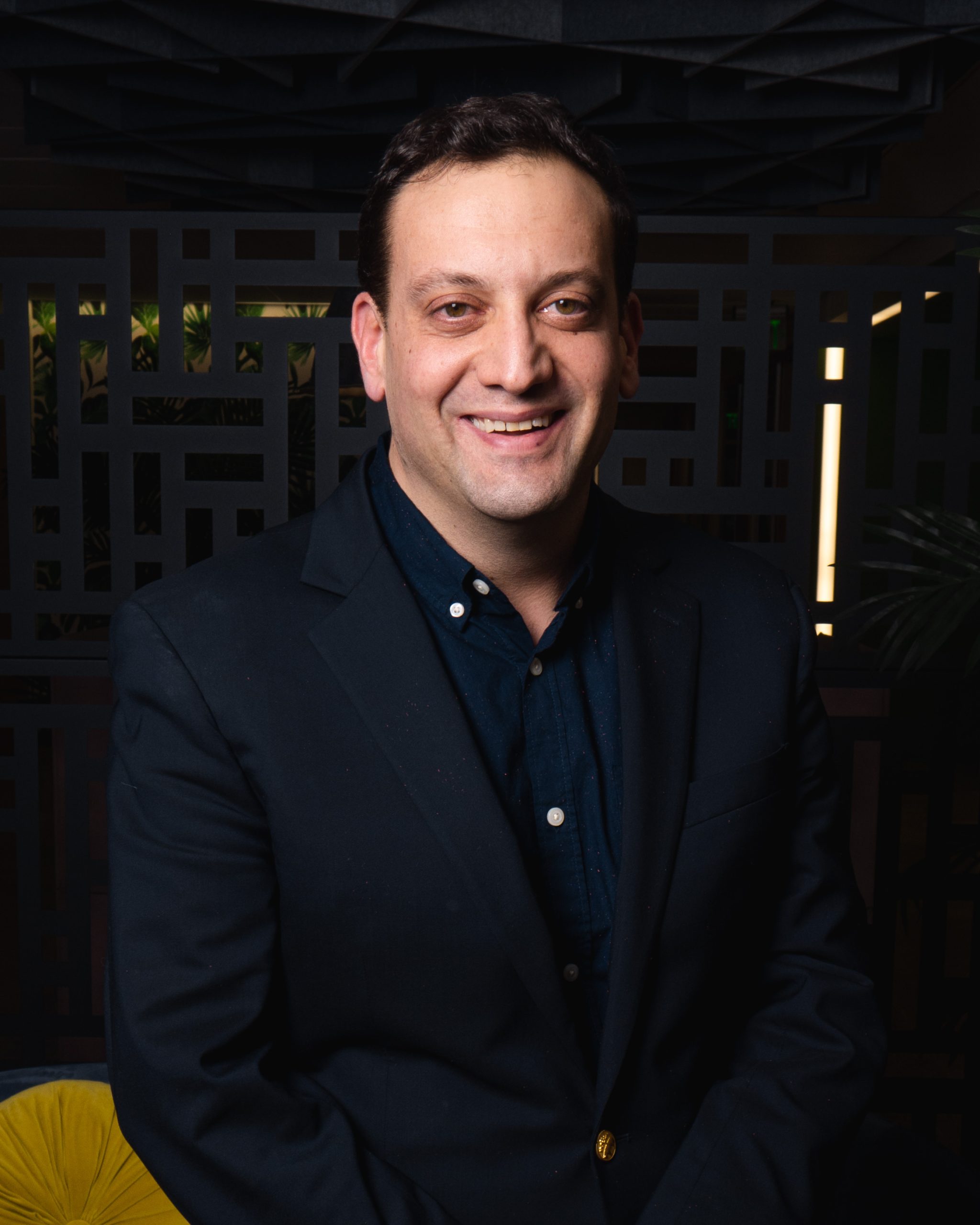
A founder who solved his own inbox
Nick Smith runs Sailes, a New York AI company that builds autonomous prospecting agents called Sailebots. The bots do the parts of B2B selling that a human sales executive would rather not - list-building, contact hunting, first-touch outreach, follow-through - and they do it in that executive's own voice. Smith has 30 employees, dual offices in Manhattan and Kansas City, a $5.1M Series A closed in September 2023, and a customer list that starts at the Fortune 1000 and goes up from there.
The origin story Smith tells is uncharacteristically precise for a startup founder. On July 4, 2018, at 11:30 in the morning, he was at the Lake of the Ozarks. He opened his iPhone, went to Notes, and typed one word: Sailes. He sketched out what the thing might be. Then he closed the app, got in the boat, and, as he puts it, "it was on from that point."
The lake shows up a lot in interviews. Smith says significant portions of the company were "ideated" there, via voice memos and journaling, and treats the location less as vacation than as a working environment where the meeting requests stop and the pattern-matching can start. Founders talk about their process in many self-flattering ways. Smith's version is that he goes to the water, records voice memos, and comes back with product decisions. There is a version of this that sounds like affectation, and a version that just sounds like someone who knows where their good ideas come from.
The problem preceded the model
Before Sailes, Smith spent years in sales leadership at CBS Corporation and iHeart Radio, running quotas and teams inside enterprise media. This matters because the job he was doing then is the job Sailebot now does for other people. Hunting decision-makers on LinkedIn, hunting emails elsewhere, drafting first-touch messages that a person might actually reply to, sequencing follow-ups without becoming annoying - the administrative overhead of selling, which had metastasized to the point where the actual selling was the smaller half of the day.
He is unusually strict about how he describes the founding intuition. "We started with a problem before we started with AI," he told an interviewer. "It wasn't 'What's a cool AI company we could build.' It was very much a 'Here's a problem and I think AI can help us solve it better.'" This is now a common thing for AI founders to say and an uncommon thing for them to actually have done. Sailes was ideated in mid-2018, which is well before generative models were a category anyone outside research was building around. The company had to grow into the tools rather than the other way around.
"I wrote down in my notes on my iPhone: Sailes. I wrote down what I thought that would be, then I ran and got in the boat and it was on from that point."
- Nick Smith, on July 4, 2018Sailebot, and the personality question
The product is called the Sailebot. It is an autonomous agent that runs prospecting on behalf of a specific human sales executive. The distinguishing design choice - and the one Smith is quickest to point at - is that each Sailebot is calibrated to the personality of the person it works for. A Sailebot for a chatty enterprise account executive should not send the same first email as a Sailebot for a terse ex-military VP of Sales. This sounds obvious. It is not what most of the market shipped.
The bet is that hyperpersonalization at scale is a durable moat, because the alternative - generic AI outreach that reads like generic AI outreach - trains buyers to ignore the inbox faster than sellers can adapt. Smith's phrase for this is "digital labor," which he uses the way factory owners once used the word "steam." He thinks the category is early. He is probably right, but only in the way that anyone selling into enterprise sales orgs in 2026 gets to be right for a while.
The O'Hare moment
Every founder has a version of the moment they knew the thing was real. Smith's happened at Chicago O'Hare airport. A customer received a Sailebot message and responded warmly - the first meaningful validation that the personality-mirroring worked outside the demo. Sailes did not have a formal sales team yet; that would not launch until 2023. He was, in effect, watching his own product replicate the human he used to be, at scale, from a terminal gate.
The airport is the correct setting for the anecdote. Most founder-milestone stories happen in boardrooms or over champagne. This one happened between flights, which is closer to where the actual customers live.
"Start with a real problem and be obsessed with solving that beyond being obsessed with AI."
- Nick SmithBefore the company
The pre-Sailes resume has one strange note in it. Alongside the sales leadership at CBS and iHeart, Smith co-hosted a show on WOR New York and iHeart Radio called "Common Ground." Its mandate was to build bridges between business and organized labor. He also holds an Eagle Scout rank, was named a two-time "One to Watch" by CBS New York, and appeared on City and State Magazine's list of "40 Future Leaders of New York Politics." Not the standard AI-founder deck. It is a resume that reads like someone who was going to end up running for office and then ended up running an AI company instead.
The politics-adjacent history matters mostly for tone. Smith talks about AI in language that is closer to policy than to technology - "AI is meant to fundamentally disrupt and improve lives," and "digital labor" as a workforce category rather than a product feature. He is comfortable with the vocabulary of impact.
Weekly pivots as an asset
He has one operating belief that shows up in interviews often enough to be treated as doctrine: weekly pivots are not signs of failure but signs of a healthy startup. Sailes has been building since 2018, which means it survived the pre-generative era, the ChatGPT moment, the enterprise-AI gold rush, and whatever we are calling the current sorting phase. A tolerance for weekly course-correction is what you would expect from a company that has had to keep repricing its own moat every quarter.
The Series A closed in September 2023 for $5.1 million, bringing total funding to $6.45 million. Sailes is now venture-backed but still small - 30 people, split between New York and Kansas City. The two-city arrangement is deliberate. New York is where the enterprise sales leaders are. Kansas City is where you can hire engineers who will still be there in three years.
What he is trying to build
Smith's stated aspiration is to make autonomous, personality-driven AI a standard piece of enterprise sales infrastructure, and to push the market away from what he calls AI-in-name-only. He is a Forbes Technology Council member and speaks on the AI startup circuit - most recently at the Philly Builders Conference - which is the correct venue for someone whose thesis is that "digital labor" is going to be a phrase people say without irony in a few years. Whether he is right about the terminology is separate from whether he is right about the workflow. On the workflow, the customer list is starting to answer for itself.
The thing about Nick Smith, in the end, is that the pieces do fit together. A former broadcast-sales operator, an Eagle Scout, a radio co-host who wanted to bridge labor and management, a founder who ideates on lake docks and closes at airport gates - the through-line is someone who noticed that most jobs contain a lot of administrative overhead they should not, and decided to build software that quietly does the overhead. The Sailebot is a bot. It also does the exact set of tasks Smith used to do at CBS. He built himself out of a job and then licensed the replacement.
The path to Sailebot
A resume that doesn't quite match the category
Eagle Scout
The highest rank in the Boy Scouts of America. Achieved before the career in enterprise sales.
CBS NY "One to Watch"
Two-time recipient during his sales leadership tenure at CBS Corporation.
40 Future Leaders
Named to City and State Magazine's "40 Future Leaders of New York Politics."
Forbes Tech Council
Member of the invitation-only Forbes Technology Council.
Sailebot
Invented the personality-driven autonomous prospecting agent that powers the company.
"Common Ground" Co-host
Co-hosted the WOR New York / iHeart Radio program on business-labor relations.
Five things that fit oddly together
The company name was born in an iPhone Notes entry. Not on a whiteboard. Not in a pitch deck. In Notes, on a dock.
He is an Eagle Scout, which is not the credential most sales-AI founders lead with.
Sailes runs from both Manhattan and Kansas City. The split is deliberate: customers on one coast, engineers on the other.
Each Sailebot is calibrated to a single human's personality. The moat is that the emails don't sound like emails from a bot.
The formative customer-validation moment did not happen in a demo room. It happened at O'Hare airport, between flights.
On problems, AI, and the order they belong in
"We started with a problem before we started with AI. It wasn't 'What's a cool AI company we could build.' It was very much a 'Here's a problem and I think AI can help us solve it better.'"
- On the founding intuition"AI is meant to fundamentally disrupt and improve lives."
- On what the technology is forCommon questions
Who is Nick Smith?
The President, CEO and Founder of Sailes, a New York-based AI company that builds autonomous prospecting agents for enterprise sales teams.
What is a Sailebot?
Sailes' autonomous, personality-driven AI agent that prospects on behalf of an individual sales executive, mirroring their voice and approach.
When did Nick Smith start Sailes?
He conceived the idea on July 4, 2018 at the Lake of the Ozarks, and founded the company that same year.
What did he do before Sailes?
Sales leadership at CBS Corporation and iHeart Radio, and co-hosting "Common Ground," a WOR New York / iHeart Radio program on business-labor relations.
How much funding has Sailes raised?
Approximately $6.45M total, including a $5.1M Series A closed in September 2023.