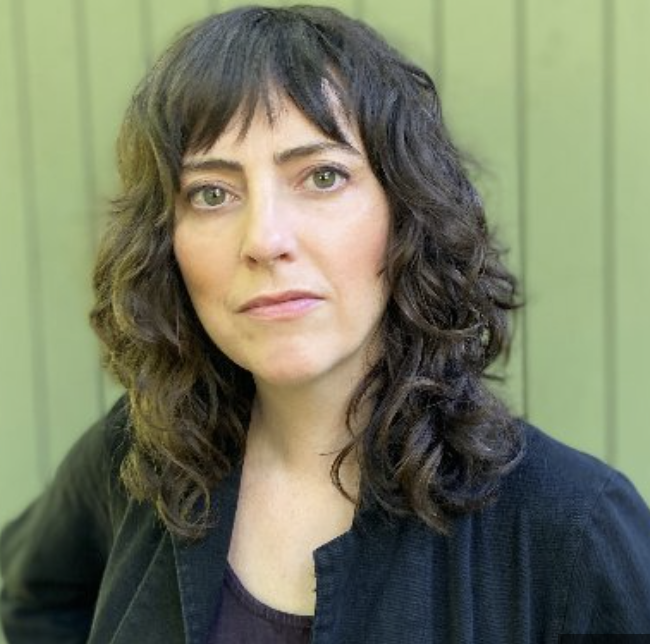
Niamh O'Hara runs a CLIA-certified clinical laboratory in Long Island City, Queens, where patient samples arrive in coolers and leave as strings of As, Ts, Gs, and Cs. She is the co-founder and CEO of Biotia, a company she started in 2017 with Christopher Mason, a geneticist at Weill Cornell Medicine. They met at the New York Genome Center. This is the sort of origin story that only sounds normal in three or four zip codes in the world.
The pitch is unusually plain. In most hospitals, when a doctor wants to know what is causing an infection, the workflow has not changed much since Louis Pasteur was alive: take a sample, streak it on agar, wait for something to grow, look at it. This works fine when the pathogen cooperates. It works badly when the pathogen is one of the roughly 95% of microbial species that do not culture well, which is most of them. Biotia's product is what happens when you skip the petri dish and read the DNA directly.
The technology is next-generation sequencing plus metagenomics plus a growing pile of AI. O'Hara describes it, in one of the more useful founder explanations you will hear, like this: you take a sample - urine, synovial fluid, wastewater - extract the DNA and RNA, focus on the microbial fraction, break it into small pieces, and run massively parallel sequencing on an Illumina or Oxford Nanopore machine. Then software figures out what is in there.
She trained as an evolutionary biologist. Her PhD from Stony Brook is in ecology and evolution, which is not the standard pedigree for a diagnostics CEO. It shows up in how Biotia thinks about samples: less "find the pathogen," more "characterize the population." Before Biotia, she spent five years commercializing next-gen sequencing technology for hospitals, plus large-scale surveys of the microbiomes of ambulances across the United States, hospital environments, urine, and SARS-CoV-2 samples. Some of the survey work ended up at the International Space Station. Some of it ended up in Molecular Ecology and Microbiome. Some of it made it into WIRED.
Biotia spun out of Cornell Tech in association with Weill Cornell Medicine, via the Jacobs Technion-Cornell Institute's Runway Startup Postdoc Program - a program that pays scientists to try to turn their research into companies. It is one of the more effective founder pipelines in New York and produced Biotia in 2017, with O'Hara doing the CEO half and Mason doing the "global director" half. The lab in Queens went CLIA-certified, which is the credential you need to run a real clinical diagnostics business rather than a research-use-only one.
In August 2022, Biotia closed an oversubscribed $8M Series A, bringing total funding to around $10.4M. The company hired 14 people on the back of the round. It has since announced a partnership with Mayo Clinic to develop an isolate assay for patients with infections that do not fit the usual diagnostic categories - the weird cases, the ones that get referred around and never get an answer. This is a good market to be in, in the sense that it is a market defined entirely by the failure of existing tests.
Biotia's public tone is unusually quiet for a healthtech company. O'Hara talks about publications and data-sharing more than she talks about disruption. "We're mostly a bunch of scientists," she has said, "with a focus on publications, sharing data, and collaboration." It reads as either a very careful positioning strategy or an accurate description of the office. Probably both.
The long bet.
The larger ambition, which O'Hara does not lead with but which shows up in her interviews if you listen long enough, is to build the world's leading global microbial sequence database. If you have that database, and enough clinical samples flowing through your pipeline every month, you can start to notice things. Resistance markers appearing in a new geography. A pathogen shifting hosts. A local cluster that would have taken months to identify with culture-based methods showing up in a weekend of sequencing.
Biotia's public materials use the phrase "biosurveillance." O'Hara uses more restrained language, but the direction is the same: identify what is out there, keep a record, apply machine learning to it, and try to catch the next outbreak before it needs a press conference. This is a large claim and a slow one. Antibiotic resistance is one of those problems where the useful data accumulates on decade time scales. The Biotia thesis is that if you make the sequencing routine and cheap and clinical, the data accumulates faster.
The company has been careful about scope. Instead of trying to replace all diagnostics at once, it has picked places where the existing tests are worst - hard-to-diagnose infections, women's health, synovial fluid, urine that does not respond to standard treatment. It has extended its partnerships (Mayo, others), grown its clinical validation portfolio, and stayed small. Twenty-six employees at last count. Series A, not D. Long Island City, not South San Francisco.
There is a version of the founder profile that would end here with a sentence about how O'Hara is going to change medicine. She might. She would probably prefer the sentence about how she is going to publish the next paper. If Biotia is right about metagenomics as clinical infrastructure, the changing-medicine part follows automatically, and the paper does the work.
Also, ambulances.
One small detail that keeps recurring: the ambulance study. Before Biotia, O'Hara led work characterizing the microbiome of ambulances across the United States - which turns out to be a strange, mobile, medically-relevant environment that no one had really surveyed. If you want a concise version of who she is, it is probably this: an evolutionary biologist who, when handed the tools of next-generation sequencing, went and sequenced the inside of an ambulance. Then she and her co-founder went to build the company that could do it at clinical scale.