The Scene
A Tuesday night, somewhere in suburbia.
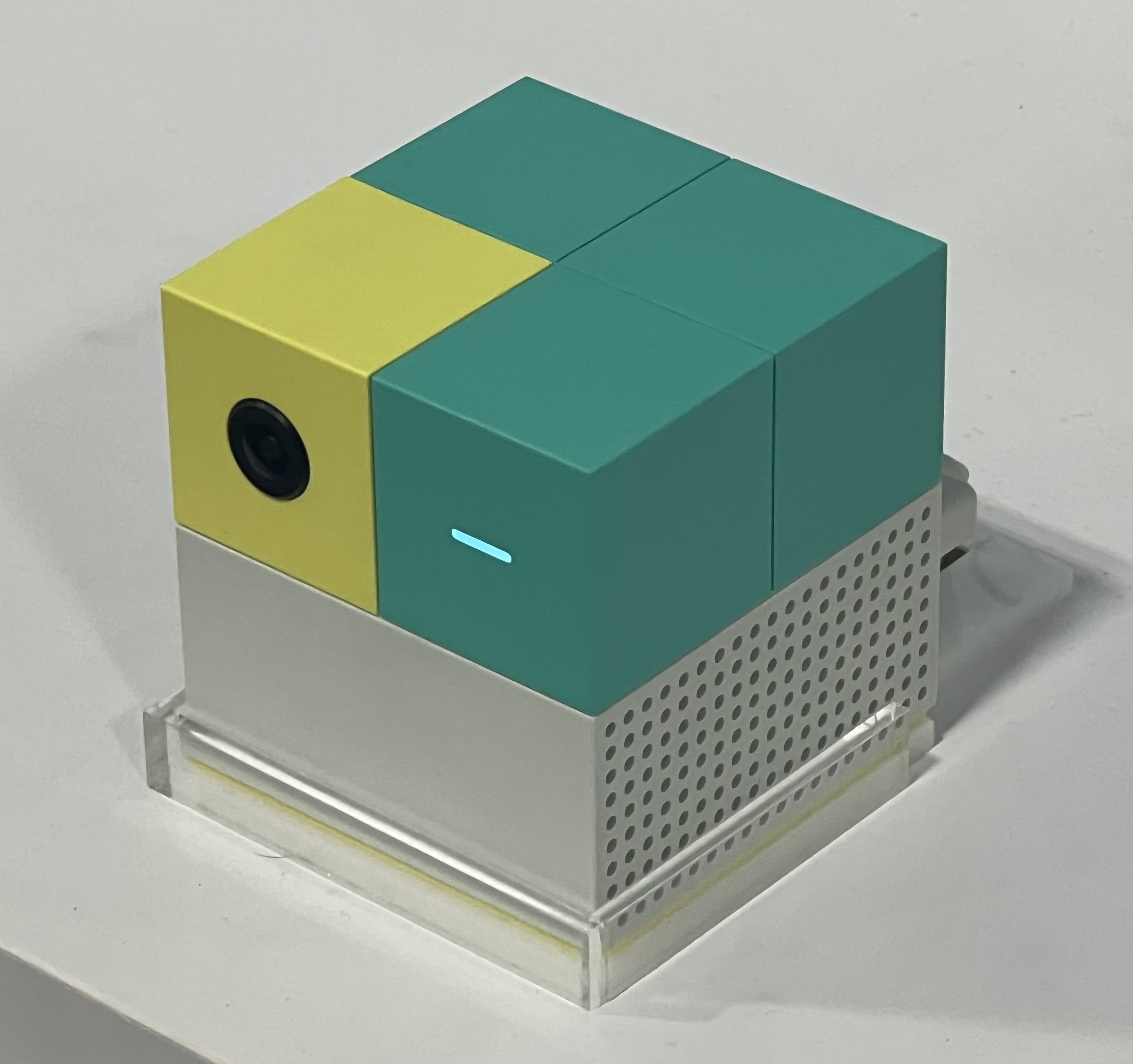
It is 7:14 p.m. and the kids are arguing about who gets the bigger half of the couch. The television is on but ignored. A small white cube sits next to the soundbar, blinking patiently. Someone presses a button. The room becomes a controller. A second later, the seven-year-old is ducking under a virtual log and the dog has decided to leave.
This is what Nex sells. Not a console exactly. Not a toy. A quiet rearrangement of the deal between a family and its television.
The console is the room. The controller is the kid.
- Nex's working theory, distilled
The problem they saw.
For two decades, the dominant story of family screen time was a slow-motion losing battle. Tablets won. Couches widened. Pediatricians wrote stern reports. Nintendo briefly pulled families to their feet with the Wii and then put them back down. Microsoft tried with the Kinect and then put the entire idea in a drawer in 2017. Active play, on a screen, was treated like a fad whose moment had passed.
The founders of Nex did not agree. They had spent a chunk of their careers at Apple, where the lesson is generally that the market is not done with a category until the experience is actually good. Motion gaming, they argued, had not failed. The hardware had failed. The latency had failed. The library had failed. The category never really got its second draft.
Motion gaming didn't die. It just never had a decent sequel.
- The bet, in one sentence
The founders' bet.
David Lee, Reggie Chan and Tony Sung started Nex in 2018. Lee had already sold a previous startup to Apple in 2009, then spent a decade inside the company before deciding the next interesting computer-vision problem was sitting in living rooms, not pockets. The pitch was, on its face, a little embarrassing. The world was sprinting toward virtual reality, toward AR glasses, toward the cloud. They wanted to make a box.
The bet was that the right box - small, cheap, with a camera and a modern neural net - could do what an entire Xbox couldn't. They raised a modest Series A in 2019, brought Alibaba Entrepreneurs Fund and KPCB along, and then in September 2021 closed a $25 million Series B led by Blue Pool Capital with Samsung Ventures and Mark Cuban writing checks. Total raised: roughly $42 million. By startup standards in their category, that is not a lot. They spent it slowly.
They built one product. They shipped it late. And then it worked.
The product.
The Nex Playground is a 76-millimeter cube. It costs $179. Inside is an 8-core ARM chip, 64 gigabytes of storage, and an ultra-wide-angle camera tuned for living rooms. There is a small remote control for menus, and that is the last time you will touch a controller. The console plugs into the television over HDMI and watches the room. An on-device motion-tracking engine - the part that actually matters - reads bodies in real time without a wearable, without a wristband, without anything strapped to a child who would just lose it anyway.
Five games shipped in the box. Fifty more rent for $89 a year. The math is unromantic and it works.
- Business model, plainly
Out of the box you get Fruit Ninja, a music-rhythm game called Starri, and a handful of party titles. The annual Play Pass subscription unlocks a rotating library that now spans more than fifty experiences, from fitness routines to AR puzzle games for very small children. The third leg of the strategy is licensed IP. Variety reported in early 2026 that Nex had landed Bluey, the BBC Studios juggernaut beloved by every American parent who has reconsidered moving to Australia. Barbie followed. The licensing pipeline reads less like a console catalog and more like a child's bedroom wall.
A reasonably patient seven-year arc
2018
Founded. Three ex-Apple engineers begin work on a motion-tracking console for families.
2019
Series A. KPCB and Alibaba Entrepreneurs Fund lead an early round.
2021
Series B - $25M. Blue Pool Capital leads, with Samsung Ventures and Mark Cuban participating.
2023
Launch. Nex Playground ships at $179. 5,000 units sold in the soft debut window.
2024
150,000 units. Word of mouth, retail pickup at Walmart and Amazon, HSA/FSA wellness eligibility.
2025
$150M+ revenue. ~600K units expected in calendar year; cumulative sales approach one million.
2026
Bluey deal. Variety profile; BBC Studios brings its biggest property to Nex.
Units sold per year, in cubes
Annual unit shipments, Nex Playground - rounded to thousands.
5K2023
150K2024
600K2025E
FIG.02 - The chart any hardware founder would tape to their fridge. Source: company-reported figures via Variety and Outlook Respawn, 2025-2026.
The proof.
Numbers tell one story. Retail shelves tell another. The Nex Playground is now sold at Walmart with HSA and FSA eligibility - it qualifies, in some jurisdictions, as a wellness purchase. That is an absurd sentence to write about a gaming console, and it is also an extremely useful piece of positioning. Parents who would never spend $179 on yet another game system will, it turns out, spend it on something a doctor will tacitly endorse.
The company says it is approaching a self-sustaining position. It is not raising. That is unusual for a four-year-old hardware startup that built its own silicon-adjacent stack from a standing start. Nex took the long path - building hardware, motion engine, content licensing and SDK in parallel - and emerged on the other side as a small, profitable, oddly beloved consumer brand. The Variety story credits Bluey. The Bluey deal helps. But the underlying engine had been quietly compounding for two years before that headline.
A wellness device that happens to be a video game console. Or a video game console that happens to be a wellness device. Either reading sells.
- The retail Trojan horse
The mission.
The company's stated belief - and you can read it on the wall of their San Jose office and on the first page of their marketing site - is that physical play is essential. Fun, social, the most natural way to be active. It is the kind of line that would be saccharine if it were not also operationally true of every product decision they make. The console has no chat. The library is family-rated. The hardware refuses to be a tablet replacement. They are not pretending to be the Switch, and they are visibly uninterested in courting the teen-shooter market.
There is a quietly subversive idea threaded through the brand. Most of the gaming industry has spent fifteen years optimizing for engagement, which is to say, for stillness - eyes locked, fingers twitching, time melting. Nex has gone the other direction. It optimizes for sweat, for laughter, for the dog leaving the room. The Motion Developer Kit, opened to third-party studios, is an invitation to others to do the same: build fitness apps, learning experiences, even interactive ads that require a human body to move. Whether the broader industry takes that invitation seriously is the company's next bet.
Engagement is when nobody moves. Active play is when everybody does.
- The unspoken argument
Why it matters tomorrow.
Wearables saturated. Phones plateaued. VR headsets remain heavy and expensive and a little lonely. Meanwhile, the screen in the room that families share - the television - has been waiting, for years, for someone to do something useful with it again. Nex's argument is that the next interface category is not a goggle and not a watch. It is a camera, pointed at a living room, that understands what bodies are doing. If that turns out to be true, the cube is the first device of an entire shelf that does not exist yet. If it is not, well, at least almost a million families had a better Tuesday night.
Back to the living room.
It is 7:46 p.m. now in suburbia. The seven-year-old is winded. The parent who said they would just watch is, against all stated intentions, doing the silly arm thing. The dog has not returned. The little white cube blinks patiently and waits to do it again tomorrow. This is what Nex built. The screen is still on. Nobody is sitting in front of it.