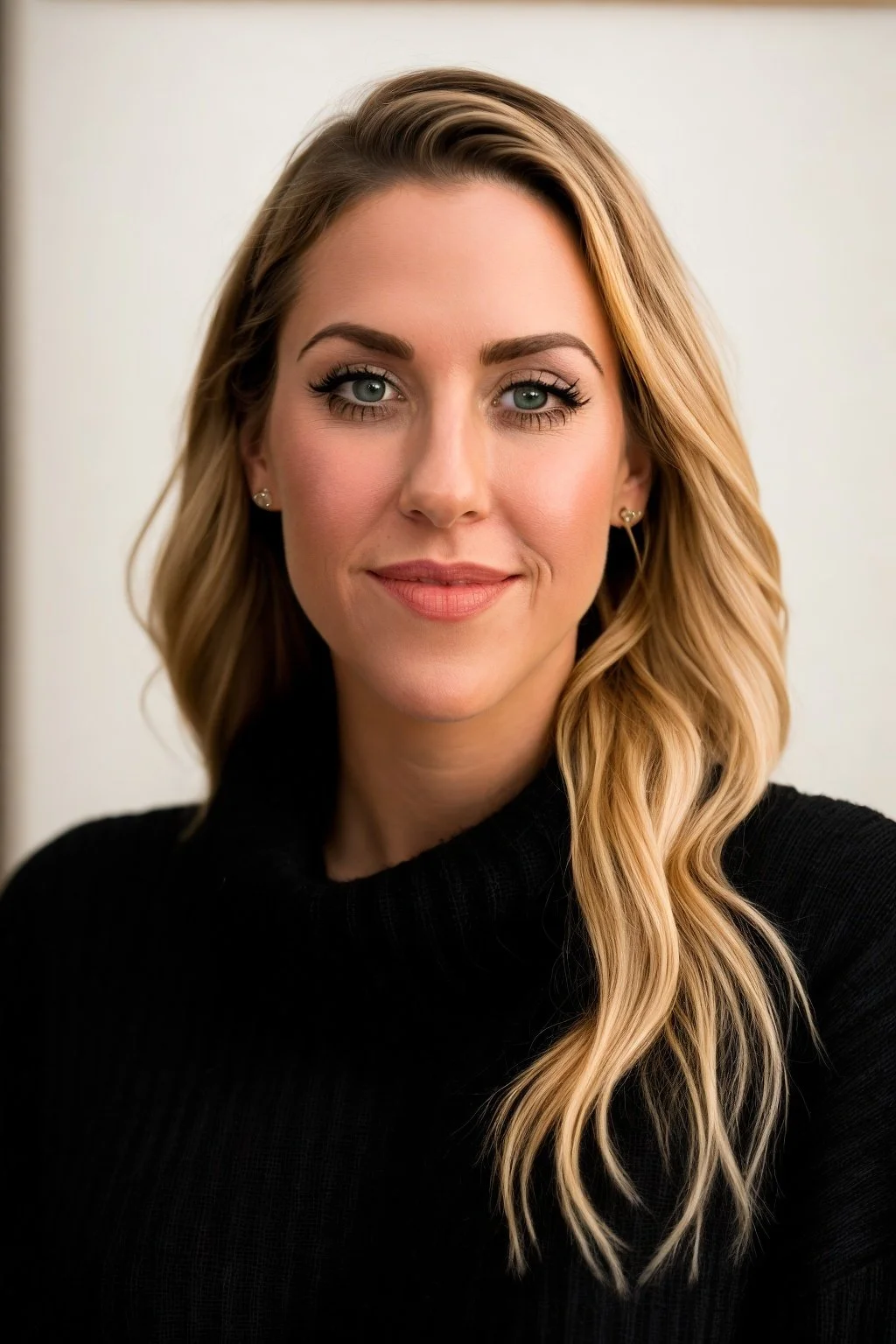
The Woman Who Builds Companies Before They Know They Need Her
Natalie Ledbetter joined Stash when there were 27 people and two of them were arguing about whether they needed an HR policy. She built the HR department, the recruiting function, the employee experience program, and the culture - and she left when there were 350 people who somehow all believed the company actually meant it when it talked about diversity. That's not a feel-good story. That's an operational fact, delivered in 2.5 years.
Today she runs Ledbetter Global Advisory, offering what she calls "embedded operating leadership" - not consulting, not advising from a safe distance, but getting in the weeds with Series A and B founders who have outgrown their early-stage people systems and don't yet know how badly they need help. Her pitch is disarmingly direct: "No decks. No theory. Just real fixes, fast."
In a field crowded with HR thought leaders posting LinkedIn carousels about "psychological safety," Ledbetter is the one actually installing it, line by line, hire by hire, policy by policy. She's been doing it since the early 2010s, when "people operations" wasn't even a job title most founders knew to look for.
Born in America. Raised in Jakarta. Built for Chaos.
The origin story matters. Ledbetter grew up in Jakarta, Indonesia as a "third culture kid" - an American kid attending an international school alongside students from 90 different countries. That school, the Jakarta Intercultural School, was a daily encounter with difference: different languages, different values, different frameworks for understanding the world. It was also a front-row seat to global inequality, watching an economy evolve in real time in a developing country.
She came back to the United States for university, earning a Bachelor's in Journalism at The University of Texas at Austin. That detour through journalism - the craft of asking the right question, listening to the actual answer, and translating complexity into clarity - runs straight through everything she does in people operations. When she's diagnosing a startup's organizational drag, she's reporting a story. When she's interviewing a candidate, she's an investigator. When she's advising a founder, she's an editor who's already read every draft before this one.
"Network, network, network. People are much more accessible than you'd think."
- Natalie LedbetterThe Career That Doesn't Fit in a Box
Before startups, Ledbetter worked in HR for investment banking - a world of rigid hierarchy, formal process, and institutional memory. Before that, large-scale corporate accounts in the garment industry. The span is unusual: most people ops leaders come up through one industry, one culture, one kind of organization. Ledbetter came up through all of them, which is exactly why she's good at the one thing that requires you to understand organizations at a structural level.
At Shapeways, the 3D-printing marketplace, she ran recruiting during a critical growth phase - learning how to identify what skills a company needed before the company itself had articulated them. At Curalate, the social commerce company later acquired by Bazaarvoice, she built the entire recruiting organization from scratch during hyper-growth - learning how to build infrastructure that could survive speed. And then came Stash.
Stash was the moment everything Ledbetter had learned became a system. She didn't just hire people. She built diversity metrics: approximately 50% people of color in corporate offices, near 40% women company-wide, 28% women in engineering and data science. She'll be the first to say that last number isn't good enough - which is exactly the kind of accountability that separates the people who talk about DEI from the people who measure it.
Three Years Inside the Machine: Boldstart Ventures
After Stash, Ledbetter became Operating Partner and Head of People at Boldstart Ventures, one of the most respected seed-stage VC firms in the B2B technical founder space. Boldstart had been looking for someone to advance its platform capabilities - the work of supporting portfolio companies beyond the check, getting into the human infrastructure of scaling. The introduction came through Dipti Salopek, then VP of People at Snyk. Classic Ledbetter: a relationship connecting the dots to exactly the right room.
For three years, she sat at the intersection of venture capital and startup operations. She worked with founders building companies before most people had heard of them. She advised on hiring, org design, leadership transitions, and the invisible architecture of culture. She wrote for Boldstart's blog, co-authored pieces on enterprise security and remote-first leadership, and became what one Boldstart GP called the firm's ability to "jump into the trenches, creating fundamental People Ops building blocks while balancing strategy and execution."
She also did something rarer: she used the perch at Boldstart to watch patterns across dozens of companies simultaneously. Where individual operators see one startup, Ledbetter saw the portfolio - the same mistakes made at slightly different speeds, the same inflection points disguised as different problems. That pattern recognition became the foundation of what she now does at Ledbetter Global Advisory.
"She is practically on my team. She's literally building the connective tissue of our organization."
- John Amaral, Co-Founder & CTO, Root.ioThe Swiss Army Knife Metaphor and Why It Actually Fits
Her clients call her a "Swiss Army knife." Her own description: a disruptor, a fixer, someone who thrives in ambiguous, chaotic environments. These aren't contradictions. The Swiss Army knife works because every tool in it is precise. You don't use the corkscrew to cut wire. Ledbetter knows which tool is which: when to push on org design, when to fix a mis-hire situation, when to install systems, when to just listen to a founder at 11pm who's terrified about next quarter.
She counts among her core qualities: deep empathy, intellectual curiosity, and a willingness to embrace discomfort as a growth catalyst. She practices all three publicly. As a TEDx speaker, she's talked through ideas on the public stage. As a guest lecturer at Columbia and Drexel universities, she's tested her frameworks against the hardest critics - students who haven't yet bought into the conventional wisdom. As a podcast guest on shows ranging from Fast Company appearances to TroopHR to The Ops Drop, she keeps refining the argument that people operations is not a cost center. It's a revenue driver.
What She Actually Does Now
Ledbetter Global Advisory works with Series A and B companies at the moment growth starts to outpace the organization. That's a specific moment - not "we need an HR person" vague, but "decisions are getting slower, roles are blurring, and the people who got us here might not be the people who get us there." Ledbetter has seen it enough times to recognize it in the first conversation.
Her client list includes Bubble.io, Wallaroo.ai, Virtual Sapiens, and companies coming out of the Boldstart portfolio. She serves on the Board of Advisors at Virtual Sapiens. She remains active in professional networks including Chief, PeopleTech Partners, TroopHR, Wendy Road, Startup Experts, Transform, and Peer150 - not passive membership, but the kind of active participation that keeps someone current in a field that changes every six months.
She also maintains a strict personal boundary that tells you something real about her: every Saturday is entirely her own. She's done this through hyper-growth phases, through VC portfolios, through fractional engagements that could theoretically swallow every waking hour. The Saturdays are non-negotiable. It's the kind of detail that sounds small until you realize it explains how someone sustains this level of intensity for two decades without burning out.
Her Twitter handle, @LeUnicornHunter, predates the moment unicorns became Silicon Valley shorthand for the latest billion-dollar exit. She was hunting rare talent before the metaphor got fashionable, which might be the cleanest summary of her whole career: she found the important things before they had names.